



 Full Games List
 Featured Games
 New Games
 Reviews
 Media
Media Images
 Blogs
Blogs Game Updates
 Images Feedback Summary
 Game Design Highlights
 Tutorials
 Articles
 Scripts
 Utilities / Plugins
 Resources
 Engines
 Engine Bulletins
 What is Makerscore?
 Past Events
 Achievements
 Misaos
 Forums
 Post History
 Chat
Chat New to RMN?
 Full Store List
 RMN Music Pack (free)



CHARACTER SELECTION!
Posts
Pages:
1

 JosephSeraph
 View playlists
 Close
CloseOn a similar topic with LockeZ' Choices with Consequences: Why?, lets talk about a particular kind of choice:
Character selection, and the kind of gameplay impact it has! What RPGs can you remember that featured character selection, and how did they handle it? How different would the game be, based on the characters you chose?
Let me start with examples:
In SaGa Frontier, PSX (and a great part of the SaGa games) you have to choose between ~7 characters in the beginning of the game. Each has their own final boss and their own story, and while some quests overlap, they're never the same. The world is breathing, and you're never "the player" walking a default path, you're that specific character, playing their path in their world. In a sense, every character's scenario is wildly different, even if the quests sometimes overlap.
Basically, ~7 games in one!
In Kartia: The Word of Fate, PSX you chose between two essentially opposite characters, starting by their color schemes: Lacrima the Shine Warrior, dutybound to her shrine, and Toxa the Free Knight, a free-roaming warrior not much different from Butz from FFV. Their stories also interlap during several moments, ultimately leading to them fighting together and the choice of character playing a minor role in terms of gameplay and setting the longer the game progresses.
In Brigandine, PSX, you're presented with the option to choose an emperor and a country to control in the very beginning of the game, each country and emperor having different stats, mechanics and recruitable members during the course of the game; and having a bubble-plot outside of the general (and rather bland) plot. In this case the scenarios don't ever overlap; except for the overall plot: All 5 countries are struggling to resist the Evil Empire of Zcsdihvoperfwergriforgotthename that is taking over the world. Outside of that, you don't ever get to know characters outside the country you chose, aside from 1 or 2 lines of dialogue, and being able to read their bio in-battle.
And then there is the other extreme: Party making. When you simply choose classes for your characters in the beginning of the game, or even sometimes only genders. Examples would be Final Fantasy 1, some Dragon Quest titles, Legend of Mana, the first 2 SaGa games, and so on. Now, I'm sure there are games that lie in between, but I can't recall their names for some reason. (Maybe Seiken Densetsu 3, for the SNES? I haven't played that one much! It always bugs somehow >: I wish they'd release a legit ENG version)
So what do you think, what is the most important aspect to think when designing games? Being able to tread wildly different paths and stories, being able to see different sides of the same stories, simply experiencing different aspects of the gameplay? What about a game that offers you the ability to choose a main character, but in the end it only really changes the first 30min of the game? Is that acceptable? Do you consider it to be "Illusion of choice"? Discuss :D
I suck at writing these topics HAHAHAH XD
Character selection, and the kind of gameplay impact it has! What RPGs can you remember that featured character selection, and how did they handle it? How different would the game be, based on the characters you chose?
Let me start with examples:
In SaGa Frontier, PSX (and a great part of the SaGa games) you have to choose between ~7 characters in the beginning of the game. Each has their own final boss and their own story, and while some quests overlap, they're never the same. The world is breathing, and you're never "the player" walking a default path, you're that specific character, playing their path in their world. In a sense, every character's scenario is wildly different, even if the quests sometimes overlap.
Basically, ~7 games in one!
In Kartia: The Word of Fate, PSX you chose between two essentially opposite characters, starting by their color schemes: Lacrima the Shine Warrior, dutybound to her shrine, and Toxa the Free Knight, a free-roaming warrior not much different from Butz from FFV. Their stories also interlap during several moments, ultimately leading to them fighting together and the choice of character playing a minor role in terms of gameplay and setting the longer the game progresses.
In Brigandine, PSX, you're presented with the option to choose an emperor and a country to control in the very beginning of the game, each country and emperor having different stats, mechanics and recruitable members during the course of the game; and having a bubble-plot outside of the general (and rather bland) plot. In this case the scenarios don't ever overlap; except for the overall plot: All 5 countries are struggling to resist the Evil Empire of Zcsdihvoperfwergriforgotthename that is taking over the world. Outside of that, you don't ever get to know characters outside the country you chose, aside from 1 or 2 lines of dialogue, and being able to read their bio in-battle.
And then there is the other extreme: Party making. When you simply choose classes for your characters in the beginning of the game, or even sometimes only genders. Examples would be Final Fantasy 1, some Dragon Quest titles, Legend of Mana, the first 2 SaGa games, and so on. Now, I'm sure there are games that lie in between, but I can't recall their names for some reason. (Maybe Seiken Densetsu 3, for the SNES? I haven't played that one much! It always bugs somehow >: I wish they'd release a legit ENG version)
So what do you think, what is the most important aspect to think when designing games? Being able to tread wildly different paths and stories, being able to see different sides of the same stories, simply experiencing different aspects of the gameplay? What about a game that offers you the ability to choose a main character, but in the end it only really changes the first 30min of the game? Is that acceptable? Do you consider it to be "Illusion of choice"? Discuss :D
I suck at writing these topics HAHAHAH XD
Man, this was the original premise of The Tower way back in 2002.
At the beginning, you chose between the GOOD and EVIL characters, Garinol the Paladin or Mortimer the Necromancer. I was 16. I was very emphatically 16. I have no idea how the idea might actually have played out, of course, because all the work I ever did on the game was for the EVIL campaign and the GOOD campaign was never touched, and the game never finished.
Anyway, this thread is not about what I first thought. I thought it was just about class selection, not something that had major impact on how you experience the story (i.e. character select like in Borderlands, not character select like in Resident Evil).
At the beginning, you chose between the GOOD and EVIL characters, Garinol the Paladin or Mortimer the Necromancer. I was 16. I was very emphatically 16. I have no idea how the idea might actually have played out, of course, because all the work I ever did on the game was for the EVIL campaign and the GOOD campaign was never touched, and the game never finished.
Anyway, this thread is not about what I first thought. I thought it was just about class selection, not something that had major impact on how you experience the story (i.e. character select like in Borderlands, not character select like in Resident Evil).
Resident Evil is one of the titles I was trying to remember! I'm talking about all kinds of character selection in here! :D
And yeah, that "planning a single path" kinda thing happens a lot when we're new, heheh :D
But yeah! The impact certainly isn't major in Resident Evil. So, what justifies the usage of multiple characters? Would the game be substantially altered were we to wipe that out and made a game only with Jill's scenario in RE3, for instance? The later RE games however, quite clearly follow a more chapter-oriented gameplay, with the scenarios hardly ever overlapping. (I have just played the sixth one but this is what it feels to me from what I"ve seen from 'em)
Basically what justifies, and what do you expect that will happen when you choose the quirky ghetto gal instead of the frail and narrow doctor dude? If the game plays mostly the same, is it worth having a character select screen? If the game follows an episodic structure, however, I don't even consider it character selection. (Like RE6) you're just playing chapters. That's it. Chapters that don't need to be played in a particular order, but that's not a matter of choice. You're still playing all of 'em anyway! Aside from the eventual non-required one.
And yeah, that "planning a single path" kinda thing happens a lot when we're new, heheh :D
But yeah! The impact certainly isn't major in Resident Evil. So, what justifies the usage of multiple characters? Would the game be substantially altered were we to wipe that out and made a game only with Jill's scenario in RE3, for instance? The later RE games however, quite clearly follow a more chapter-oriented gameplay, with the scenarios hardly ever overlapping. (I have just played the sixth one but this is what it feels to me from what I"ve seen from 'em)
Basically what justifies, and what do you expect that will happen when you choose the quirky ghetto gal instead of the frail and narrow doctor dude? If the game plays mostly the same, is it worth having a character select screen? If the game follows an episodic structure, however, I don't even consider it character selection. (Like RE6) you're just playing chapters. That's it. Chapters that don't need to be played in a particular order, but that's not a matter of choice. You're still playing all of 'em anyway! Aside from the eventual non-required one.
What I think in something like RE1 or RE2 is added is depth and perspective. Largely it's the same story but I found that tackling that story from different angles and needing to see both sides of it to understand some events was super fascinating!

Two games I can think of similar to the Kartia example: Threads of Fate and Folklore. I've only played the latter. I like the idea of following two separate characters whose stories overlap. However in Folklore (I mentioned this in LockeZ thread, too) you had to play through the same stages with both characters anyway, so there wasn't much diversity (except maybe in which monsters appeared for whom). And... I didn't finish that game, so I can't say what kind of significance playing in two different scenarios ultimately had for the story. (Also I haven't played Threads of Fate at all, I just know that it has this device.)
What about games like FF 13-2 and Ni No Kuni: Wrath of the White Witch, where you can fill your party with captured monsters? They don't serve much purpose in the way of story or character development, but can drastically affect how you play the game based on which monsters you put into your party.
What about games like FF 13-2 and Ni No Kuni: Wrath of the White Witch, where you can fill your party with captured monsters? They don't serve much purpose in the way of story or character development, but can drastically affect how you play the game based on which monsters you put into your party.
Indeed @Max, this is a very interesting point. And a great tool for the designer!
The Folklore approach, though, I have to agree that isn't the wisest. But then again, in these cases, we could possibly earn more if instead of choosing a character, we were switching back and forth during the gameplay, couldn't we? But then again, you'd have to create more scenarios so that their gameplay doesn't overlap as much.
That's interesting too. FFX-2 did it as well, and it is quite amusing. I think it can be fun, but sometimes a bit jarring!
The Folklore approach, though, I have to agree that isn't the wisest. But then again, in these cases, we could possibly earn more if instead of choosing a character, we were switching back and forth during the gameplay, couldn't we? But then again, you'd have to create more scenarios so that their gameplay doesn't overlap as much.
author=suzy_cheesedreams
What about games like FF 13-2 and Ni No Kuni: Wrath of the White Witch, where you can fill your party with captured monsters? They don't serve much purpose in the way of story or character development, but can drastically affect how you play the game based on which monsters you put into your party.
That's interesting too. FFX-2 did it as well, and it is quite amusing. I think it can be fun, but sometimes a bit jarring!
Suikoden 3 used an interesting party system where you would play three interconnected stories (there were actually six all up - a doggie POV which was cute but basically just fluff, the baddie side which was unlocked after completing the game and the Tenkai's mode which dealt more with the goings-on around the base, how it came to be set up and such, instead of the actual war focus of the other characters).
Basically each character had chapters to go through. You could go through them all for one character or do them in any order (after playing the first chapter for each first) and each character focussed on the reasons behind their involvement in the war, why they acted certain ways in other scenarios and what was going on behind certain sides' scenes. Some areas were only open to certain parties, too, and doing the chapters in a specific order would open up small scenes that were otherwise blocked because you hadn't seen something else in another chapter.
It was actually a really interesting way to tell a story and though the gameplay itself wasn't amazing (there was a LOT of backtracking... a very LOT) it was pretty interesting to see how the different groups came together and interacted from each perspective.
Being a Suikoden game, eventually you ended up with a huge cast of characters to use in your party - from mages, to cute girls, to puppets, to ninjas, to kobolds and elves and ducks and knights and... well, you get the idea. In Suikoden III there are well over 50 characters to choose from for your party (out of 108 Stars of Destiny to recruit).
Basically each character had chapters to go through. You could go through them all for one character or do them in any order (after playing the first chapter for each first) and each character focussed on the reasons behind their involvement in the war, why they acted certain ways in other scenarios and what was going on behind certain sides' scenes. Some areas were only open to certain parties, too, and doing the chapters in a specific order would open up small scenes that were otherwise blocked because you hadn't seen something else in another chapter.
It was actually a really interesting way to tell a story and though the gameplay itself wasn't amazing (there was a LOT of backtracking... a very LOT) it was pretty interesting to see how the different groups came together and interacted from each perspective.
Being a Suikoden game, eventually you ended up with a huge cast of characters to use in your party - from mages, to cute girls, to puppets, to ninjas, to kobolds and elves and ducks and knights and... well, you get the idea. In Suikoden III there are well over 50 characters to choose from for your party (out of 108 Stars of Destiny to recruit).
Oh, Ni no Kuni is an awful game, but I sincerely enjoyed the combat in FF 13-2.
Liberty, you reminded me of those optional scenes in FF 9. These sometimes offered the chance to take charge of a different party member, or mostly would just be short scenes that gave a little bit of insight into a character's background or personality. I think they helped greatly to flesh out the story, however conspicuous the execution of the feature itself was.
Then there is a game like FF7, with its hidden characters. Recruiting Yuffie opens up a sidequest, and with Vincent you gain more insight into Hojo and the birth of Sephiroth. So... that's neat stuff to pack away with a possible-to-miss character.
...Two other games I can think of are(though they aren't rpgs): Ronin Blade and Onimusha 2. Ronin Blade was similar to Folklore in that you play as two different characters, but fortunately their playthroughs were quite different, and they faced unique bosses.
There was a friendship system in Onimusha 2, and I think getting a particular character to like you opened up extra parts later in the game where you could play as them, and neglecting/favouring certain characters would alter their storylines and ultimately garner you different endings. You had to play the game over and over differently to see each new pathway appear in the menu, so I guess because of the repetition the game was quite short.
Liberty, you reminded me of those optional scenes in FF 9. These sometimes offered the chance to take charge of a different party member, or mostly would just be short scenes that gave a little bit of insight into a character's background or personality. I think they helped greatly to flesh out the story, however conspicuous the execution of the feature itself was.
Then there is a game like FF7, with its hidden characters. Recruiting Yuffie opens up a sidequest, and with Vincent you gain more insight into Hojo and the birth of Sephiroth. So... that's neat stuff to pack away with a possible-to-miss character.
...Two other games I can think of are(though they aren't rpgs): Ronin Blade and Onimusha 2. Ronin Blade was similar to Folklore in that you play as two different characters, but fortunately their playthroughs were quite different, and they faced unique bosses.
There was a friendship system in Onimusha 2, and I think getting a particular character to like you opened up extra parts later in the game where you could play as them, and neglecting/favouring certain characters would alter their storylines and ultimately garner you different endings. You had to play the game over and over differently to see each new pathway appear in the menu, so I guess because of the repetition the game was quite short.
I always had a soft spot for the system in Star Ocean games where you could go see what your party were doing in town. You'd be treated to small scenes that would show more of their character and get to know them better. I don't know, it was always pretty neat (and in a lot of cases, cute~)
Of course, there's also FF6 and the end game where everyone was split up and doing their own thing. Re-recruiting them meant having to find them and they each had their own little quest/story you could do. That's always a viable option.
Ah! Wild ARMs! How could I have forgotten?! You have three characters to start off but you could choose which one's story you wanted to start with and you'd play that one until the point where you all meet up. You could switch between the stories at save points, too, so it was pretty interesting to switch from one story to the other and back again, if you wished. When the characters actually met, their stories amalgamated into one main story.
Of course, there's also FF6 and the end game where everyone was split up and doing their own thing. Re-recruiting them meant having to find them and they each had their own little quest/story you could do. That's always a viable option.
Ah! Wild ARMs! How could I have forgotten?! You have three characters to start off but you could choose which one's story you wanted to start with and you'd play that one until the point where you all meet up. You could switch between the stories at save points, too, so it was pretty interesting to switch from one story to the other and back again, if you wished. When the characters actually met, their stories amalgamated into one main story.
Also in Wild ARMs, there were some dungeons later on where you had to split up again to complete puzzles (one character would activate a switch for another to go through a gate, etc.).
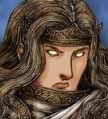
There's Seiken Densetsu 3, a sequel to Secret of Mana, where you select three characters out of six to form a party. Whoever you pick first determines what the very beginning and the very end will be, but over 90% of the game is the same. I've played it more than ten times and I simple picked my favorite characters the most.
There is no most important aspect when it comes to allowing the player to choose different characters, what matters is that whatever you do, you're doing it well. For example, if the idea with choosing main character is to let the player see multiple stories, but 90% of the story is the same, that's a major failure. However, if the idea instead is that the different character have different play-styles, then it doesn't matter if 90% of the story is the same. What does matter then is that the characters indeed have different play-styles and that all works at least semi equally for an average player.
To be honest though, there's no game where the choose the main character aspect has really impressed me. As a general rule, the more of a difference there is, be it story or gameplay or both, the more it means the developers simple has to split the effort. Two different stories means you have to write for both and two characters with vastly different play-styles means enemies have to be designed to work with both. You can make it easier on yourself by making things same-ish, such as the already mentioned "90% of the story is the same", but the more you do so, the less of a point there is to multiple characters.
There is no most important aspect when it comes to allowing the player to choose different characters, what matters is that whatever you do, you're doing it well. For example, if the idea with choosing main character is to let the player see multiple stories, but 90% of the story is the same, that's a major failure. However, if the idea instead is that the different character have different play-styles, then it doesn't matter if 90% of the story is the same. What does matter then is that the characters indeed have different play-styles and that all works at least semi equally for an average player.
To be honest though, there's no game where the choose the main character aspect has really impressed me. As a general rule, the more of a difference there is, be it story or gameplay or both, the more it means the developers simple has to split the effort. Two different stories means you have to write for both and two characters with vastly different play-styles means enemies have to be designed to work with both. You can make it easier on yourself by making things same-ish, such as the already mentioned "90% of the story is the same", but the more you do so, the less of a point there is to multiple characters.
I remember SaGa Frontier! One of the interesting characters I remember is Red, who can turn into the superhero Alkaiser. The cool thing about that (besides the whole superhero thing) is that he couldn't transform if there were any human characters in the party unless they were incapacitated. It was a minor gimmick, but one that fit the character and the playstyle.
Another was a lazy bum who got kicked out of his own house until he did stuff. Since he was so carefree, he could join all of the other characters (who either was busy with their own adventures, or just didn't like the current MC), and his story was the most open; which was somewhat required since you could face the final boss nearly instantly. Kinda neat for a character who's shtick is "I have nothing better to do".
As for picking, if it's just picking aesthetic wise and 90% of the story is the same, I don't see the point. If it had various gimmicks attached to each character, or a different story, then sure.
Another was a lazy bum who got kicked out of his own house until he did stuff. Since he was so carefree, he could join all of the other characters (who either was busy with their own adventures, or just didn't like the current MC), and his story was the most open; which was somewhat required since you could face the final boss nearly instantly. Kinda neat for a character who's shtick is "I have nothing better to do".
As for picking, if it's just picking aesthetic wise and 90% of the story is the same, I don't see the point. If it had various gimmicks attached to each character, or a different story, then sure.
Pages:
1

