



 Full Games List
 Featured Games
 New Games
 Reviews
 Images
 Blogs
Blogs Game Updates
 Images Feedback Summary
 Game Design Highlights
 Tutorials
 Articles
 Scripts
 Utilities / Plugins
 Resources
 Engines
 Engine Bulletins
 What is Makerscore?
 Past Events
 Achievements
 Forums
 Post History
 Chat
Chat New to RMN?
 Full Store List
 RMN Music Pack (free)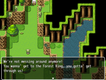

 Add Review
 Subscribe
 Nominate
 Submit Media
 RSS
RSS
 Game Design
Secrets and Endings! First half guide.
 Gredge109
The Shore: Foreign Tides is out! Of course, you already knew that. In fact, you've already played it, right? Well I'm sure you have, however there's a bunch of secrets under the hood! The first half of the game was developed by me, and I put a number of hidden things throughout the game. I'll mark the secrets as spoilers as I go along. But let's dig right into it! First off, a little feature you probably didn't know was part of the game:
I. Morality
Alignment, disposition, or what-have-you. This game has an alignment feature that doesn't follow the typical good-neutral-evil morality of other games. Rather, this game's morality moves along three lines: Serious, Neutral, and Positive. What's the difference? Quite a bit, really! Different events may be hidden based on your morality, and even the environment may change depending on your type of play-through. There's no down-side to any morality, and no up-side, really. It's truly meant to change the environment to reflect the way the player plays the game. That being said, here's how to go about getting the different moralities, and what effects they have on the game.
A. Positive Play-through
B. Neutral Play-through
C. Serious Play-through
II. Dating Characters!
Well, not really! There's no romancing options in this game, but you can totally meet up with some of the different NPCs, if you wish, to learn more about them. This results in them agreeing to meet you later, and sometimes even giving you a key to get into their home. Here's how you can "date" the different characters!
A. Reynald
B. Anne
C. The Archaeologist
D. The Innkeeper
E. Gordon
III. Minor Secrets
I hope you enjoyed these secrets to the first half! Be sure to check out Liberty's blog entry here for information on her half, and see if you can find all of the secrets this game as to offer.
Thanks for playing!
I. Morality
Alignment, disposition, or what-have-you. This game has an alignment feature that doesn't follow the typical good-neutral-evil morality of other games. Rather, this game's morality moves along three lines: Serious, Neutral, and Positive. What's the difference? Quite a bit, really! Different events may be hidden based on your morality, and even the environment may change depending on your type of play-through. There's no down-side to any morality, and no up-side, really. It's truly meant to change the environment to reflect the way the player plays the game. That being said, here's how to go about getting the different moralities, and what effects they have on the game.
A. Positive Play-through
A positive play-through can be achieved by interacting with everyone! Talking with various people and interacting with the environment raises your morality. Wanting to know more about the different characters in the game also raises your morality! The point of the positive play-through is to reflect a player who is invested in the world around them.
The music and face portrait of your character will change to show a positive play-through. In a positive play-through, your character's portrait will change to a smile, the music as you explore will be more up-beat, and you'll even unlock more dialogue with some of the characters in the game. There is also a character you will meet who is only available during a positive play-through. When traveling back from the boss areas, if you choose not to use the porta-ring, you will also run into more NPCs you previously encountered who will now chat with you.
Looking into both the lake of Enbury Village, the bookshelf in the Hunter's Lodge, as well as the mirror in your room in the Hunter's Lodge, will result in a description describing what type of person you are. At the end of the first half, Gordon, the man who talks to you at the Shore, will change his dialogue entirely both when you talk to him, and when you depart on the ferry. Before the transition into the second half, you will receive two pieces of gear that are indicative of the type of person you are.
The music and face portrait of your character will change to show a positive play-through. In a positive play-through, your character's portrait will change to a smile, the music as you explore will be more up-beat, and you'll even unlock more dialogue with some of the characters in the game. There is also a character you will meet who is only available during a positive play-through. When traveling back from the boss areas, if you choose not to use the porta-ring, you will also run into more NPCs you previously encountered who will now chat with you.
Looking into both the lake of Enbury Village, the bookshelf in the Hunter's Lodge, as well as the mirror in your room in the Hunter's Lodge, will result in a description describing what type of person you are. At the end of the first half, Gordon, the man who talks to you at the Shore, will change his dialogue entirely both when you talk to him, and when you depart on the ferry. Before the transition into the second half, you will receive two pieces of gear that are indicative of the type of person you are.
B. Neutral Play-through
A neutral play-through is achieved by interacting commonly within the world. You're not over-invested in it, and it's not as if you don't care. Rather, you have an interest in the world without being enamored with it. As a result, your play-through will certainly be middle-of-the-ground. Your battle portrait and the exploration music will remain the same it did at the beginning, and upon taking the ferry to begin the second half, you will receive the two positive pieces of equipment that reflect your generally good nature.
C. Serious Play-through
A serious play-through is acquired by genuinely not caring about anything throughout the world. This is easily achieved by simply ignoring everyone you have the option to ignore. Several characters who wish to talk to you can be blown off and straight-up ignored. Gordon, who you first run into in the Hunter's Lodge, can be walked past. Same with the Forest King in the woods the first time you meet him. Finally, on the second puzzle in the forest, you can completely walk past the two goblins and ignore them. Having ignored everyone and keeping your chatter with NPCs to a minimum, you will then trigger a serious play-through. Other things, such as blowing people off and telling them you don't care how they feel, will also lower your disposition.
When a serious play-through is engaged, the changes will be apparent. Your character portrait changes to an angry expression, and the exploration music changes genres entirely to reflect a more serious environment. Furthermore, the common battle-music will also change to reflect a more serious conflict.
Puzzles will be disabled throughout the environment because you, as the player, don't care about them. Some enemy NPCs will be gone entirely, as they are avoiding you. Some enemy monsters you fight you will actually kill, and those who used to have dialogue with you, will now attack you on sight, seeing as you are a threat. The bosses skip parts of their introduction as you simply attack them. Furthermore, conquered a boss while in a serious play-through will result in you killing the boss, and they will no longer appear during the rest of the game, even if you change into a more neutral or positive play-through. On your way back after a boss fight, should you choose not to use the porta-ring, the NPCs will not spawn to talk to you (you killed their boss, after all). Furthermore, the Hunter's Log bookshelf, your room's mirror, and the Enbury Lake will all reflect the more serious nature of who you are. Going to the shore and trying to board the ferry early reflect show you feel about this whole island. At the end of the first half, the two pieces of equipment you receive will also reflect your more stoic nature.
The point of the serious play-through is not to be a negative or evil one, but rather, to be a generic JPRG hero. You're the one who travels about fighting and killing monsters. In this world, that's not necessarily a bad thing: you are a hunter, after all, and hunters need to hunt. Rather you are no longer the bright and cheery person you once were. Sure, you're a hero now, but you're no longer the friend everyone loves. You're the person they call upon during war, you're not the person that comforts them. At the end of the first half, Gordon's conversation will also change to reflect this. Oh yeah, and you can blow him off at the end, too.
When a serious play-through is engaged, the changes will be apparent. Your character portrait changes to an angry expression, and the exploration music changes genres entirely to reflect a more serious environment. Furthermore, the common battle-music will also change to reflect a more serious conflict.
Puzzles will be disabled throughout the environment because you, as the player, don't care about them. Some enemy NPCs will be gone entirely, as they are avoiding you. Some enemy monsters you fight you will actually kill, and those who used to have dialogue with you, will now attack you on sight, seeing as you are a threat. The bosses skip parts of their introduction as you simply attack them. Furthermore, conquered a boss while in a serious play-through will result in you killing the boss, and they will no longer appear during the rest of the game, even if you change into a more neutral or positive play-through. On your way back after a boss fight, should you choose not to use the porta-ring, the NPCs will not spawn to talk to you (you killed their boss, after all). Furthermore, the Hunter's Log bookshelf, your room's mirror, and the Enbury Lake will all reflect the more serious nature of who you are. Going to the shore and trying to board the ferry early reflect show you feel about this whole island. At the end of the first half, the two pieces of equipment you receive will also reflect your more stoic nature.
The point of the serious play-through is not to be a negative or evil one, but rather, to be a generic JPRG hero. You're the one who travels about fighting and killing monsters. In this world, that's not necessarily a bad thing: you are a hunter, after all, and hunters need to hunt. Rather you are no longer the bright and cheery person you once were. Sure, you're a hero now, but you're no longer the friend everyone loves. You're the person they call upon during war, you're not the person that comforts them. At the end of the first half, Gordon's conversation will also change to reflect this. Oh yeah, and you can blow him off at the end, too.
II. Dating Characters!
Well, not really! There's no romancing options in this game, but you can totally meet up with some of the different NPCs, if you wish, to learn more about them. This results in them agreeing to meet you later, and sometimes even giving you a key to get into their home. Here's how you can "date" the different characters!
A. Reynald
Everyone's under-dog favorite, Reynald! Reynald is encountered early int he game, in the Hunter's Lodge, when you begin your quest. To date him, go talk to him and complete his battle tutorial. After you have done so, he'll talk to you about meeting up with him later. After you battle the Forest King, the time will change to the evening, and you can find Reynald in his house in Enbury Village. However if you wait until after the Mountain Golem to go to his house, his house will be locked.
B. Anne
The barkeep and boss, Anne! She's the leader of the Hunter's Lodge but, as you can expect, she doesn't have too many friends, being the manager and all. You can agree to meet up with her if you talk to her inside of the Hunter's Lodge either before or during evening. However, she doesn't have a traditional "date" like the others. Once you go to her place during night, she will talk to you, and if you agreed to meet up with her, her dialogue will change ever so slightly to reflect this fact. She'll still talk to you if you check things around her house, but it's not like the others, given the nature of what she tells you at the end of the first half.
C. The Archaeologist
The archaeologist can be found early in the game after exiting the Hunter's Lodge. It requires a high disposition for him to appear. Of course, interacting with the Hunter's Lodge, talking to everyone and checking everything (sometimes repeatedly) will result in a high disposition out the gate, which causes him to spawn by the campfire.
Talking to him, he will introduce himself. If you wish to know more about him, he will give you the key to his cabin. The archaeologist will then spawn throughout different areas on the island, so long as you explore before evening. He can be found standing in Enbury Village, in the Enbury Temple, at the Crossroads, and in the entrance of the Mountain Area. When it is evening, you can meet him in his log cabin to hear his story. Come nightfall, the cabin will be locked, and you will not be able to enter (and if you have his key, you choose not to wake him up).
Talking to him, he will introduce himself. If you wish to know more about him, he will give you the key to his cabin. The archaeologist will then spawn throughout different areas on the island, so long as you explore before evening. He can be found standing in Enbury Village, in the Enbury Temple, at the Crossroads, and in the entrance of the Mountain Area. When it is evening, you can meet him in his log cabin to hear his story. Come nightfall, the cabin will be locked, and you will not be able to enter (and if you have his key, you choose not to wake him up).
D. The Innkeeper
The innkeeper! The quiet one who is never in the spotlight. If you stay at the end either before or during evening, she will ask your opinion on something. Agreeing to help her will allow you to chat with her later on during night At night, you can go back to the inn, talk to the innkeeper, then follow her upstairs to continue the conversation. However if you don't stay at the end before nightfall, she won't be there at night, having gone to bed.
E. Gordon
You'll run into Gordon early on in the game. Regardless of whether you choose to meet up with him later on or not (or even if you just blow him off), he'll still be at the shore later on. After all, he's known you for years!
III. Minor Secrets
There's several minor secrets hidden throughout the first half. Some are so minor I almost want to let you discover them for yourself. The most significant of these, however, is a side-quest of sorts.
Early in the game in the woods, as you are leaving the Hunter's Lodge, there's a ghost you can talk to if your disposition is not low. Talk to him, and he vanishes! If you talked to him, and if your disposition is not serious, you will find him later on in the forest as you're making your way to the Forest King. After talking to him after that, he'll appear one more time in the Mountain Area during evening. After talking to him, he'll disappear once more before finally re-appearing at night in the graveyard east of the Temple in Embury Village. Talk to him one last time to receive his farewell discourse. On a side note, you'll find his widow standing at the grave around noon.
(Be careful! The grave is a very magical place due to the ghost's presence, and if you aren't being mindful of where you step, the magic of the graveyard may teleport you right up the nearby cliff!)
Another thing to note is the slime in the forest. After the gate puzzle, if you cross the bridge and head north, you'll encounter a slime who lost his lunch. If you help him find it, he'll thank you, then explain his predicament further. He's got bad eye sight, and needs some glasses! Luckily, the item shop in town has some glasses that should fit him just right! If you give him the glasses, he will give you a nice item in exchange. Perfect!
There's multiple hidden items throughout the world. Some are consumables, and some are stat boosters. Be sure to search everyone! Search search search! You'll never know what you'll find!
Early in the game in the woods, as you are leaving the Hunter's Lodge, there's a ghost you can talk to if your disposition is not low. Talk to him, and he vanishes! If you talked to him, and if your disposition is not serious, you will find him later on in the forest as you're making your way to the Forest King. After talking to him after that, he'll appear one more time in the Mountain Area during evening. After talking to him, he'll disappear once more before finally re-appearing at night in the graveyard east of the Temple in Embury Village. Talk to him one last time to receive his farewell discourse. On a side note, you'll find his widow standing at the grave around noon.
(Be careful! The grave is a very magical place due to the ghost's presence, and if you aren't being mindful of where you step, the magic of the graveyard may teleport you right up the nearby cliff!)
Another thing to note is the slime in the forest. After the gate puzzle, if you cross the bridge and head north, you'll encounter a slime who lost his lunch. If you help him find it, he'll thank you, then explain his predicament further. He's got bad eye sight, and needs some glasses! Luckily, the item shop in town has some glasses that should fit him just right! If you give him the glasses, he will give you a nice item in exchange. Perfect!
There's multiple hidden items throughout the world. Some are consumables, and some are stat boosters. Be sure to search everyone! Search search search! You'll never know what you'll find!
I hope you enjoyed these secrets to the first half! Be sure to check out Liberty's blog entry here for information on her half, and see if you can find all of the secrets this game as to offer.
Thanks for playing!
Game Design
Intentions and Endings
Hi guys, Liberty here! Today I'm gonna talk about what I'd intended to do with the project when I got it and how that fell through. Also, the different endings.
See, Gredge set this pretty cool system up for rewarding you for exploration. It changed the tone of the game depending on how seriously you played, from music to scene changes. It felt rather Undertale-ish, if I'm being honest, and I thought it was a pretty cool little feature.
I'd intended to continue on with it a bit, to give the player one of six endings depending on your Morality and the choices you made in the second part. Needless to say, that fell through.
Originally I'd thought about having three different end games dependant on where your morality would fall - one for low, one for medium and one for high. Each of these would have a failure and success route for slight changes in their respective endings.
Just need to say that since I eventually reused ideas in the game from these points, the following hidden information has spoilers for the game endings.
In keeping with the idea that low morality would be for those who weren't keen on exploring everything and just wanted to breeze through a game without getting to deep, the low morality run would focus on a few hunt quests.
For succeeding that path you would become a legend among your fellow hunters, eventually taking over Rosalee's position as leader of the Guild in Resea. Failure left you losing some prestige, but still being well-regarded by your fellow hunters.
As you can see, there wasn't much depth to that idea and it has some small pay-off but nothing that was lore-building.
The second path, middling morality, was a little different in that it added the idea of teaming up with someone else - changing the gameplay. It would have actually become a very big game changer due to what I had planned - Ella would step back as the main fighter and be a supportive role to Tenne, a second-year hunter who was to take an examination to see if he was good enough to be bumped up a rank.
As Ella you'd have chosen a support type of skill each turn to use on Tenne, while he auto-battled against enemies. Depending on your support, skills would be locked or unlocked for that turn. You could also use items to heal him, but otherwise Ella would have been hands-off during this arc.
If he passed the exam, Ella's ending would have told how they teamed up quite often, the both of you eventually becoming well-known as great partners to work with. If he failed the exam he would have decided against staying in the guild and Ella would settle into life as a normal hunter.
The increased interaction between two people would have been better for the story, however Ella was already shown to be a silent protagonist. Add to that that I just wasn't sure I could get the system to work how I wanted in the short amount of time we had for the event... I decided to scrap the idea, though I kept Tenne as a character, as you can see.
The last path - that of high morality - led to a more interesting and story-based path. Ella would be given the role of trainer to a new recruit and have to teach her how to be a hunter. This part was aiming to be more of a raising simulation - a bit like Princess Maker - where you give Isla tasks to perform and her stats grow depending on her success or failure (which was dependant on her stats).
More interaction than the second path was planned between the characters, however I again ran into the problem of Ella being a silent protagonist. I wanted to explore the idea of a spoiled, city-raised rich-girl becoming a good hunter, but without anyone for her to play off or interact with it would have been a bit harder.
I also realised that the kind of simulation I wanted for Isla's path was going to be impossible to do in the time-frame, but I didn't want to compromise the idea too much, so I decided to scrap it.
Isla's failure path is very similar to the bad ending in the game itself, so I won't talk about it much except to say that I always planned for her death and for Ella to go back home in disgrace.
Her success path was also similar to the good ending, where Ella becomes a teacher.
When push came to shove I quickly realised that I was being a bit too ambitious and instead decided to blend the three path idea together into the end-half story you see, with only three endings total.
The choice to keep Isla and Tenne in the party came about from realising that having two characters that could talk would allow for dialogue and interaction, without it being too stilted when bounced off the silent wall that is Ella.
The cutting of Ella's hair was not a big part of the plan but I actually had a dream about her hair being cut off - much the same way it happens - and I decided to add it in. It becomes something of a symbol in the same way that Garnet's hair does in FFIX - a cutting of past ties and acceptance of moving on with your life.
Though it doesn't actually become a huge factor in the game, I liked the subtle message it gave, that Ella is moving beyond her past by killing a monster that she would once have not had to, and accepting that change in her life - that sometimes to protect you have to kill. It is an important realisation on her part that the real world has more shades of grey and sometimes you have to take actions you wouldn't normally want to in order to survive and to protect. It also serves as a symbol of her innocent ideals being struck down at the same time as she kills the monster.
There are three endings total, and I hope you all look for them. In fact, it shouldn't be hard to get them all as you can do so just before the last battle - by choosing how you go forward.
Ending 1 - Good: Return to the guild and talk to Rosalee instead of entering the cave.
Ending 2 - Normal: Enter the cave and beat the boss.
Ending 3 - Bad: Enter the cave and lose to the boss.
I hope this gave some insight into the second half of the game and that if you play it, you enjoy it! Thanks for reading! >.<)b
See, Gredge set this pretty cool system up for rewarding you for exploration. It changed the tone of the game depending on how seriously you played, from music to scene changes. It felt rather Undertale-ish, if I'm being honest, and I thought it was a pretty cool little feature.
I'd intended to continue on with it a bit, to give the player one of six endings depending on your Morality and the choices you made in the second part. Needless to say, that fell through.
Originally I'd thought about having three different end games dependant on where your morality would fall - one for low, one for medium and one for high. Each of these would have a failure and success route for slight changes in their respective endings.
Just need to say that since I eventually reused ideas in the game from these points, the following hidden information has spoilers for the game endings.
In keeping with the idea that low morality would be for those who weren't keen on exploring everything and just wanted to breeze through a game without getting to deep, the low morality run would focus on a few hunt quests.
For succeeding that path you would become a legend among your fellow hunters, eventually taking over Rosalee's position as leader of the Guild in Resea. Failure left you losing some prestige, but still being well-regarded by your fellow hunters.
As you can see, there wasn't much depth to that idea and it has some small pay-off but nothing that was lore-building.
The second path, middling morality, was a little different in that it added the idea of teaming up with someone else - changing the gameplay. It would have actually become a very big game changer due to what I had planned - Ella would step back as the main fighter and be a supportive role to Tenne, a second-year hunter who was to take an examination to see if he was good enough to be bumped up a rank.
As Ella you'd have chosen a support type of skill each turn to use on Tenne, while he auto-battled against enemies. Depending on your support, skills would be locked or unlocked for that turn. You could also use items to heal him, but otherwise Ella would have been hands-off during this arc.
If he passed the exam, Ella's ending would have told how they teamed up quite often, the both of you eventually becoming well-known as great partners to work with. If he failed the exam he would have decided against staying in the guild and Ella would settle into life as a normal hunter.
The increased interaction between two people would have been better for the story, however Ella was already shown to be a silent protagonist. Add to that that I just wasn't sure I could get the system to work how I wanted in the short amount of time we had for the event... I decided to scrap the idea, though I kept Tenne as a character, as you can see.
The last path - that of high morality - led to a more interesting and story-based path. Ella would be given the role of trainer to a new recruit and have to teach her how to be a hunter. This part was aiming to be more of a raising simulation - a bit like Princess Maker - where you give Isla tasks to perform and her stats grow depending on her success or failure (which was dependant on her stats).
More interaction than the second path was planned between the characters, however I again ran into the problem of Ella being a silent protagonist. I wanted to explore the idea of a spoiled, city-raised rich-girl becoming a good hunter, but without anyone for her to play off or interact with it would have been a bit harder.
I also realised that the kind of simulation I wanted for Isla's path was going to be impossible to do in the time-frame, but I didn't want to compromise the idea too much, so I decided to scrap it.
Isla's failure path is very similar to the bad ending in the game itself, so I won't talk about it much except to say that I always planned for her death and for Ella to go back home in disgrace.
Her success path was also similar to the good ending, where Ella becomes a teacher.
When push came to shove I quickly realised that I was being a bit too ambitious and instead decided to blend the three path idea together into the end-half story you see, with only three endings total.
The choice to keep Isla and Tenne in the party came about from realising that having two characters that could talk would allow for dialogue and interaction, without it being too stilted when bounced off the silent wall that is Ella.
The cutting of Ella's hair was not a big part of the plan but I actually had a dream about her hair being cut off - much the same way it happens - and I decided to add it in. It becomes something of a symbol in the same way that Garnet's hair does in FFIX - a cutting of past ties and acceptance of moving on with your life.
Though it doesn't actually become a huge factor in the game, I liked the subtle message it gave, that Ella is moving beyond her past by killing a monster that she would once have not had to, and accepting that change in her life - that sometimes to protect you have to kill. It is an important realisation on her part that the real world has more shades of grey and sometimes you have to take actions you wouldn't normally want to in order to survive and to protect. It also serves as a symbol of her innocent ideals being struck down at the same time as she kills the monster.
(Highlight above for spoilers about the ending scenes of the game.)
There are three endings total, and I hope you all look for them. In fact, it shouldn't be hard to get them all as you can do so just before the last battle - by choosing how you go forward.
Ending 1 - Good: Return to the guild and talk to Rosalee instead of entering the cave.
Ending 2 - Normal: Enter the cave and beat the boss.
Ending 3 - Bad: Enter the cave and lose to the boss.
(Highlight lines for spoilers on how to get the different endings.)
I hope this gave some insight into the second half of the game and that if you play it, you enjoy it! Thanks for reading! >.<)b
Pages:
1

