



 Full Games List
 Featured Games
 New Games
 Reviews
 Media
Media Images
 Blogs
Blogs Game Updates
 Images Feedback Summary
 Game Design Highlights
 Tutorials
 Articles
 Scripts
 Utilities / Plugins
 Resources
 Engines
 Engine Bulletins
 What is Makerscore?
 Past Events
 Achievements
 Misaos
 Forums
 Chat
Chat New to RMN?
 Full Store List
 RMN Music Pack (free)



 Profile
 Locker
 Play Lists
SPEJOKU'S PROFILE
spejoku

0
 Close
Close
I really like games, like the lions' share of people on this site. I study Illustration, and I've been messing around in rpg maker for a bit. Nice to meet you!
Search
 Spej draws some things
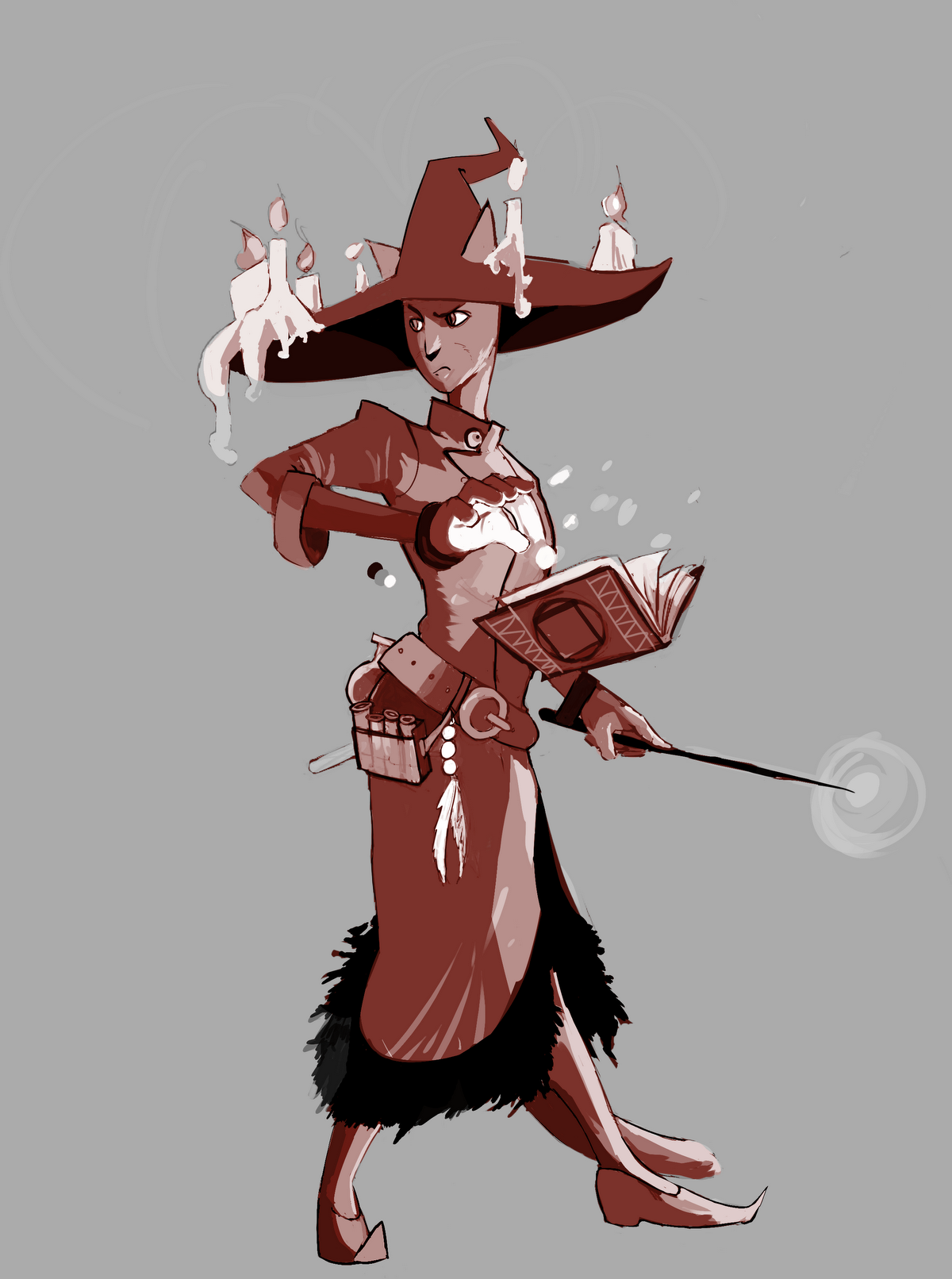
ok so I actually have an artblog and whatnot, but I wanted to start a thing here for character concept art and other things that I can use for character and story ideas for rpg maker.
Have some character designs (spoilered because they're kind of huge images sometimes sorry. if it's too big, please open it in a new tab so it'll get auto resized. i really need to check my image sizes when i upload them, im sorry):


(some zelda fanart)

(and just some random sketches from the other day)
Have some character designs (spoilered because they're kind of huge images sometimes sorry. if it's too big, please open it in a new tab so it'll get auto resized. i really need to check my image sizes when i upload them, im sorry):
(some zelda fanart)
(and just some random sketches from the other day)
Hello hello!
I realized I never really introduced myself. I'm Spej, I'm an illustration student at my school. So far the only rpg maker project Ive finished is one of those build-along tutorials, which was really helpful.
Fave rpgs and influences include Final fantasy 9 (then the rest), Mother 3, Persona 4, then the rest of the smt ones. Basically my favorite studios are Atlus, Platinum Games, and then squaresoft circa 2000.
Nice to meet you!
Fave rpgs and influences include Final fantasy 9 (then the rest), Mother 3, Persona 4, then the rest of the smt ones. Basically my favorite studios are Atlus, Platinum Games, and then squaresoft circa 2000.
Nice to meet you!
[RMVX ACE] Can somone help me reverse engineer this?
ok so I've been playing some really polished rpg maker games lately and there's a few things I really really want to emulate, but have no idea how to. The biggest one is the 2d format of the game Lisa. Here's a video of it in action.
the game is amazing you should definitely play it. not for childrens tho. it's on steam.
anyway, I wanted to reverse engineer how dingaling did the 2d format present in the game. I'm not certain how rude this is? if I should just pm him?
I know it'll involve scripting but as I dont really have any ruby experience I'd like to wrap my head around it as much as possible before trying to dive into learning how to script.
here's a list of what I can see as features of the 2d presentation.
-tile based movement. The player goes over objects and interacts with them by pressing up or down and then the interact button. (so pretty much all events are above or below player unless they're specifically blocking your way.)
-the player cannot jump per se, they can only change elevation by climbing ladders and going up and down vertically adjacent surfaces. In game you do this by pressing spacebar and up or down when an acceptable space is near. The ladder functionality seems unchanged from vanilla rpg maker but I dont have any ideas about how to do the up/down thing that doesnt involve a billion copy-pasted events. (maybe a common event? that autoruns every map?)
-When you fall, you go straight down with no horizontal movement. falling damage is applied if the distance is great enough. (the fact that you fall when there's nothing beneath you is the most important part here. that and the fact that it calculates a fall damage based on tiles traversed)
-you can jump one square gaps if you are using a vehicle item (a bike) There's a sequence later in the game where you can go off ramps on a motorcycle but I think that's definitely outside the scope of what I'm asking. (the only thing that comes ot mind is a bunch of copy pasted events.)
-encounters happen on contact with npc (which I think is the easiest thing to implement. Theres areas with random encounters too, i think that was just an encounter area tile thingy that doesnt even require any scripting.)
-I personally enjoy how the text boxes hover over the speaker's heads, but that's not integral to the 2d format.
The rest as far as I can tell is just custom sprites and custom animations. the battle system uses Yanfly's combo skills script, and as far as I can tell there's just a ton of different skills and a ton of custom animations. I think that the overworld sprites are just scaled down versions of the sprites he used for the combat animations.
I want to understand how to do this so I can mess around with different perspectives in my games. The top down perspective standard to rpg maker often comes across as too impersonal and zoomed out for my tastes, so I want to explore other options if they exist.
also lisa was made in RPGmager XP, as far as I remember. Again, go play it. its on steam, its great.
Edit: I realize this is a huge thing to ask. But the only thing that comes to mind is either an auto run or parallel process that moves the player when it's possible to move Them down. bit I don't think a move player event is the best idea. That leaves scripting, as far as I can tell, and I have no idea how to approach that. Any ideas?
the game is amazing you should definitely play it. not for childrens tho. it's on steam.
anyway, I wanted to reverse engineer how dingaling did the 2d format present in the game. I'm not certain how rude this is? if I should just pm him?
I know it'll involve scripting but as I dont really have any ruby experience I'd like to wrap my head around it as much as possible before trying to dive into learning how to script.
here's a list of what I can see as features of the 2d presentation.
-tile based movement. The player goes over objects and interacts with them by pressing up or down and then the interact button. (so pretty much all events are above or below player unless they're specifically blocking your way.)
-the player cannot jump per se, they can only change elevation by climbing ladders and going up and down vertically adjacent surfaces. In game you do this by pressing spacebar and up or down when an acceptable space is near. The ladder functionality seems unchanged from vanilla rpg maker but I dont have any ideas about how to do the up/down thing that doesnt involve a billion copy-pasted events. (maybe a common event? that autoruns every map?)
-When you fall, you go straight down with no horizontal movement. falling damage is applied if the distance is great enough. (the fact that you fall when there's nothing beneath you is the most important part here. that and the fact that it calculates a fall damage based on tiles traversed)
-you can jump one square gaps if you are using a vehicle item (a bike) There's a sequence later in the game where you can go off ramps on a motorcycle but I think that's definitely outside the scope of what I'm asking. (the only thing that comes ot mind is a bunch of copy pasted events.)
-encounters happen on contact with npc (which I think is the easiest thing to implement. Theres areas with random encounters too, i think that was just an encounter area tile thingy that doesnt even require any scripting.)
-I personally enjoy how the text boxes hover over the speaker's heads, but that's not integral to the 2d format.
The rest as far as I can tell is just custom sprites and custom animations. the battle system uses Yanfly's combo skills script, and as far as I can tell there's just a ton of different skills and a ton of custom animations. I think that the overworld sprites are just scaled down versions of the sprites he used for the combat animations.
I want to understand how to do this so I can mess around with different perspectives in my games. The top down perspective standard to rpg maker often comes across as too impersonal and zoomed out for my tastes, so I want to explore other options if they exist.
also lisa was made in RPGmager XP, as far as I remember. Again, go play it. its on steam, its great.
Edit: I realize this is a huge thing to ask. But the only thing that comes to mind is either an auto run or parallel process that moves the player when it's possible to move Them down. bit I don't think a move player event is the best idea. That leaves scripting, as far as I can tell, and I have no idea how to approach that. Any ideas?
Some analysis on Earthbound's opening
Hello hello!
I wanted to throw around some thoughts I had on Earthbound, and how it sets up it's unique tone and humor through the first hour or so of play. This is all just my personal take on the subject, but I think most everyone can agree that Earthbound is a game with a really unique world. So here's my thoughts on how the game sets up the world in it's opening. Also I am probably going to make some mistakes in here so please forgive me for any slip-ups.
When you first start Earthbound, you see the standard studio logos, and then the screen turns to static and you get this screen:/Update%2001/6-1680.png)
This is pretty important, as the first image you get of the game proper, even before you see any of the characters, is this image of aliens attacking what appears to be an American city. The game's opening image is a juxtaposition of the mundane and the fantastic, and this juxtaposition is incredibly important to how the game operates.
Then after naming your characters the game opens on some images of a normal looking town, Onett, with some basic narration. The game focuses on a house, and then into the room of a sleeping kid. The kid wakes up when something loud shakes the house. Notable is the choice of setting and the time the game takes to set up the scene. At the beginning of the game, we only see the mundane. In fact, we don't even see the meteor fall.
Then the player is given control. Ness goes through the house, changes out of his pajamas (after his mom insists), and goes out to investigate what happened. There are no enemies here, the only thing you see are some townsfolk and some policemen, who are pretty normal despite their silly dialogue. Ness eventually gets stopped by a police barricade and goes home.
This entire first scene is remarkable in how mundane it is in subject matter. Yes, you have the meteor, but you don't even see it at this point. There is no supernatural yet, just a curious child and some cops responding to a loud noise. The player is given a sense that "this is the normal way things are" as they explore.
Then the next part happens. Porky asks for your help because his brother hasn't come home yet, so you back outside. Immediately, something is different. You have enemies, spiteful crows and coil snakes and runaway dogs. You go back up to the meteorite to find Porky's brother and a time travelling psychic bug who tells you that an alien overlord conquers the future and you're the only one who can stop him. On your way home, an alien teleports in and you fight it off with psychic powers.
The takeaway imo is this: Earthbound's focus on the mundane is what allows it to use the fantastic elements so well. Part of Earthbound's signature style is the way that characters react in mundane ways to the fantastic. Without the small details of everyday life (your mom worrying about you, equipment of baseball caps and tee ball bats) then the fantastic wouldn't have been as strange, because the player would've just accepted it as part of the suspension of disbelief. Without setting the stage as a strange but identifiably "realistic" world, the addition of alien invaders and brainwashing mani mani statues wouldn't have the unique effect that it does.
If one were to try to replicate Earthbound's tone, then you must pay close attention to how you handle the mundane in your game. Without the first emphasis on the mundane, the game wouldn't have felt the same.
tl;dr I feel that Earthbound chooses to have the player experience the mundane first so that the impact of the fantastic later is more pronounced, and that the play between mundane and fantastic is a key part to it's unique personality. If you want to replicate that feeling, you need to pay attention to how you're using the mundane and fantastic story elements and how you're presenting them to the player.
I wanted to throw around some thoughts I had on Earthbound, and how it sets up it's unique tone and humor through the first hour or so of play. This is all just my personal take on the subject, but I think most everyone can agree that Earthbound is a game with a really unique world. So here's my thoughts on how the game sets up the world in it's opening. Also I am probably going to make some mistakes in here so please forgive me for any slip-ups.
When you first start Earthbound, you see the standard studio logos, and then the screen turns to static and you get this screen:
This is pretty important, as the first image you get of the game proper, even before you see any of the characters, is this image of aliens attacking what appears to be an American city. The game's opening image is a juxtaposition of the mundane and the fantastic, and this juxtaposition is incredibly important to how the game operates.
Then after naming your characters the game opens on some images of a normal looking town, Onett, with some basic narration. The game focuses on a house, and then into the room of a sleeping kid. The kid wakes up when something loud shakes the house. Notable is the choice of setting and the time the game takes to set up the scene. At the beginning of the game, we only see the mundane. In fact, we don't even see the meteor fall.
Then the player is given control. Ness goes through the house, changes out of his pajamas (after his mom insists), and goes out to investigate what happened. There are no enemies here, the only thing you see are some townsfolk and some policemen, who are pretty normal despite their silly dialogue. Ness eventually gets stopped by a police barricade and goes home.
This entire first scene is remarkable in how mundane it is in subject matter. Yes, you have the meteor, but you don't even see it at this point. There is no supernatural yet, just a curious child and some cops responding to a loud noise. The player is given a sense that "this is the normal way things are" as they explore.
Then the next part happens. Porky asks for your help because his brother hasn't come home yet, so you back outside. Immediately, something is different. You have enemies, spiteful crows and coil snakes and runaway dogs. You go back up to the meteorite to find Porky's brother and a time travelling psychic bug who tells you that an alien overlord conquers the future and you're the only one who can stop him. On your way home, an alien teleports in and you fight it off with psychic powers.
The takeaway imo is this: Earthbound's focus on the mundane is what allows it to use the fantastic elements so well. Part of Earthbound's signature style is the way that characters react in mundane ways to the fantastic. Without the small details of everyday life (your mom worrying about you, equipment of baseball caps and tee ball bats) then the fantastic wouldn't have been as strange, because the player would've just accepted it as part of the suspension of disbelief. Without setting the stage as a strange but identifiably "realistic" world, the addition of alien invaders and brainwashing mani mani statues wouldn't have the unique effect that it does.
If one were to try to replicate Earthbound's tone, then you must pay close attention to how you handle the mundane in your game. Without the first emphasis on the mundane, the game wouldn't have felt the same.
tl;dr I feel that Earthbound chooses to have the player experience the mundane first so that the impact of the fantastic later is more pronounced, and that the play between mundane and fantastic is a key part to it's unique personality. If you want to replicate that feeling, you need to pay attention to how you're using the mundane and fantastic story elements and how you're presenting them to the player.
Pages:
1
 Games - Tester
 Games - Other
 Statuses
 Posts
Posts
