



 Full Games List
 Featured Games
 New Games
 Reviews
 Media
Media Images
 Blogs
Blogs Game Updates
 Images Feedback Summary
 Game Design Highlights
 Tutorials
 Articles
 Scripts
 Utilities / Plugins
 Resources
 Engines
 Engine Bulletins
 What is Makerscore?
 Past Events
 Achievements
 Misaos
 Forums
 Post History
 Chat
Chat New to RMN?
 Full Store List
 RMN Music Pack (free)



MORE THAN 1,000 SPECIES DISCOVERED IN MEKONG
Posts
Pages:
1

 demondestiny
 View playlists
 Close
Closehttp://news.yahoo.com/s/afp/20081215/sc_afp/sciencethailandseasiawildlife_081215132156
I found this pretty interesting and that snake looks cool. Discuss. ;)
BANGKOK (AFP) â€" Scientists have discovered more than 1,000 species in Southeast Asia's Greater Mekong region in the past decade, including a spider as big as a dinner plate, the World Wildlife Fund said Monday.
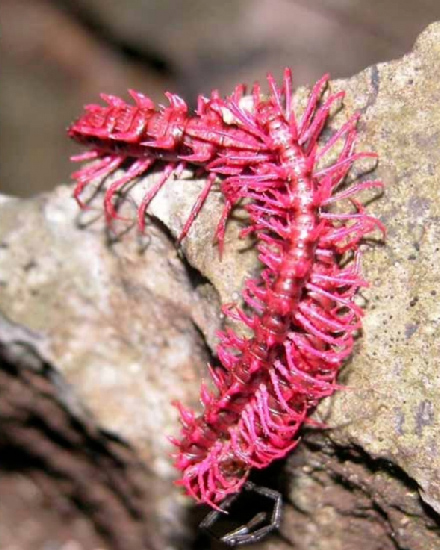
A rat thought to have become extinct 11 million years ago and a cyanide-laced, shocking pink millipede were among creatures found in what the group called a "biological treasure trove".
The species were all found in the rainforests and wetlands along the Mekong River, which flows through Cambodia, Laos, Myanmar, Thailand, Vietnam and the southern Chinese province of Yunnan.
"It doesn't get any better than this," Stuart Chapman, director of WWF's Greater Mekong Programme, was quoted as saying in a statement by the group.
"We thought discoveries of this scale were confined to the history books."
The WWF report, "First Contact in the Greater Mekong", said that "between 1997 and 2007, at least 1,068 have been officially described by science as being newly discovered species."
These included the world's largest huntsman spider, with a leg span of 30 centimetres (11.8 inches), and the "startlingly" coloured "dragon millipede", which produces the deadly compound cyanide.
Not all species were found hiding in remote jungles -- the Laotian rock rat, which the study said was thought to be extinct about 11 million years ago, was first encountered by scientists in a local food market in 2005, it said.
One species of pitviper was first noted by scientists after it was found in the rafters of a restaurant at the headquarters of Thailand's Khao Yai national park in 2001.
"This region is like what I read about as a child in the stories of Charles Darwin," said Dr Thomas Ziegler, curator at the Cologne Zoo, who was involved in the research.
"It is a great feeling being in an unexplored area and to document its biodiversity for the first time both enigmatic and beautiful," he said.
The new species highlighted in the report include 519 plants, 279 fish, 88 frogs, 88 spiders, 46 lizards, 22 snakes, 15 mammals, four birds, four turtles, two salamanders and a toad -- an average of two previously undiscovered species a week for the past 10 years.
The report warned, however, that many of the species could be at risk from development, and called for a cross-border agreement between the countries in the Greater Mekong area to protect it.
I found this pretty interesting and that snake looks cool. Discuss. ;)
author=demondestiny link=topic=2704.msg50889#msg50889 date=1229416342BANGKOK (AFP) â€" Scientists have discovered more than 1,000 species in Southeast Asia's Greater Mekong region in the past decade, including a spider as big as a dinner plate, the World Wildlife Fund said Monday.
I found this pretty interesting and that snake looks cool. Discuss. ;)
There are just some things I'd rather not have discovered. Or at least killed off. Little spiders are okay in my book, but BIG FREAKIN HAIRY SPIDERS, not so much.

That millipede sounds pretty epic. If it has cyanide it can probably kill easily with whatever bite it might have.
That snake is pretty goddamned awesome looking.
That snake is pretty goddamned awesome looking.


It would be interesting to know, how many of those species are still viable and safe from extinction in say... 50 years? Considering the fact how many self-made adventurers, trophy hunters and exotic animal resellers are going to flood the region soon. And well... the overall state of our dear Earth isn't too well too. I hope those dinner-plate spiders bite their heads off.
But I've gotta say... that is one trendy pink millipede! ;)
But I've gotta say... that is one trendy pink millipede! ;)
Pages:
1

