



 Full Games List
 Featured Games
 New Games
 Reviews
 Media
Media Images
 Blogs
Blogs Game Updates
 Images Feedback Summary
 Game Design Highlights
 Tutorials
 Articles
 Scripts
 Utilities / Plugins
 Resources
 Engines
 Engine Bulletins
 What is Makerscore?
 Past Events
 Achievements
 Misaos
 Forums
 Post History
 Chat
Chat New to RMN?
 Full Store List
 RMN Music Pack (free)



I HATE WHEN THINGS GET OVER EXPLAINED..
Posts

 Craze
Craze View playlists
 Close
CloseI agree with Ciel's posts in this topic, and... wolfcoder's (I feel dirty).
Stupid people are stupid. Don't cater to them. It makes less stupid people dislike you.
Stupid people are stupid. Don't cater to them. It makes less stupid people dislike you.
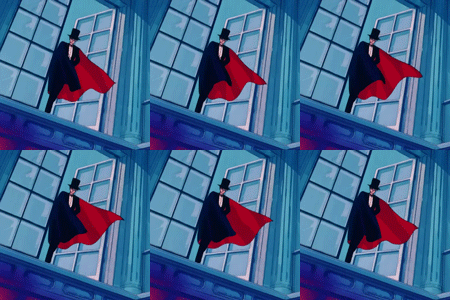
author=Jerichounfortunately for me this has articulated pretty much everything that i felt needed to be said. then again all my favourite games involve lots of text / reading / generally using your brain so maybe i am looking at this from a skewed viewpoint...
do not cater to the lowest denominator. this is the equivalent of selling fast food.
wait, isn't this a game design topic?

make interesting characters with personalities and this problem goes away on its own
because if they had personalities they'd have something more to say than "yes i agree" "yes of course" "oh absolutely let's go" "i can't wait to go there" "oh boy let's all leave" (lol golden sun ds~)
or maybe less to say
either way everyone wins
because if they had personalities they'd have something more to say than "yes i agree" "yes of course" "oh absolutely let's go" "i can't wait to go there" "oh boy let's all leave" (lol golden sun ds~)
or maybe less to say
either way everyone wins

You don't have to be stupid to forget where you're supposed to be going. Very often games will tell you the name of a place that so far means nothing to you. If you stop playing, go to sleep and then resume the next day, it's fully possible to have forgotten the name of that place. Heck, the player may take a longer break than that.
However, over-explaining is not a good solution. Hearing a name that means nothing to you four times doesn't really help much. Rather, I think there should be a way for the player to remind himself. If there isn't a journal, a smart use of NPCs can do the trick.
However, over-explaining is not a good solution. Hearing a name that means nothing to you four times doesn't really help much. Rather, I think there should be a way for the player to remind himself. If there isn't a journal, a smart use of NPCs can do the trick.

Some players are idiots and they like to glance at things rather than go through every detail. Like speed running... even if its the first time you've played.

Moved to game design. More appropriate here..
About this topic: Lack of subtlety is one of the biggest complaints I have about writing in games, and one of the most universal. Ways exist to reinforce gameplay direction without making your dialogue obnoxious and horrible. For example, let's take two different games:
Persona 4 and SMT: DS.
Persona 4 focuses on naturalistic development of characters. Plot points are repeated on request but are not continually shoved down your throat. A great deal of the game is about people having other 'sides' to themselves they do not let others see, and the game is conservative with these elements, driving interest in the characters instead of devolving to the same old shit. You feel that there is even more to these people that you do not learn within the game itself. The game is fundamentally a murder mystery, and the antagonist (well, the 'original' one) is effective, interesting and is not a random throwaway, and we make all the logical connections as to who it could be at the exact moment it is necessary to do, connecting all the prior plot points we have learned about together in an intelligent manner for maximum dramatic interest. I have never seen another villain reveal in a game that is so effective.
In SMT: DS, we have an interesting initial story concept ruined by stereotypical anime tropes and the most hammered in plot convolutions you will ever see. Plot points are repeated ad nauseam - you will hear the same crap a thousand times. Worse yet, the player will often come to conclusions about things before they occur, but don't worry the game will say it a thousand times in case you forget. Characters act unbelievably considering the situation they are in and actual development is pretty much nil. The choice at the end of the game feels arbitrary and not much emotion exists behind the decision because everyone is so unlikable. It is basically needless padding and only one of the choices is rational considering the circumstances.
In RM* games, the problem I have in regards to subtlety usually has little to do with giving directions specifically, and more to do with how the writing works in general. Even games with 'good writing' (compared to whatever standard we have) seem to have issues with leaving things left unsaid. One of my biggest problems with Master of the Wind, for example, was when Stoic rambles on and on and on about his past and we get to know everything. But it's too much. The mystique and interesting elements of the character were lost for the sake of telling us too much in a series of fundamentally boring scenes that were way too long. In the review of Legion's game that I denied I made a valid complaint about the character's voice not fitting that of a young girl and said things no 'human' would say out loud. I guess that's the big thing. 'Would a person REALLY say this out loud?"
Subtlety adds weight to interaction between characters and allows the player to think critically about his/her actions. It is one of the most important elements of writing. Never disregard it. There are better ways to provide gameplay and plot direction that do not involve hammering it into the player's head - do not be like SMT: DS.
About this topic: Lack of subtlety is one of the biggest complaints I have about writing in games, and one of the most universal. Ways exist to reinforce gameplay direction without making your dialogue obnoxious and horrible. For example, let's take two different games:
Persona 4 and SMT: DS.
Persona 4 focuses on naturalistic development of characters. Plot points are repeated on request but are not continually shoved down your throat. A great deal of the game is about people having other 'sides' to themselves they do not let others see, and the game is conservative with these elements, driving interest in the characters instead of devolving to the same old shit. You feel that there is even more to these people that you do not learn within the game itself. The game is fundamentally a murder mystery, and the antagonist (well, the 'original' one) is effective, interesting and is not a random throwaway, and we make all the logical connections as to who it could be at the exact moment it is necessary to do, connecting all the prior plot points we have learned about together in an intelligent manner for maximum dramatic interest. I have never seen another villain reveal in a game that is so effective.
In SMT: DS, we have an interesting initial story concept ruined by stereotypical anime tropes and the most hammered in plot convolutions you will ever see. Plot points are repeated ad nauseam - you will hear the same crap a thousand times. Worse yet, the player will often come to conclusions about things before they occur, but don't worry the game will say it a thousand times in case you forget. Characters act unbelievably considering the situation they are in and actual development is pretty much nil. The choice at the end of the game feels arbitrary and not much emotion exists behind the decision because everyone is so unlikable. It is basically needless padding and only one of the choices is rational considering the circumstances.
In RM* games, the problem I have in regards to subtlety usually has little to do with giving directions specifically, and more to do with how the writing works in general. Even games with 'good writing' (compared to whatever standard we have) seem to have issues with leaving things left unsaid. One of my biggest problems with Master of the Wind, for example, was when Stoic rambles on and on and on about his past and we get to know everything. But it's too much. The mystique and interesting elements of the character were lost for the sake of telling us too much in a series of fundamentally boring scenes that were way too long. In the review of Legion's game that I denied I made a valid complaint about the character's voice not fitting that of a young girl and said things no 'human' would say out loud. I guess that's the big thing. 'Would a person REALLY say this out loud?"
Subtlety adds weight to interaction between characters and allows the player to think critically about his/her actions. It is one of the most important elements of writing. Never disregard it. There are better ways to provide gameplay and plot direction that do not involve hammering it into the player's head - do not be like SMT: DS.

Yes, but writing in a video game is different. There's different rules, it's not like a book/movie/play even though sometimes the event script reads out like an actual play script.
There's lots of reasons why, but it all comes from the fact that the player has to interact with the game world. You're going to have to do some "talking to the screen at the player" otherwise it can bewilder the player.
Though I think characters do this too much in some RM games (if the game is trying to be somewhat serious, this works well in comedies actually).
I actually like never saying some things because the explanation I could come up with isn't anywhere near as awesome as what the player imagines. It just can't live up to the player's expectations.
There's lots of reasons why, but it all comes from the fact that the player has to interact with the game world. You're going to have to do some "talking to the screen at the player" otherwise it can bewilder the player.
Though I think characters do this too much in some RM games (if the game is trying to be somewhat serious, this works well in comedies actually).
I actually like never saying some things because the explanation I could come up with isn't anywhere near as awesome as what the player imagines. It just can't live up to the player's expectations.
author=WolfCoder
Yes, but writing in a video game is different. There's different rules, it's not like a book/movie/play even though sometimes the event script reads out like an actual play script.
There's lots of reasons why, but it all comes from the fact that the player has to interact with the game world. You're going to have to do some "talking to the screen at the player" otherwise it can bewilder the player.
What? Where in my entire post did I mention a film, book or play as a point of reference? This is a weakness games have that is more than avoidable. Saying "it's okay" is simply accepting mediocre solutions.
Video games have the advantage of being interactive. Complex concepts can be conveyed in many ways, whether audiovisually, or with dialogue or context the game provides, or with a fun tutorial. For example: oldschool Mario or Sonic games. It is not like I read the manual to find out what to do for any of these games. I pretty quickly figured out 'touching the other guys walking around' is bad, and 'picking up mushrooms and rings' is good without a single text popup.

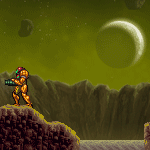
Writing in games typically sucks because people do not follow proper writing techniques.

I think there is a kind of "lowest common denominator" here--and I actually don't mean that in a negative way--where there are a few things you have to avoid doing just to avoid pissing people off, regardless of whether it is right for your game specifically or not. These include:
* No slow walk speed.
* No slow text speed.
* Relatively easy battles. (Trust me, easier is DEFINITELY the safest way to go, although this is one area where you REALLY can't please everyone.)
* No random encounters or if random encounters than VERY low encounter rate.
* Provide direction and explanation so people don't become overwhelmed/confused. (Over-Explaining)
And of course these well known, collective tastes tend to produce a certain uniformity in games of a certain quality. Of course, the homebrew scene has much less "industry standards" than at the pro-level, and hence we still have less uniformity than our pro level counterparts.
That's just my two cents. Also:
News to Karsuman:
Subtext (which is what you are talking about) does not work as well in a medium where you cannot have close-ups of people's expressions and reactions. This is why (there are exceptions) plays are generally less subtextual and stage acting less subtle than film. RM games can rely even LESS upon subtext
Subtext has never been one of the strong points of my writing, I will admit that, but the absence of subtext does not in fact indicate "bad writing" from a technical standpoint. The absence of subtext just means that it is melodrama, which again, is a term that people confuse with meaning "bad" or "overwrought" writing. Melodrama just means lack of subtext. That is, in a technical sense, all that it actually means. As a term, it is often misused. RPG Maker is not a particularly subtextual medium. I am not saying people shouldn't try. I am not saying that "let me spell it out for you" type dialogue is good. I am saying that in general, writers who use RM and decide not to use subtext may just be playing to the strengths of the medium.
Unrelated note: Much of the greatest writing in history is chock-full of things that NO HUMAN BEING WOULD EVER SAY ALOUD. See: your beloved Shakespeare. Completely and totally non-naturalistic. Laden with things people would NEVER SAY.
* No slow walk speed.
* No slow text speed.
* Relatively easy battles. (Trust me, easier is DEFINITELY the safest way to go, although this is one area where you REALLY can't please everyone.)
* No random encounters or if random encounters than VERY low encounter rate.
* Provide direction and explanation so people don't become overwhelmed/confused. (Over-Explaining)
And of course these well known, collective tastes tend to produce a certain uniformity in games of a certain quality. Of course, the homebrew scene has much less "industry standards" than at the pro-level, and hence we still have less uniformity than our pro level counterparts.
That's just my two cents. Also:
In RM* games, the problem I have in regards to subtlety usually has little to do with giving directions specifically, and more to do with how the writing works in general. Even games with 'good writing' (compared to whatever standard we have) seem to have issues with leaving things left unsaid. One of my biggest problems with Master of the Wind, for example, was when Stoic rambles on and on and on about his past and we get to know everything. But it's too much. The mystique and interesting elements of the character were lost for the sake of telling us too much in a series of fundamentally boring scenes that were way too long. In the review of Legion's game that I denied I made a valid complaint about the character's voice not fitting that of a young girl and said things no 'human' would say out loud. I guess that's the big thing. 'Would a person REALLY say this out loud?"
News to Karsuman:
Subtext (which is what you are talking about) does not work as well in a medium where you cannot have close-ups of people's expressions and reactions. This is why (there are exceptions) plays are generally less subtextual and stage acting less subtle than film. RM games can rely even LESS upon subtext
Subtext has never been one of the strong points of my writing, I will admit that, but the absence of subtext does not in fact indicate "bad writing" from a technical standpoint. The absence of subtext just means that it is melodrama, which again, is a term that people confuse with meaning "bad" or "overwrought" writing. Melodrama just means lack of subtext. That is, in a technical sense, all that it actually means. As a term, it is often misused. RPG Maker is not a particularly subtextual medium. I am not saying people shouldn't try. I am not saying that "let me spell it out for you" type dialogue is good. I am saying that in general, writers who use RM and decide not to use subtext may just be playing to the strengths of the medium.
Unrelated note: Much of the greatest writing in history is chock-full of things that NO HUMAN BEING WOULD EVER SAY ALOUD. See: your beloved Shakespeare. Completely and totally non-naturalistic. Laden with things people would NEVER SAY.
About the easy battles. Yes, that's absolutely true. DQ9 had some 10+ minute average random encounters only to walk into the same random encounter.
Here's a question for you though or anyone else. Do any of us like RPGs for the combat? Would we be better off not having any combat at all or very minimal combat? In FF8 there was a power to just turn the combat off.
Here's a question for you though or anyone else. Do any of us like RPGs for the combat? Would we be better off not having any combat at all or very minimal combat? In FF8 there was a power to just turn the combat off.
If you want to see why someone would like an RPG for combat, go play any of the Mario RPGs. They will make you wish all RPGs had even an ounce of the energy and fun that they have.

Without the combat, it's not really a game (at least, not an RPG - its more like an adventure game). Most of the fun for me is derived from preparing my party for battle, fighting that battle, and getting stronger so I can do it again.

author=ShortStar
In FF8 there was a power to just turn the combat off.
I really don't remember this feature at all, unless you're referring to the No Encounters ability, which has been present in every FF since, like, 5, and is usually a mid- or endgame power.
@MaxMcgee
I understand your point but I disagree about RM being THAT bad a medium for subtext.
Purely on the basis that I downright refuse to use melodrama (at least in the game I'm currently working on). If the player doesn't "get" the subtext that's their problem. Most people are busy creating their own approximately correct subtexts constantly anyway (if we weren't all doing this, a lot of entertainment media would have to try a lot harder, the audience does 50% of the work in making a story work) and ambiguity is in-itself a subtextual technique for creating uncertainty and therefore unrest. Subtext can be delivered through musical intonation and timbre (as opposed to being really overt and non-subtle with musical choices) "Lighting", abscence or presence of others, surroundings etc.
Don't get me wrong, I agree that RM's not the best storytelling medium in the world, but I still think it's possible to communicate "subtextually" with it to a decent enough degree.
(PS. I actually liked your post, I'm not slamming it)
I understand your point but I disagree about RM being THAT bad a medium for subtext.
Purely on the basis that I downright refuse to use melodrama (at least in the game I'm currently working on). If the player doesn't "get" the subtext that's their problem. Most people are busy creating their own approximately correct subtexts constantly anyway (if we weren't all doing this, a lot of entertainment media would have to try a lot harder, the audience does 50% of the work in making a story work) and ambiguity is in-itself a subtextual technique for creating uncertainty and therefore unrest. Subtext can be delivered through musical intonation and timbre (as opposed to being really overt and non-subtle with musical choices) "Lighting", abscence or presence of others, surroundings etc.
Don't get me wrong, I agree that RM's not the best storytelling medium in the world, but I still think it's possible to communicate "subtextually" with it to a decent enough degree.
(PS. I actually liked your post, I'm not slamming it)
Subtext (which is what you are talking about) does not work as well in a medium where you cannot have close-ups of people's expressions and reactions. This is why (there are exceptions) plays are generally less subtextual and stage acting less subtle than film. RM games can rely even LESS upon subtext
This is a bizarre statement that's flawed and lazy in substance. A comic wouldn't outperform a book in terms of subtext just because you can see the faces of characters. It comes back to me feeling like you think mediocrity is acceptable if 'x' medium has a harder time conveying it inherently.
Subtext has never been one of the strong points of my writing, I will admit that, but the absence of subtext does not in fact indicate "bad writing" from a technical standpoint. The absence of subtext just means that it is melodrama, which again, is a term that people confuse with meaning "bad" or "overwrought" writing. Melodrama just means lack of subtext. That is, in a technical sense, all that it actually means. As a term, it is often misused. RPG Maker is not a particularly subtextual medium. I am not saying people shouldn't try. I am not saying that "let me spell it out for you" type dialogue is good. I am saying that in general, writers who use RM and decide not to use subtext may just be playing to the strengths of the medium.
In a technical sense, a lot of things mean something completely irrelevant to the importance of the topic.
I am not saying that EVERYTHING needs to have a double meaning or even that people should apply a thousand MEANINGFUL layers to their writing. I just think people should put more thought into what they are doing.

Here is something in an RM* game that could have benefited from a tiny bit of subtext.
Unrelated note: Much of the greatest writing in history is chock-full of things that NO HUMAN BEING WOULD EVER SAY ALOUD. See: your beloved Shakespeare. Completely and totally non-naturalistic. Laden with things people would NEVER SAY.
1) It's in style. It remains consistent throughout. The dialogue maintains the same emotional gravity that 'standard' prose would have.
2) Plays sometimes have to communicate 'thought' through spoken words. Soliloquies and asides are among those elements. Plays are also not RM* games, and subtext would of course be applied in different ways.
3) There is more subtext in Hamlet than plot. Seriously, the dude is just wandering around thinking and thinking and thinking and doing nothing the whole time. Then everyone dies.
author=kentona
Without the combat, it's not really a game (at least, not an RPG - its more like an adventure game). Most of the fun for me is derived from preparing my party for battle, fighting that battle, and getting stronger so I can do it again.
I totally agree with you brother, but do you think we're in the majority? I doubt it.

author=WIP
If you want to see why someone would like an RPG for combat, go play any of the Mario RPGs. They will make you wish all RPGs had even an ounce of the energy and fun that they have.
I was just thinking about this the other day. Paper Mario manages to take ridiculously simple combat and make them addictive and fun. Simple rules like "Don't jump on spikes" and "This enemy has high defense, use a Fire Flower", with a very large mix of enemy types (and thus strategies), as well as the addition of Action Commands makes you always pay attention, but never makes you bored.
On topic, Paper Mario also keeps the next relevant location easily locatable by:
1) providing you a map with a big mark on it
2) providing you a "wise old man" NPC who reminds you of your current objective
3) providing an easy-to-find fortune teller who provides you very specific information for some coins.
A Link to the Past did the same fortune-teller bit as well, and both games used this to provide end-game secret item hints (for an even higher price) so the game doesn't force you to buy a strategy guide to find the best things.

