



 Full Games List
 Featured Games
 New Games
 Reviews
 Media
Media Images
 Blogs
Blogs Game Updates
 Images Feedback Summary
 Game Design Highlights
 Tutorials
 Articles
 Scripts
 Utilities / Plugins
 Resources
 Engines
 Engine Bulletins
 What is Makerscore?
 Past Events
 Achievements
 Misaos
 Forums
 Post History
 Chat
Chat New to RMN?
 Full Store List
 RMN Music Pack (free)



THE BAD GUY WINS
Posts

 JustRob
 View playlists
 Close
CloseWhat do you think about stories in which the bad guy wins? Or, stories in which the main character becomes a bad guy, but still wins?
I know these kind of stories are frowned upon because for a player, a story needs to have a resolution. It's okay for betrayal, deceit, and crime to happen, but it all needs to be resolved in the end.
However, at the same time, I am a bit tired of the classic story where the good guy wins, and I think it could be interesting if it was the other way around. Ofcourse not in the manner of "Haha I dominate the world because I can", but with a bad guy that has their own views on things and acts according to that.
What do you think? "Bad ending", will it work or not?
I know these kind of stories are frowned upon because for a player, a story needs to have a resolution. It's okay for betrayal, deceit, and crime to happen, but it all needs to be resolved in the end.
However, at the same time, I am a bit tired of the classic story where the good guy wins, and I think it could be interesting if it was the other way around. Ofcourse not in the manner of "Haha I dominate the world because I can", but with a bad guy that has their own views on things and acts according to that.
What do you think? "Bad ending", will it work or not?

Well there's a couple of approaches that I can think of off-hand. There's the multiple endings story where you can have one ending where the hero sides with the villain and they rule the galaxy as father and son. That way you can let the player's action pick the ending. (or let the player pick the ending at the very end if you're that kind of designer)
Another way is if it's you know the scope of the story. If the point of the story is to defeat the villain then obviously the villain cannot win. But if the point of the story is something else then evil may triumph just because the fact that good would win didn't even enter into it. If it is a revenge story then the character may take revenge much to the glee of whoever is next in line. If the character has to find something to save his people he might do that and maybe pave the way for something else from where-ever he found that thing.
The third way is to set up for a sequel. Let the good guy be triumphant and then the bad guy comes in and says "well, well, I manipulated you into all of this all along suck on that. *poof*" and in the next game the player is out for the head of whoever manipulated him.
Another way is if it's you know the scope of the story. If the point of the story is to defeat the villain then obviously the villain cannot win. But if the point of the story is something else then evil may triumph just because the fact that good would win didn't even enter into it. If it is a revenge story then the character may take revenge much to the glee of whoever is next in line. If the character has to find something to save his people he might do that and maybe pave the way for something else from where-ever he found that thing.
The third way is to set up for a sequel. Let the good guy be triumphant and then the bad guy comes in and says "well, well, I manipulated you into all of this all along suck on that. *poof*" and in the next game the player is out for the head of whoever manipulated him.
When I watched Deathnote I so wanted Kira to win :/
In a game however, it would be kind of strange to go on a long journey and defeat the final boss only to see the hero lose anyway. It's hard to think of a way to pull it off with grace. Maybe the main character survives but some of his friends die, or the planet/village is still destroyed, and the hero wins but with heavy casualties. Maybe the story follows the bad guy and that's who the player is controlling the whole time. Or maybe you throw in some huge Shyamalan twist at the end!
In a game however, it would be kind of strange to go on a long journey and defeat the final boss only to see the hero lose anyway. It's hard to think of a way to pull it off with grace. Maybe the main character survives but some of his friends die, or the planet/village is still destroyed, and the hero wins but with heavy casualties. Maybe the story follows the bad guy and that's who the player is controlling the whole time. Or maybe you throw in some huge Shyamalan twist at the end!
Well, Death Note was viewed always from Kira's perspective, so it's not strange people wanted him to win. He was clearly evil and slightly insane, but at the same time he had a reason for acting the way he did and people could actually quite sympathize with that.
I think that's the way to go when making a bad guy. It's fine if a bad guy murders people, manipulates them, tortures them, but there has to be a reason, even if it's misguided and twisted.
Also, if a "bad guy wins" story were to be made there's no way there could be a two-shoed good guy hero going through the entire game but losing at the very end. There has to be a reason why the bad guy wins, not just "Haha I am stronger". Betrayal is the most obvious way, whether it's the main good guy or a side character.
I think that's the way to go when making a bad guy. It's fine if a bad guy murders people, manipulates them, tortures them, but there has to be a reason, even if it's misguided and twisted.
Also, if a "bad guy wins" story were to be made there's no way there could be a two-shoed good guy hero going through the entire game but losing at the very end. There has to be a reason why the bad guy wins, not just "Haha I am stronger". Betrayal is the most obvious way, whether it's the main good guy or a side character.

I'm too lazy to write a long post about this right now, but have you guys seen the movie Hero? you know, the one with jet li? I think that's a nice approach to this subject, but I don't know how well would it translate to a game though.
LockeZ
I'd really like to get rid of LockeZ. His play style is way too unpredictable. He's always like this too. If he ran a country, he'd just kill and imprison people at random until crime stopped.
5958
Please don't ever make an "lol buy the sequel" ending. >_< If you're going to use this style of ending, do it for its own sake, for the inherent drama of the plot twist.
JustRob, I think the type of story you're talking about is a classical tragedy. In modern times, tragedies have become a very unpopular type of story. However you can find a lot of them in classical literature - several of Shakespeare's plays are tragedies for instance, as are many of the surviving stories that the Greeks wrote. Perhaps the most famous is Shakespeare's Romeo and Juliet. Typically in a tragedy, what causes the downfall of the protagonist is not that he loses the final battle, but that he has some sort of fatal character flaw. It's worth noting that these stories typically end badly for everyone - it's not like the villain usually gets a happy ending either. If the villain survives the final encounter and successfully enacts his plan, it's good to show the plan ultimately failing somehow, and possibly causing the villain's downfall as well. One of the purposes of a tragedy is to trace the path of human failure. Winning the final battle via self-sacrifice does not count as a tragedy - for a story to be tragic, the protagonist has to actually fail to achieve his goal.
From a more practical, gameplay-driven point of view, games are built around presenting challenges to the player and then requiring the player to overcome them. If the hero simply loses the final battle, giving a special ending in which the villain wins is fine... but how is this different from a game over? After watching this ending, shouldn't they be prompted to reload and try again? This is a problem you have to solve. Maybe your game can end with the protagonist defeating the villain but still failing to achieve his goal - the world still ends, his girlfriend is still killed, etc. Maybe you can make the player control the antagonist for the final battle. There are other options, but making the final battle an unwinnable battle is probably not a good way to do it. The player will feel like they simply got a game over.
JustRob, I think the type of story you're talking about is a classical tragedy. In modern times, tragedies have become a very unpopular type of story. However you can find a lot of them in classical literature - several of Shakespeare's plays are tragedies for instance, as are many of the surviving stories that the Greeks wrote. Perhaps the most famous is Shakespeare's Romeo and Juliet. Typically in a tragedy, what causes the downfall of the protagonist is not that he loses the final battle, but that he has some sort of fatal character flaw. It's worth noting that these stories typically end badly for everyone - it's not like the villain usually gets a happy ending either. If the villain survives the final encounter and successfully enacts his plan, it's good to show the plan ultimately failing somehow, and possibly causing the villain's downfall as well. One of the purposes of a tragedy is to trace the path of human failure. Winning the final battle via self-sacrifice does not count as a tragedy - for a story to be tragic, the protagonist has to actually fail to achieve his goal.
From a more practical, gameplay-driven point of view, games are built around presenting challenges to the player and then requiring the player to overcome them. If the hero simply loses the final battle, giving a special ending in which the villain wins is fine... but how is this different from a game over? After watching this ending, shouldn't they be prompted to reload and try again? This is a problem you have to solve. Maybe your game can end with the protagonist defeating the villain but still failing to achieve his goal - the world still ends, his girlfriend is still killed, etc. Maybe you can make the player control the antagonist for the final battle. There are other options, but making the final battle an unwinnable battle is probably not a good way to do it. The player will feel like they simply got a game over.
Hmm, yes that is an interesting way to look at it, and I think what you described as a tragedy fits what I have in mind.
However, I was thinking more of it from the antagonist's point of view. If you're actually seeing the game from their eyes, then that no longer makes them the antagonist I think, yet they're still clearly in the wrong.
But let's say the main character is a good guy, and wants to protect those close to him no matter what. Eventually he sells his soul for power, yet then becomes the embodiment of evil he sought to destroy, while still believing to be doing the right thing. Technically, since the character had a change of heart, the game ending with the "good guys" dieing or suffering some kind of miserable fate, or the entire world, it would still mean that the main character had achieved their goal, yet not their initial goal since they had a personality change.
In that case, would it still count as a tragedy?
However, I was thinking more of it from the antagonist's point of view. If you're actually seeing the game from their eyes, then that no longer makes them the antagonist I think, yet they're still clearly in the wrong.
But let's say the main character is a good guy, and wants to protect those close to him no matter what. Eventually he sells his soul for power, yet then becomes the embodiment of evil he sought to destroy, while still believing to be doing the right thing. Technically, since the character had a change of heart, the game ending with the "good guys" dieing or suffering some kind of miserable fate, or the entire world, it would still mean that the main character had achieved their goal, yet not their initial goal since they had a personality change.
In that case, would it still count as a tragedy?
The protagonist winning the day and getting everything he wants at the expense of becoming a soulless monster is still tragedy, in my book, especially if he loses the respect of the people he was trying to protect in the first place. Darth Vader is a good example of this kind of character.
Also, I am going to clear up any protagonist/antagonist confusion here. The protagonist is always the primary point of view character, regardless of whether he is "good" or "evil." It is completely possible to have a "bad guy" as the protagonist. Similarly, the antagonist is always the opponent of the protagonist, even if the antagonist is himself "good."
Also, I am going to clear up any protagonist/antagonist confusion here. The protagonist is always the primary point of view character, regardless of whether he is "good" or "evil." It is completely possible to have a "bad guy" as the protagonist. Similarly, the antagonist is always the opponent of the protagonist, even if the antagonist is himself "good."
LockeZ
I'd really like to get rid of LockeZ. His play style is way too unpredictable. He's always like this too. If he ran a country, he'd just kill and imprison people at random until crime stopped.
5958
author=JustRob
But let's say the main character is a good guy, and wants to protect those close to him no matter what. Eventually he sells his soul for power, yet then becomes the embodiment of evil he sought to destroy, while still believing to be doing the right thing. Technically, since the character had a change of heart, the game ending with the "good guys" dieing or suffering some kind of miserable fate, or the entire world, it would still mean that the main character had achieved their goal, yet not their initial goal since they had a personality change.
In that case, would it still count as a tragedy?
Yeah, I think so. It certainly fits the spirit of a tragedy - you don't see the character's death, but you definitely see his downfall.
This is very similar to what happens to the main character in my game Vindication, actually. James is obsessed with two things - revenge against the Empire, and protecting his daughter. About 3/4 of the way through the game, SPOILER:
he permanently leaves the team and joins the enemy, and you are left controlling the other seven party members and attempting to stop him.
There's a specific literary term for this type of character, a tragic hero whose flaws or obsessions ultimately end up being his downfall. It's called the "Byronic Hero" and if you're interested you may want to do a bit of research about it.
i think the term "tragic hero" itself implies that they're led to their downfall by their flaws/obsessions/etc
as far as i'm familiar with the term, a Byronic hero is just an exaggerated anti-hero
as far as i'm familiar with the term, a Byronic hero is just an exaggerated anti-hero
If you make an epic game with likable characters and in the end they lose to the evil dude even AFTER a highly motivational speech, be prepared to have hit and miss feedback from others.
If there is both a bad and good ending and both sides are awesome then I would not mind it one bit.
If there is both a bad and good ending and both sides are awesome then I would not mind it one bit.
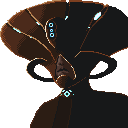
Not one person has mentioned Kefka; what the hell guys I thought you were on the ball.
In my game, I am very carefully going out of my way to ensure that the antagonists aren't presented as moustache-twirling, cloak-flipping villains who appear briefly to berate you and to summon boss monsters. The ultimate goal/s that the two sides represent should be more of a moral conundrum than a matter of flat good and evil; I guess, in short, I'm subverting this - by trying to make the bad guys not look so bad. An additional layer is that the world setting is pretty bleak; it's not going to make much difference if you "SAVE TEH WORLD" if the world isn't very worth saving to begin with.
As far as "lol buy the sequel" - I'd say don't do it just for that effect, BUT, I do love endings that leave some things open to interpretation.
As far as "lol buy the sequel" - I'd say don't do it just for that effect, BUT, I do love endings that leave some things open to interpretation.
i think people would generally be more willing to try interesting things with jrpg stories if they were more willing to ditch the stale bildungsroman "save the world" thing
note that this isn't directed at you or anything versalia, just your mention of "SAVE TEH WORLD" brought it to my attention (plus having a world that is too shit to be worth saving is a pretty good way to subvert the whole thing anyway)
edit: goddamn your avatar chaos. goddamn it to hell.
note that this isn't directed at you or anything versalia, just your mention of "SAVE TEH WORLD" brought it to my attention (plus having a world that is too shit to be worth saving is a pretty good way to subvert the whole thing anyway)
edit: goddamn your avatar chaos. goddamn it to hell.

This could work, and set up precedent for future games without leaving so much to be desired that players are forced to buy subsequent games just to get the whole story.
For example.
Hero A, lets call him Mark, is not really so much a hero. One of those reluctant heroes you hear so much about. He is dragged into a large conflict because his Fiancée, lets call her Kelly, is taken along with all the other villagers in his hometown for some sinister plot by the main villain. Mark manages to avoid it, somehow, and sets out to rescue his Fiancée.
Done properly, this could be the ultimate goal for your hero. Save his girlfriend. That doesn't necessarily mean beat the bad guy, or save the world, or even rescue the other villagers. It would take a strong narrative muscle to manage to progress the villain's story at the same time so that the game doesn't appear to just be about Mark and Kelly, with all sorts of other stuff going on that is mostly meaningless, but it could work and would offer something slightly off the beaten path.
For example.
Hero A, lets call him Mark, is not really so much a hero. One of those reluctant heroes you hear so much about. He is dragged into a large conflict because his Fiancée, lets call her Kelly, is taken along with all the other villagers in his hometown for some sinister plot by the main villain. Mark manages to avoid it, somehow, and sets out to rescue his Fiancée.
Done properly, this could be the ultimate goal for your hero. Save his girlfriend. That doesn't necessarily mean beat the bad guy, or save the world, or even rescue the other villagers. It would take a strong narrative muscle to manage to progress the villain's story at the same time so that the game doesn't appear to just be about Mark and Kelly, with all sorts of other stuff going on that is mostly meaningless, but it could work and would offer something slightly off the beaten path.
prexus: I often get tired of that sort of "small goal" driving bigger adventures, though. Arc the Lad: Twilight of Spirits and Tales of Symphonia are two games I can think of that throw you through gauntlets and gauntlets of dungeons in pursuit of your sister/some girl.
I start thinking "God, now we're in the Temple of Ice looking for the Mystical Shard so I can help these assholes do a thing so they can in turn help me rescue her, and I've killed six bosses and quelled the uprising of an army, can I just rescue my sister now and advance the plot to a more interesting goal"
There's almost never NOT a scenario in which "Rescue your loved one!" segues into a more complex and evolved issue, because it is so laughably basic. (What if you find out she was kidnapped by an organization of slave-trading women-kidnappers? That's a natural progression to wanting to take down this crime ring.) In fact, it's practically the most cliche of RPG motivations, tied with SAVE TEH WORLD.
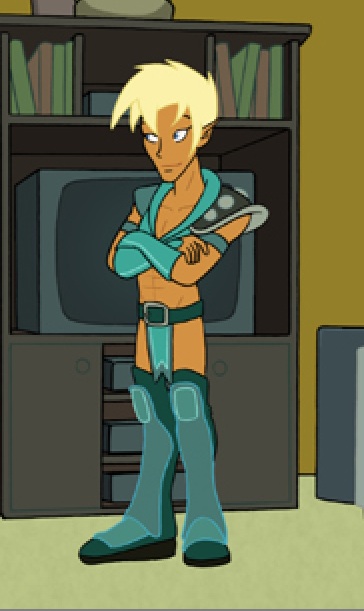
I'M ON A NEVERENDING QUEST TO SAVE MY BOYFRIEND
in short: needing to rescue Princess Zelda is a really boring end goal
I start thinking "God, now we're in the Temple of Ice looking for the Mystical Shard so I can help these assholes do a thing so they can in turn help me rescue her, and I've killed six bosses and quelled the uprising of an army, can I just rescue my sister now and advance the plot to a more interesting goal"
There's almost never NOT a scenario in which "Rescue your loved one!" segues into a more complex and evolved issue, because it is so laughably basic. (What if you find out she was kidnapped by an organization of slave-trading women-kidnappers? That's a natural progression to wanting to take down this crime ring.) In fact, it's practically the most cliche of RPG motivations, tied with SAVE TEH WORLD.
I'M ON A NEVERENDING QUEST TO SAVE MY BOYFRIEND
in short: needing to rescue Princess Zelda is a really boring end goal
What I meant though, was that you aren't tasked with thwarting armies and finding magical artifacts for other people, just to find your way to a small goal. The point was that that small goal was actually a huge goal in the eyes of the Hero, which he is more likely to be enlisting others to help him do, as opposed to helping others on his way there. Like I said, it can be done. But it would require very strong narrative skills.
author=prexus
What I meant though, was that you aren't tasked with thwarting armies and finding magical artifacts for other people, just to find your way to a small goal. The point was that that small goal was actually a huge goal in the eyes of the Hero, which he is more likely to be enlisting others to help him do, as opposed to helping others on his way there. Like I said, it can be done. But it would require very strong narrative skills.
then I'll agree with your point and reiterate
but it would require very strong narrative skills.
I look at what I've tasked myself with on this project, and I hope to god I have the narrative strength to pull it off.
Corfaisus
"It's frustrating because - as much as Corf is otherwise an irredeemable person - his 2k/3 mapping is on point." ~ psy_wombats
7874
While a few of us are explaining what we seek to accomplish with our games that lie just outside of "good hero saves world. END", you could make the world "un-save-able" because the villain is killed, either out of a balance or him being the only one who knows how to restore the decaying land. You could also have a villain that led a life of evil called for by a "master" figure, but strives towards redemption when he realizes only too late that his life went to shit because of his choice, even if not in the hero's eyes but in the eyes of the governing deities. This way he doesn't necessarily fall into the "bad guy turned good" character, but more of a villain who achieved his own end, which in my game feeds into what I was explaining earlier.
Somehow, I swear I'll make the world coming to an end work.
If your game just so happens to follow the cookie-cutter, completely uninspiring "good hero save world. END" storyline, any greater attempt at having the bad guy win will seem nothing more than a slap in the face after all that the player went out of their way to do.
Somehow, I swear I'll make the world coming to an end work.
If your game just so happens to follow the cookie-cutter, completely uninspiring "good hero save world. END" storyline, any greater attempt at having the bad guy win will seem nothing more than a slap in the face after all that the player went out of their way to do.

