Full Games List
 Featured Games
 New Games
 Reviews
 Media
Media Images
 Blogs
Blogs Game Updates
 Images Feedback Summary
 Game Design Highlights
 Tutorials
 Scripts
 Utilities / Plugins
 Resources
 Engines
 Engine Bulletins
 What is Makerscore?
 Past Events
 Achievements
 Misaos
 Forums
 Post History
 Chat
Chat New to RMN?
 Full Store List
 RMN Music Pack (free)



 Profile
 Locker
 Play Lists
STORMCROWFLEET'S PROFILE
 Close
CloseSearch
Filter
 All
All Game Pages
 User Statuses
 On Story Structure
Taken from Wikipedia on Campbell work on comparative religion and myth :
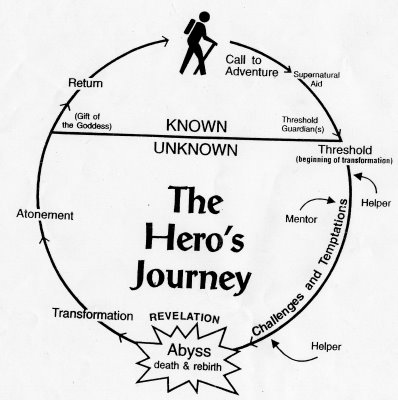
''The hero starts in the ordinary world, and receives a call to enter an unusual world of strange powers and events (a call to adventure). If the hero accepts the call to enter this strange world, the hero must face tasks and trials (a road of trials), and may have to face these trials alone, or may have assistance. At its most intense, the hero must survive a severe challenge, often with help earned along the journey. If the hero survives, the hero may achieve a great gift (the goal or "boon"), which often results in the discovery of important self-knowledge. The hero must then decide whether to return with this boon (the return to the ordinary world), often facing challenges on the return journey. If the hero is successful in returning, the boon or gift may be used to improve the world (the application of the boon).
Very few myths contain all of these stages - some myths contain many of the stages, while others contain only a few; some myths may have as a focus only one of the stages, while other myths may deal with the stages in a somewhat different order. These stages may be organized in a number of ways, including division into three sections: Departure (sometimes called Separation), Initiation and Return. "Departure" deals with the hero venturing forth on the quest, "Initiation" deals with the hero's various adventures along the way, and "Return" deals with the hero's return home with knowledge and powers acquired on the journey.
The classic examples of the monomyth relied upon by Campbell and other scholars include the stories of Osiris, Prometheus, the Buddha, Moses, and Christ, although Campbell cites many other classic myths from many cultures which rely upon this basic structure.''
http://upload.wikimedia.org/wikipedia/commons/6/61/Heroesjourney.jpg
Check that picture, take a game or a movie that is famous, like Final Fantasy VII or Star Wars, and you'll see that even if there is minor details that may add something, it follow up that pattern.
I'm not saying to use that pattern, but invariably, most of the myth invented by humans follow this pattern. So if you don't want to write shit because you don't know how to write decent story structure, well follow the pattern, at least you'll have something that human subconscience will recognize.
''The hero starts in the ordinary world, and receives a call to enter an unusual world of strange powers and events (a call to adventure). If the hero accepts the call to enter this strange world, the hero must face tasks and trials (a road of trials), and may have to face these trials alone, or may have assistance. At its most intense, the hero must survive a severe challenge, often with help earned along the journey. If the hero survives, the hero may achieve a great gift (the goal or "boon"), which often results in the discovery of important self-knowledge. The hero must then decide whether to return with this boon (the return to the ordinary world), often facing challenges on the return journey. If the hero is successful in returning, the boon or gift may be used to improve the world (the application of the boon).
Very few myths contain all of these stages - some myths contain many of the stages, while others contain only a few; some myths may have as a focus only one of the stages, while other myths may deal with the stages in a somewhat different order. These stages may be organized in a number of ways, including division into three sections: Departure (sometimes called Separation), Initiation and Return. "Departure" deals with the hero venturing forth on the quest, "Initiation" deals with the hero's various adventures along the way, and "Return" deals with the hero's return home with knowledge and powers acquired on the journey.
The classic examples of the monomyth relied upon by Campbell and other scholars include the stories of Osiris, Prometheus, the Buddha, Moses, and Christ, although Campbell cites many other classic myths from many cultures which rely upon this basic structure.''
http://upload.wikimedia.org/wikipedia/commons/6/61/Heroesjourney.jpg
Check that picture, take a game or a movie that is famous, like Final Fantasy VII or Star Wars, and you'll see that even if there is minor details that may add something, it follow up that pattern.
I'm not saying to use that pattern, but invariably, most of the myth invented by humans follow this pattern. So if you don't want to write shit because you don't know how to write decent story structure, well follow the pattern, at least you'll have something that human subconscience will recognize.
Pages:
1
 Games - Tester
 Games - Other