



 Full Games List
 Featured Games
 New Games
 Reviews
 Media
Media Images
 Blogs
Blogs Game Updates
 Images Feedback Summary
 Game Design Highlights
 Tutorials
 Scripts
 Utilities / Plugins
 Resources
 Engines
 Engine Bulletins
 What is Makerscore?
 Past Events
 Achievements
 Misaos
 Forums
 Chat
Chat New to RMN?
 Full Store List
 RMN Music Pack (free)



 Profile
 Locker
 Play Lists
BLITZEN'S PROFILE
Blitzen

3253
 Close
Close
i like breakfast
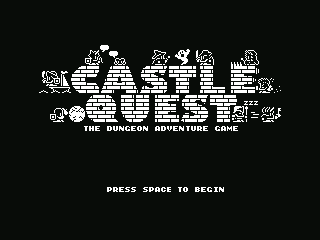
Castle Quest Demo
"...This game is fun and different than any other RPG Maker game." - Maia "Your game seems so cool, I might actually download it." - Cop Killa
"...This game is fun and different than any other RPG Maker game." - Maia "Your game seems so cool, I might actually download it." - Cop Killa

Search
Filter
 All
All Game Pages
 User Statuses
 Missiongarde Worldbuilding -- countries for sale!
Ricardir Gardeheim
King Ricardir Gardeheim XXVIII, 'the Undying', His Majesty, King of Missiongarde, Prince of Avrion, Regent of Roenfeld, Keeper of the Undersool.
Ricardir Gardeheim was king of Missiongarde for the longest contiguous period. Coming to the crown at the age of 12, after the natural death of his father, he took up the mantle of the kingship with a serious and strongarmed attitude, having a violent passion for the powers and traditions of the monarchy created frequent conflicts with the Parliament.
The Undersool the came under his guard when the nearby Kingdom of Roenfeld was cursed under a mysterious spell. All the citizens had turned to amber, save the Princess Roena, who was sealed in a block of ice. Ricardir set up an outpost near Roenfeld and declared its annexation, but no one enters the kingdom for fear of the curse, not even to unthaw the princess. As such, the Undersool, a series of elaborate, icy, mines and caves, has not been entered for years, despite its rich amber resources and mineral wealth.
His epithet 'the Undying' comes from his prolonged 56 years where he was confined to bed with a mysterious illness. The king himself, despite a haughty cough and frequent bouts of arrythmia, practiced calesthentics and selective nutrition judiciously. Ruling the kingdom from his private quarters for the remainder of his life, rarely making public appearances, the king became disattached from wordly affairs after his wife of seventy years, Queen Allobelle, died in 980. While weak and infeebled, doctors' predictions of his death always proved to be premature: the man lived to be 103 years old before he was found murdered in his bed.
King Ricardir Gardeheim XXVIII, 'the Undying', His Majesty, King of Missiongarde, Prince of Avrion, Regent of Roenfeld, Keeper of the Undersool.
Ricardir Gardeheim was king of Missiongarde for the longest contiguous period. Coming to the crown at the age of 12, after the natural death of his father, he took up the mantle of the kingship with a serious and strongarmed attitude, having a violent passion for the powers and traditions of the monarchy created frequent conflicts with the Parliament.
The Undersool the came under his guard when the nearby Kingdom of Roenfeld was cursed under a mysterious spell. All the citizens had turned to amber, save the Princess Roena, who was sealed in a block of ice. Ricardir set up an outpost near Roenfeld and declared its annexation, but no one enters the kingdom for fear of the curse, not even to unthaw the princess. As such, the Undersool, a series of elaborate, icy, mines and caves, has not been entered for years, despite its rich amber resources and mineral wealth.
His epithet 'the Undying' comes from his prolonged 56 years where he was confined to bed with a mysterious illness. The king himself, despite a haughty cough and frequent bouts of arrythmia, practiced calesthentics and selective nutrition judiciously. Ruling the kingdom from his private quarters for the remainder of his life, rarely making public appearances, the king became disattached from wordly affairs after his wife of seventy years, Queen Allobelle, died in 980. While weak and infeebled, doctors' predictions of his death always proved to be premature: the man lived to be 103 years old before he was found murdered in his bed.
Understanding Fun Game Design ~ Case Study: Tetris
What are you thinking about right now?
Nearly at two thousand words
And I can't keep from slacking.
It's not that I'm not worried,
It's that motivation's lacking.
I think when all is said and done,
And I get home to bed,
I'll kick myself for goofing off
And writing poems instead.
And I can't keep from slacking.
It's not that I'm not worried,
It's that motivation's lacking.
I think when all is said and done,
And I get home to bed,
I'll kick myself for goofing off
And writing poems instead.
..:: RMN 2009 Event Calendar ::..
Understanding Fun Game Design ~ Case Study: Tetris
Understanding Fun Game Design ~ Case Study: Tetris
Lets get down to the lowest common denominator, something each and every one of us probably knows off by heart. I love Tetris. It's like a cultural institution in and of itself. The world could be ending and while some of us will be fighting off the minions of Satan and others will be ascending to paradise, the rest of us will probably be playing Tetris.
When I was young its not quite something I could come to understand. The pieces fall down and you try and move them so they don't pile up and hit the top of the screen, and then the Gameboy yells at you with a screech that sounds like an elf getting caught in his zipper. Simple enough? Not exactly. Tetris is actually far more complicated than it looks, and while its venire may appear basic, underneath is a whole net of meanings and systems that combine to make it what it is. The experiences it creates rival the greatest joys and the lowest despairs in life. One game can make you the dominator, the underdog, the underachiever, and the desperate. In a way, you don't play Tetris - Tetris plays you.
The game rules, as I said before, are simple enough. In basic ‘marathon' mode (labeled Type-A in the original Gameboy version, you play until you lose. “Tetroids,†groups of four contiguous blocks arranged in a variety of ways, fall from the top of the screen. In the confines of the space provided, you navigate them as to form lines. If a whole line is formed from side to side, the line clears and you get points. Not only this, but you can clear multiple lines at once, if you try. For every 10 lines you clear you go up a level, for every level you go up the game gets faster and faster. Usually around level 12, if you don't know what you're doing, the speed of the game will get the better of you and you will lose and proceed to cry like a little girl. For the love of God, pull yourself together.
The straightforwardness of this ludology is deceiving. How can this simple set of structures create such awesome low-level narrative experiences? This is what we're going to find out.
Lets start with the blocks. These pieces actually have no inherent meaning or value outside of the game. They are simply a set of all possible four-unit tetrads. What gives them their meaning is the way that they are used in the ludology (that usually means the ‘rules' for those of you who don't speak gamish yet.) There are the crooked ones, the L-shaped ones, and then the veritable pig in the Tetris pantry, the square one. There is actually a really complex brick-selection algorithm lying behind what seems like a random choice on behalf of the computer. Which brick you get next is out of your hands, but it is optimized to enhance your game play experience. But remember, the pieces are just abstract pieces. They have no value aside from that which we ascribe them in the context of the game. But, if I were to say “What is the most valuable piece in Tetris?†I bet you would say the straight piece. On this I would agree, but not because there is something about four well-aligned blocks which is inherently valuable. What makes it valuable how the game provides us with the opportunity for us to ascribe value to it.
What makes the straight piece valuable is the fact that it is the only block capable of creating a “Tetrisâ€, a simultaneous four-line clearance. It's worth the most points, and you're rewarded by a cute little squeal from the game. If you are looking for points or for the quick level-up, the straight piece then becomes the lynchpin of your strategy. You will arrange the other blocks with a gap (a favorite tends to be a one-unit empty space on one side of the field). You anticipate it, you hope for it to come. If it does, you've completed a short term goal, and if it doesn't you might have to compromise or deal with the increasing difficult circumstance of managing the rest of the field while trying to keep the space open. At what point do you abandon it? Are you going to be disappointed or relieved? Satisfied or angered? The game has created the possibility for emotion to emerge through the way you play it. Creates an emotional experience simply and solely out of its ludology is, in my opinion, evidence of an excellent game design.
Lets look at another way the ludology creates emotion. Tetris makes use of a little game design trope I like to call the ‘multiplier factor.' As you progress through the game play experience, some variable which influences the pace of gameplay increases at a set rate. In Tetris, this is the speed at which the blocks descend into the playfield. Each time you clear 10 lines, you go up a level, and this speed increases. This, like anything else in the game, has no inherent value aside from that which we give it. The game speeding up is not presented as an inherently good thing or a bad thing; it's just simply part of the design. Yet, as the game speeds up, we find ourselves having to cope with the increasing pace. We start to think and act faster. Eventually the speed may get the better of us and we might not be able to keep up. You start to lose control, but you don't want to lose. You might feel anxiety or, if you are playing up near the top of the field, desperation. I have seen people nearly break their teeth by stressing so hard over those last few seconds of a lost game of Tetris. And they love it.
So, there we go. A thousand words on Tetris.
Lets get down to the lowest common denominator, something each and every one of us probably knows off by heart. I love Tetris. It's like a cultural institution in and of itself. The world could be ending and while some of us will be fighting off the minions of Satan and others will be ascending to paradise, the rest of us will probably be playing Tetris.
When I was young its not quite something I could come to understand. The pieces fall down and you try and move them so they don't pile up and hit the top of the screen, and then the Gameboy yells at you with a screech that sounds like an elf getting caught in his zipper. Simple enough? Not exactly. Tetris is actually far more complicated than it looks, and while its venire may appear basic, underneath is a whole net of meanings and systems that combine to make it what it is. The experiences it creates rival the greatest joys and the lowest despairs in life. One game can make you the dominator, the underdog, the underachiever, and the desperate. In a way, you don't play Tetris - Tetris plays you.
The game rules, as I said before, are simple enough. In basic ‘marathon' mode (labeled Type-A in the original Gameboy version, you play until you lose. “Tetroids,†groups of four contiguous blocks arranged in a variety of ways, fall from the top of the screen. In the confines of the space provided, you navigate them as to form lines. If a whole line is formed from side to side, the line clears and you get points. Not only this, but you can clear multiple lines at once, if you try. For every 10 lines you clear you go up a level, for every level you go up the game gets faster and faster. Usually around level 12, if you don't know what you're doing, the speed of the game will get the better of you and you will lose and proceed to cry like a little girl. For the love of God, pull yourself together.
The straightforwardness of this ludology is deceiving. How can this simple set of structures create such awesome low-level narrative experiences? This is what we're going to find out.
Lets start with the blocks. These pieces actually have no inherent meaning or value outside of the game. They are simply a set of all possible four-unit tetrads. What gives them their meaning is the way that they are used in the ludology (that usually means the ‘rules' for those of you who don't speak gamish yet.) There are the crooked ones, the L-shaped ones, and then the veritable pig in the Tetris pantry, the square one. There is actually a really complex brick-selection algorithm lying behind what seems like a random choice on behalf of the computer. Which brick you get next is out of your hands, but it is optimized to enhance your game play experience. But remember, the pieces are just abstract pieces. They have no value aside from that which we ascribe them in the context of the game. But, if I were to say “What is the most valuable piece in Tetris?†I bet you would say the straight piece. On this I would agree, but not because there is something about four well-aligned blocks which is inherently valuable. What makes it valuable how the game provides us with the opportunity for us to ascribe value to it.
What makes the straight piece valuable is the fact that it is the only block capable of creating a “Tetrisâ€, a simultaneous four-line clearance. It's worth the most points, and you're rewarded by a cute little squeal from the game. If you are looking for points or for the quick level-up, the straight piece then becomes the lynchpin of your strategy. You will arrange the other blocks with a gap (a favorite tends to be a one-unit empty space on one side of the field). You anticipate it, you hope for it to come. If it does, you've completed a short term goal, and if it doesn't you might have to compromise or deal with the increasing difficult circumstance of managing the rest of the field while trying to keep the space open. At what point do you abandon it? Are you going to be disappointed or relieved? Satisfied or angered? The game has created the possibility for emotion to emerge through the way you play it. Creates an emotional experience simply and solely out of its ludology is, in my opinion, evidence of an excellent game design.
Lets look at another way the ludology creates emotion. Tetris makes use of a little game design trope I like to call the ‘multiplier factor.' As you progress through the game play experience, some variable which influences the pace of gameplay increases at a set rate. In Tetris, this is the speed at which the blocks descend into the playfield. Each time you clear 10 lines, you go up a level, and this speed increases. This, like anything else in the game, has no inherent value aside from that which we give it. The game speeding up is not presented as an inherently good thing or a bad thing; it's just simply part of the design. Yet, as the game speeds up, we find ourselves having to cope with the increasing pace. We start to think and act faster. Eventually the speed may get the better of us and we might not be able to keep up. You start to lose control, but you don't want to lose. You might feel anxiety or, if you are playing up near the top of the field, desperation. I have seen people nearly break their teeth by stressing so hard over those last few seconds of a lost game of Tetris. And they love it.
So, there we go. A thousand words on Tetris.
Team-Captin RMN
Name: Hawk McCutcheon
Looks: Like Dick Tracy but no hat and maybe a well groomed beard and also nice pair of slacks. Give him a bit of cyberpunk panache.
Power: Common Sense, and, of course, poisoned thumbtacks.
Team: Captin, of course.
Looks: Like Dick Tracy but no hat and maybe a well groomed beard and also nice pair of slacks. Give him a bit of cyberpunk panache.
Power: Common Sense, and, of course, poisoned thumbtacks.
Team: Captin, of course.
 On Video Games and Narrative
Uh... I think I just broke the site.
I submitted an article and now whenever I visit any page aside from the forums, I can see all the code pop up in a textbox thing on screen. I dunno if this is common, but it wierded me out so I thought I'd let the world know.
This is what shows up...
EDIT: okay it went away nevermind situation normal
This is what shows up...
Close<h1>Add Article</h1> <div class="contents"> <form method="post" action=""> <div class="row"><div class="info"><label for="id_name">Name:</label></div><div class="field"><input type="text" name="name" class="text" /></div><div class="info"></div></div> <div class="row"><div class="info"><label for="id_category">Category:</label></div><div class="field"><select name="category" id="id_category"> <option value="10">Articles - Programming and Mathematics</option> <option value="1">Articles - Artist Workshop</option> <option value="2">Articles - Game Design and Theory</option> <option value="4">Articles - Writer's Block</option> <option value="5">Articles - Who Knows?</option> <option value="8">Tutorials - ika</option> <option value="6">Tutorials - RPG Maker 2000/2003</option> <option value="7">Tutorials - RPG Maker XP</option> <option value="9">Tutorials - Sphere</option> <option value="11">Tutorials - Game Maker</option> <option value="12">Tutorials - RPG Maker VX</option> </select></div><div class="info"></div></div> <div class="row"><div class="info"><label for="id_description">Description:</label></div><div class="field"><input type="text" name="description" class="text" /></div><div class="info"></div></div> <div class="row"><div class="info"><label for="id_contents">Contents:</label></div><div class="field"><textarea id="id_contents" rows="10" cols="40" name="contents"></textarea></div><div class="info"> BBCode Allowed<br></div></div> <div class="buttons"> <input class="button" type="submit" value="Continue"> </div> </form> </div>
EDIT: okay it went away nevermind situation normal
How do some of you complete games so fast?
One should not RPGMake for the goal of the RPG. Rather, one must realize that the best life exists in the act of making in and of itself. To strive is nobler than to achieve, to reach is nobler than to touch.
 Games - Tester
 Games - Other
