



 Full Games List
 Featured Games
 New Games
 Reviews
 Media
Media Images
 Blogs
Blogs Game Updates
 Images Feedback Summary
 Game Design Highlights
 Tutorials
 Articles
 Scripts
 Utilities / Plugins
 Resources
 Engines
 Engine Bulletins
 What is Makerscore?
 Past Events
 Achievements
 Misaos
 Forums
 Chat
Chat New to RMN?
 Full Store List
 RMN Music Pack (free)



 Profile
 Locker
 Play Lists
DARKEN'S PROFILE
Darken

3952
 Close
Close
*blows dust off ancient readme.txt*
Currently working on: The Machine that Breathes https://store.steampowered.com/app/1126210/the_machine_that_BREATHES/ (Please wishlist!)
Currently working on: The Machine that Breathes https://store.steampowered.com/app/1126210/the_machine_that_BREATHES/ (Please wishlist!)
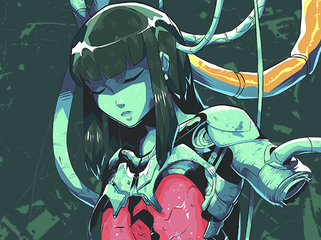
the machine that BREATHE...
A tunneling machine finds itself injected into a body resembling a human.
A tunneling machine finds itself injected into a body resembling a human.



Search
Filter
 All
All Game Pages
 User Statuses
 Is this site dead? Newcomer.
$250,000 budget - What's possible?
Ideally... realistically.... it's impossible to math it out. I would not use simple game jam games from solo devs using off the shelf assets as a measuring stick for larger complete games, they're just fundamentally different. Things can multiply or get out of hand with bad management or multiple people, or if the project is vaguely ambitious enough that you can't lay it out in JIRA tickets. The OP is extremely vague about whether they want straight up Chrono Trigger (combat and all) or a really basic 5/10 Dragon Quest clone with Chrono Trigger graphics (or whatever's referenced).
The problem is generally lining up production so that the level designers/map makers can make the content by the time art is shuffled in, and you aren't constantly sending back revisions and changing things. Depending on how easily satisfied you are and aren't asking for the world. By Chrono Trigger you mean the battle system? Because someone's likely have to script that (or find an existing plugin) and that will push back the content creation back more. Mappers will also need to talk to whoever is designing the battles, or be the same person. If anyone has to work with each other directly, that creates a huge question mark in how efficiently content can be made.
The content would have to be very town->dungeon->boss->town and made like kraft dinner over and over to be easy to estimate. I'm assuming there's no fishing mini game, no potion/crafting system no weird attention to detail bullshit, no giant dragon setting a town on fire crazy setpiece or anything super animated that can't be done with charsets hopping around and bumping into each other. Each additional thing you add is going to require more complexity or at least cooperation between team members of how best to put it together. Without those things I'd say 250k is likely overbudget unless the game is going nowhere and you need to keep people employed to keep making stuff because you can't make up your mind on what you want from day 1.
tldr: I'd be very specific about what you want for any estimate from any of us to be helpful. Money can't solve bad direction or management.
The problem is generally lining up production so that the level designers/map makers can make the content by the time art is shuffled in, and you aren't constantly sending back revisions and changing things. Depending on how easily satisfied you are and aren't asking for the world. By Chrono Trigger you mean the battle system? Because someone's likely have to script that (or find an existing plugin) and that will push back the content creation back more. Mappers will also need to talk to whoever is designing the battles, or be the same person. If anyone has to work with each other directly, that creates a huge question mark in how efficiently content can be made.
The content would have to be very town->dungeon->boss->town and made like kraft dinner over and over to be easy to estimate. I'm assuming there's no fishing mini game, no potion/crafting system no weird attention to detail bullshit, no giant dragon setting a town on fire crazy setpiece or anything super animated that can't be done with charsets hopping around and bumping into each other. Each additional thing you add is going to require more complexity or at least cooperation between team members of how best to put it together. Without those things I'd say 250k is likely overbudget unless the game is going nowhere and you need to keep people employed to keep making stuff because you can't make up your mind on what you want from day 1.
tldr: I'd be very specific about what you want for any estimate from any of us to be helpful. Money can't solve bad direction or management.
Is AI generated art ethical?
I'd compare it to having everyones art jpegs being thrown into a blender. You can't point to which art contributed to whatever result, but you can certainly point to what was put into the blender in the first place.
$250,000 budget - What's possible?
Old/Lost RpgMaker Games - SegNin's Rare/Obscure RM Games Request Topic

Is AI generated art ethical?
They literally just scrape stuff from google images and deviant art and the associate tags. it's not really AI just a large lump of stastical branching data that brute forces text/image pairs until it resembles something in a very roundabout way. The way it runs is that it's always going to run on human input, so the output can't possibly go outside of its own thing til a concept artist posts something new on artstation. It also has a lot of problems with hands and faces or even just displaying a proper prop on its own.
At best right now it's kinda useful for photobashing stuff... if you're an artist.If you want weird happy accident ideas and don't end up using the generated art itself and just as inspiration it can be a decent tool. Though the general output is pretty boring and samey, a lot of "art styles" are indicative of the ai model moreso than the prompt. I genuinely think the results are boring and shallow to look at after awhile. It's the same with retro sound effects made in BFXR, you can just tell where and how it was made. I have a stable diffusion setup on my PC and kinda stopped getting curious after a week.
What makes art interesting isn't really the detail or the realism portrayed but usually observations, human observations. You are still living in the renaissance period if your goal with art is to create stunning reality because that's been played out for years. A lot of artists I think take to certain aethetics or quirks and explore them to a very personal level. That just isn't really relayed in ai art generation. This is all subjective but I feel like a lot of ai art people who take ownership of this stuff treat art like some objective thing and that they have conquered it. The attitude these people have of treating art skills as freakish gifted powers like in X-Men or some shit is just stupid.
At best right now it's kinda useful for photobashing stuff... if you're an artist.If you want weird happy accident ideas and don't end up using the generated art itself and just as inspiration it can be a decent tool. Though the general output is pretty boring and samey, a lot of "art styles" are indicative of the ai model moreso than the prompt. I genuinely think the results are boring and shallow to look at after awhile. It's the same with retro sound effects made in BFXR, you can just tell where and how it was made. I have a stable diffusion setup on my PC and kinda stopped getting curious after a week.
What makes art interesting isn't really the detail or the realism portrayed but usually observations, human observations. You are still living in the renaissance period if your goal with art is to create stunning reality because that's been played out for years. A lot of artists I think take to certain aethetics or quirks and explore them to a very personal level. That just isn't really relayed in ai art generation. This is all subjective but I feel like a lot of ai art people who take ownership of this stuff treat art like some objective thing and that they have conquered it. The attitude these people have of treating art skills as freakish gifted powers like in X-Men or some shit is just stupid.
 Resurrect the Dying
ehhh not gonna make it, will probably just move my project to another game jam and repeat the process of not finishing it.
RIP to a legend: Rieko Kodama (Phantasy Star, Skies of Arcadia, 7th Dragon)

Sega Veteran And Industry Legend Rieko Kodama Has Passed Away. Normally I'm not one to super acknowledge celebrity/notable people deaths but this came to me as a shock as she wasn't that old (age 58) and the circumstances of about the knowledge of her death just kinda slipped out. Coincidentally I've had her work in my thoughts lately. She started out as an artist on a lot of notable early Sega titles and moved on to direct and produce most of the Phantasy Star games. So why don't we not only remember her but also just talk about some of the coolest RPGs?
I would describe the Phantasy Star series and the tangential Skies of Arcadia as alternate RPGs that cool kids liked. Aside from Phantasy Star IV they weren't always dominant critically or financially but I feel like the franchise has a unique flavor that isn't offered by the typical Final Fantasy. It's a bit like if SNK decided to make a JRPG (I guess Kouldeka counts? You know what I mean). A familiar RPG format approached by developers that come from an arcade background that leads to something offbeat further varying what can be done with the genre. There's something inspiring about its approach to the battle views or the way story telling was done in her work. Although she wasn't directly involved in games like Sakura Wars, Phantasy Star Online or Valkyria Chronicles you can definitely feel the influence and legacy of SEGA's earlier RPGs bleeding into them.
Skies of Arcadia is also notable for being the first RPG to really take advantage of hardware beyond the typical ps1/saturn hardware limits. Detailed in this clip here of Rieko Kodama talking about the environments and the added bonus of having an actual draw distance it's easy to forget how far RPGs have come. Sure FFX would come out a year later but there's something about Skies behind the character camera view and the sky island setting that left a lot to the imagination. Unfortunately due to the failure of the Dreamcast it's hard to justify putting budget behind such a type of game (something she sadly blames herself partially for).
There's also the 7th Dragon series which I have not gotten around to playing but is a collaboration between her and an Etrian Odyssey developer that also goes for an alternative vibe that's clearly indicative of Rieko's career and track record. The first game on DS is fans translated (and I believe just about any other game has some means of English availability), so it's a good time as any for me to actually get around to playing it on a weekend break or so. Also forgot to mention another game she directed Magic Knight Rayearth RPG on Sega Saturn of all things.


Anyways, life is short, and can get shorter. So while we're living and breathing, might as well give some thoughts on the most baller RPGs on the planet and appreciate the time we have left.

Empty objects in dungeon exploration
My entire current game is just:
enter room > exhaust potential item/lore spots >or engage with an enemy > or bump into an obstacle that forces you to find an accessible room to find an item that might unlock said obstacle giving you access to another room, repeat.
That's extremely simplified but it's what it essentially boils down to when I think of what to put in a room when there's no enemies. I think the audience will probably just accept that because that's especially expected in a survivor horror game where digging through glowy trash bins is a break from the intensity of claustrophobic combat. Explore > Combat is just really tried and true especially for a "what the fuck happened here" game. No one sets out to make a rummaging game but most games end up being them. The common line of thinking is just: "I need a reason why the player can't just bee line to the boss, I'll put an obstacle that forces you to take the long way around and maybe backtrack, oh I know I'll put little crumbs along the way"
A lot of my ideas on addressing the issues equate to redoing how the structure is even setup in the first place. Though I don't know if they're issues to be solved so much as a format that is pretty reliable in creating just enough filler between the meat.
There are some things I try to do to break up exploration within the format:
-Give the player 3 locked rooms but one key, then just tell the player what's actually in the rooms via security camera hacking. In a classic zelda scenario you just kind of open doors willy nilly, so I think an aspect of informing the player what they're going to get out of it now and withholding the non-chosen items longer is enough to create some kind of neuron light up in the player's brain. Especially if the items are of actual benefit, even if objectively just one of them is. It's basically just MMO quests but embedded into the room scavenging.
-Areas that are completely optional, are unlocked by items that are also completely optional to find, these items will also make combat not just easier but different especially with limited inventory. Somewhat metroidy but a little more "what do I bring with me and how will that affect combat once I'm out there unlocking an optional area" Generally though its just making cool new abilities in spots that there'd usually be uh 21 gold pieces... to mix it up as opposed to putting them in mandatory spots of importance or after a boss.
-Weird setpiece moments that aren't cutscenes before getting stuff. It's hard to think of an existing example for what I mean, but creating an in-game moment that doesn't feel like a puzzle or obstacle but just something that reacts to what the player is doing and feels different from the rest of the game. In one room I have a friendly robot NPC that just follows you around, its not explained on what it does. But when you go near a broken lore terminal it goes towards and repairs it (and maybe unlocks some item for you). The exact same thing could have been functionally done by just having the player walk up to the terminal or look for a repair tool to fix the terminal but the NPC just exists to make it feel different and maybe initially confuse the player. Though I'm also just making it to just create a "moment." beyond gameplay or story. This robot also appears maybe 2 times in the entire game.
So I guess what if the NPC opened the cabinet for you and gave you an item for talking to them? It seems pointless but contextually it's technically different and even just the confusion of "huh? is this a puzzle? do I gotta do something for this? no wait my gameplay brain can go to sleep" is something. Just don't do it 50 times in a row I guess.
-Making environments and item placements not as static. So basically there's a bridge that collapses and takes you to another area, if you use an explosive trap near it that is. That collapsed bridge however will block off an area preventing you to getting a desired item, if there's an enemy on the bridge when it collapses the enemy will from now on spawn from under it if you don't kill it. Also the lack of a bridge prevents a convenient shortcut. Lot of moving parts going on but basically without even the player intending it the places to get items or engage with enemies can be changed and morphed. Just planting the idea that the player could have been safely rummaging vs frantically rummaging vs rummaging later is enough to break up the monotony.
---
Universally I think all of my points boil down to break it up as much as you can and create variety. Subvert the "gonna go into a room and A to B the nearest pot" expectation when you think it's about to get old, then fall back into it for the sake of dev time -> play time efficiency. Otherwise I'd probably throw everything out the window and make something akin to Death Stranding or Ben Foddy's Getting Over It, where the terrain itself is the gameplay there are no items to scavenge (other than to maybe carry) and the incidental nature of the levels themselves creates unexpected interactions. That's a super nuclear option though. I don't have anything to elaborate on that idea guy pitch but that's the direction I would look into and experiment with if I got sick of the cabinet scruvammaging whatever.
enter room > exhaust potential item/lore spots >or engage with an enemy > or bump into an obstacle that forces you to find an accessible room to find an item that might unlock said obstacle giving you access to another room, repeat.
That's extremely simplified but it's what it essentially boils down to when I think of what to put in a room when there's no enemies. I think the audience will probably just accept that because that's especially expected in a survivor horror game where digging through glowy trash bins is a break from the intensity of claustrophobic combat. Explore > Combat is just really tried and true especially for a "what the fuck happened here" game. No one sets out to make a rummaging game but most games end up being them. The common line of thinking is just: "I need a reason why the player can't just bee line to the boss, I'll put an obstacle that forces you to take the long way around and maybe backtrack, oh I know I'll put little crumbs along the way"
A lot of my ideas on addressing the issues equate to redoing how the structure is even setup in the first place. Though I don't know if they're issues to be solved so much as a format that is pretty reliable in creating just enough filler between the meat.
There are some things I try to do to break up exploration within the format:
-Give the player 3 locked rooms but one key, then just tell the player what's actually in the rooms via security camera hacking. In a classic zelda scenario you just kind of open doors willy nilly, so I think an aspect of informing the player what they're going to get out of it now and withholding the non-chosen items longer is enough to create some kind of neuron light up in the player's brain. Especially if the items are of actual benefit, even if objectively just one of them is. It's basically just MMO quests but embedded into the room scavenging.
-Areas that are completely optional, are unlocked by items that are also completely optional to find, these items will also make combat not just easier but different especially with limited inventory. Somewhat metroidy but a little more "what do I bring with me and how will that affect combat once I'm out there unlocking an optional area" Generally though its just making cool new abilities in spots that there'd usually be uh 21 gold pieces... to mix it up as opposed to putting them in mandatory spots of importance or after a boss.
-Weird setpiece moments that aren't cutscenes before getting stuff. It's hard to think of an existing example for what I mean, but creating an in-game moment that doesn't feel like a puzzle or obstacle but just something that reacts to what the player is doing and feels different from the rest of the game. In one room I have a friendly robot NPC that just follows you around, its not explained on what it does. But when you go near a broken lore terminal it goes towards and repairs it (and maybe unlocks some item for you). The exact same thing could have been functionally done by just having the player walk up to the terminal or look for a repair tool to fix the terminal but the NPC just exists to make it feel different and maybe initially confuse the player. Though I'm also just making it to just create a "moment." beyond gameplay or story. This robot also appears maybe 2 times in the entire game.
So I guess what if the NPC opened the cabinet for you and gave you an item for talking to them? It seems pointless but contextually it's technically different and even just the confusion of "huh? is this a puzzle? do I gotta do something for this? no wait my gameplay brain can go to sleep" is something. Just don't do it 50 times in a row I guess.
-Making environments and item placements not as static. So basically there's a bridge that collapses and takes you to another area, if you use an explosive trap near it that is. That collapsed bridge however will block off an area preventing you to getting a desired item, if there's an enemy on the bridge when it collapses the enemy will from now on spawn from under it if you don't kill it. Also the lack of a bridge prevents a convenient shortcut. Lot of moving parts going on but basically without even the player intending it the places to get items or engage with enemies can be changed and morphed. Just planting the idea that the player could have been safely rummaging vs frantically rummaging vs rummaging later is enough to break up the monotony.
---
Universally I think all of my points boil down to break it up as much as you can and create variety. Subvert the "gonna go into a room and A to B the nearest pot" expectation when you think it's about to get old, then fall back into it for the sake of dev time -> play time efficiency. Otherwise I'd probably throw everything out the window and make something akin to Death Stranding or Ben Foddy's Getting Over It, where the terrain itself is the gameplay there are no items to scavenge (other than to maybe carry) and the incidental nature of the levels themselves creates unexpected interactions. That's a super nuclear option though. I don't have anything to elaborate on that idea guy pitch but that's the direction I would look into and experiment with if I got sick of the cabinet scruvammaging whatever.
 Games - Tester
 Games - Other
