



 Full Games List
 Featured Games
 New Games
 Reviews
 Media
Media Images
 Blogs
Blogs Game Updates
 Images Feedback Summary
 Game Design Highlights
 Tutorials
 Articles
 Scripts
 Utilities / Plugins
 Resources
 Engines
 Engine Bulletins
 What is Makerscore?
 Past Events
 Achievements
 Misaos
 Forums
 Post History
 Chat
Chat New to RMN?
 Full Store List
 RMN Music Pack (free)



SCREENSHOT SURVIVAL 20XX
Posts

 Housekeeping
 View playlists
 Close
Close
author=bulmabriefs144That's what I do, I'm a big fan of the flavor text.
If you can't interact with it, it's fluff. So do the extra work and make it something to interact with, maybe?


Also here's not a bookcase read, but a wine cabinet read.

BUT IT TURNS OUT THAT THE COUCH WAS WHAT THE READ.
Though you can talk to just about every wine cabinet in there.
author=HousekeepingIf I just made an image on screen like this.
Counterpoint: I can't recall a single thing that I've ever read from a bookcase in an rpg.
I'm sure you'd remember.
If only because the jokes on it were so disgraceful.

I was toying with Final Fantasy chapsets I found on Charas. They are not perfect, but it's kinda pleasant to work with limited resources they offer. I have a feeling, I'll be moving back to Ace in day now.



author=bulmabriefs144
Given a game where all the bookcases have something to say and one where they are decoration where you can't interact with, which is the one more likely to be played for a long period of time?
If you can't interact with it, it's fluff. So do the extra work and make it something to interact with, maybe?
Something people don't do enough of is use their maps effectively to convey all kinds of things. Words and dialogue are not the only way to paint a picture about the world and the characters who live within it. Imagery is stronger and more subtle - it can help build your world and give characterisation to people you might not spend time on - like NPCs.
If it gives an insight to the game world or characters just by existing it isn't fluff. For example (yay, more examples!!! XD )

The NPC who lives here is rather young and still childish. They don't have much to their name but they live in comfort compared to the house below, from the same town.

Two best friends live here. They don't have much money to their name and the house is very simple, so things are quite bare. One of them is a hunter.

The person who lives in this house (this is the top floor) is an avid reader. They are a linguist and study language, so this is their office. It's bright an airy and empty of everything but what he needs to do his work.

The basement of a large townhouse, three bedrooms weren't enough when a small group joined the party, so they renovated the one-storage area for use. They also added a room for entertaining customers for the detective to use. The upper bedroom shows tidy personalities, while the bottom one shows that the character doesn't really care too much (leaving the bed unmade).

Another example of a messy personality. The guy that lives here is an inventor and shut-in, who spends his days reading, studying and experimenting with alchemical formulae. He's a slob, to boot.

It's not just characters, either. Plot can be expanded by mapping. Instead of a house going back to just how it was after being destroyed, or staying destroyed indefinitely, this shows how walls were patched up and a house was made whole again. Even the furniture is in different places than it used to be - because the original owner of the house was killed during the destruction.
Rather than have a character say "Oh, that x is such a slob." show it! Show instead of tell! It's more effective than a throw-away line that means nothing in the scheme of things. Images tell a thousand tales so fucking use your graphics people! No 1-room houses with a bed necessary. Except in retro games - they get a pass.
tl;dr: You don't need to read shelves in order for them to be of import. Images speak louder than words do, so use that to show the characterisation of your peeps and places.

This is fine and dandy. And yes, I agree. I believe I critiqued someone this week for making a map that didn't seem to have something consistent to say.
HOWEVER! My favorite indie game here was Love and War. It was the minor attention to goofy details. There was library in Lavie's house that covered the room. Yes, it could have simply been atmosphere and not readable. Instead, I wound up spending half an hour reading the books.
Okay, yes, we know he's an avid reader. But at the very least, you can have something like "It's mostly trashy romance novels" or "It's epic length fantasy books." We cannot tell from a bookcase whether he is on a children's reading level, whether his taste is mystery, or anything besides okay this guy is an avid reader.
Having bookshelves have something to "say" does not break immersion. It can only enhance it. Especially if you have short readable books. You can write histories of the world, conspiracy theories, even make up fables and legends. I seriously had a book called the Eternity Epic which had the characters simulate days of continuous reading (it was actually only maybe 15 text boxes, but the characters responded to it and summed up the plot).
When you spend the effort, the player feels loved. So if you care about who plays the game, yea.
Favorite games, btw? Lufia 1/2, Dragon Quest, Earthbound. Guess what they all have in common? Minor details and interactable objects.
You do need to read for it to be of import. Having a window into the parts of the game that are not talked about by characters fleshes out the world. Yes, a picture is worth a thousand words, but this doesn't mean by reading a few short books you can't catch some information left behind. Like that the guy who seems rather childish is actually an adult and has an interest in marine biology, he simply doesn't like to decorate, so he kept it that way since he had fond memories growing up, or maybe this is his kid's room who has moved away to college, and he's slept here lately but wanted to keep it the same. Or maybe examining the burn marks, you can figure out what caused them (acid, fire, or something electrical). Is the painting on the wall a Gauguin or a child's picture? Is the letter in the last picture from an admirer, or is it an eviction notice? You going to tell me it doesn't matter to worldbuilding and characterization? Because it does.
Given that you have the ability to insert pictures and text, having a mass of decoration only objects is a waste of space. Show it, yes. But don't omit elaboration and detail because of some pretentious excuse.
My game has alot of empty space where the furniture I wanted wasn't in the tileset (stupid 2k3), or I didn't put extra detais in because I was busy with stuff. But here's a good example of what I mean.

The scene below gives off a clear impression. Ambrosia, the lead character is not much of a housewife. The house is comfortable but pretty much functional. Her kid is pretty messy as well, having an unmade futon (it gets made). They have one concession to modernity (the technology of the time is sorta Magitech), a light orb. It looks like most of their food is pickled or salted, enhancing the impression that she perhaps doesn't know how to use food while it's still fresh.
But also look, every single one of these objects triggers some sort of observation or dialogue.
HOWEVER! My favorite indie game here was Love and War. It was the minor attention to goofy details. There was library in Lavie's house that covered the room. Yes, it could have simply been atmosphere and not readable. Instead, I wound up spending half an hour reading the books.
Okay, yes, we know he's an avid reader. But at the very least, you can have something like "It's mostly trashy romance novels" or "It's epic length fantasy books." We cannot tell from a bookcase whether he is on a children's reading level, whether his taste is mystery, or anything besides okay this guy is an avid reader.
Having bookshelves have something to "say" does not break immersion. It can only enhance it. Especially if you have short readable books. You can write histories of the world, conspiracy theories, even make up fables and legends. I seriously had a book called the Eternity Epic which had the characters simulate days of continuous reading (it was actually only maybe 15 text boxes, but the characters responded to it and summed up the plot).
When you spend the effort, the player feels loved. So if you care about who plays the game, yea.
Favorite games, btw? Lufia 1/2, Dragon Quest, Earthbound. Guess what they all have in common? Minor details and interactable objects.
You do need to read for it to be of import. Having a window into the parts of the game that are not talked about by characters fleshes out the world. Yes, a picture is worth a thousand words, but this doesn't mean by reading a few short books you can't catch some information left behind. Like that the guy who seems rather childish is actually an adult and has an interest in marine biology, he simply doesn't like to decorate, so he kept it that way since he had fond memories growing up, or maybe this is his kid's room who has moved away to college, and he's slept here lately but wanted to keep it the same. Or maybe examining the burn marks, you can figure out what caused them (acid, fire, or something electrical). Is the painting on the wall a Gauguin or a child's picture? Is the letter in the last picture from an admirer, or is it an eviction notice? You going to tell me it doesn't matter to worldbuilding and characterization? Because it does.
Given that you have the ability to insert pictures and text, having a mass of decoration only objects is a waste of space. Show it, yes. But don't omit elaboration and detail because of some pretentious excuse.
My game has alot of empty space where the furniture I wanted wasn't in the tileset (stupid 2k3), or I didn't put extra detais in because I was busy with stuff. But here's a good example of what I mean.
The scene below gives off a clear impression. Ambrosia, the lead character is not much of a housewife. The house is comfortable but pretty much functional. Her kid is pretty messy as well, having an unmade futon (it gets made). They have one concession to modernity (the technology of the time is sorta Magitech), a light orb. It looks like most of their food is pickled or salted, enhancing the impression that she perhaps doesn't know how to use food while it's still fresh.
But also look, every single one of these objects triggers some sort of observation or dialogue.
Sorry, nope~ Gotta disagree. Decoration only objects are better at giving character. I would rather rely on imagery to add than just text.
I mean, you can say "Oh, there's tons of people in this town!" but if you have two houses and three people... well, you got an issue there.
If you have someone say "Monsters are constantly battering at our doors night after night." but said doors and town looks pristine? Dissonance! But walk into a town with battered walls and doors, with the sound of pounding on doors when you sleep at the inn? You do not have to be told and the image is stronger in your mind, lasting longer and making a bigger impression than one line out of a thousand.
A random NPC saying "I like to fish." can be telling you something useful instead, if his house is close to the water and kitted out with fishing regalia. Instead of having to characterise himself by what he says, he can instead focus on giving you information about monster fish in the wild. You don't need it spelled out because it already is - via imagery.
BUT! Both together? Powerful and best combination. Supporting writing with visual aspects helps sell the 'truth' of what the player is being told so much more. It is lazy to rely only on text and every good writer knows - show, don't fucking tell.
*drops mic*
I mean, you can say "Oh, there's tons of people in this town!" but if you have two houses and three people... well, you got an issue there.
If you have someone say "Monsters are constantly battering at our doors night after night." but said doors and town looks pristine? Dissonance! But walk into a town with battered walls and doors, with the sound of pounding on doors when you sleep at the inn? You do not have to be told and the image is stronger in your mind, lasting longer and making a bigger impression than one line out of a thousand.
A random NPC saying "I like to fish." can be telling you something useful instead, if his house is close to the water and kitted out with fishing regalia. Instead of having to characterise himself by what he says, he can instead focus on giving you information about monster fish in the wild. You don't need it spelled out because it already is - via imagery.
BUT! Both together? Powerful and best combination. Supporting writing with visual aspects helps sell the 'truth' of what the player is being told so much more. It is lazy to rely only on text and every good writer knows - show, don't fucking tell.
*drops mic*

Yea, I'm with Liberty on this one - don't express something through direct text when indirect things like environment art and backgrounds will do. You can't do it for things that need to be clearly explained to the player, but for it's great for stuff like theming and storytelling. The Dark Souls games do a great job of this: subtle additions to the ruins you explore imply what happened there, and bosses are often the implied to be victims of the surrounding catastrophe.
It's a lot harder to do that sort of environmental storytelling, but it's a lot less awkward than interrupting the player with text and I think it leaves a longer-lasting impression.
It's a lot harder to do that sort of environmental storytelling, but it's a lot less awkward than interrupting the player with text and I think it leaves a longer-lasting impression.

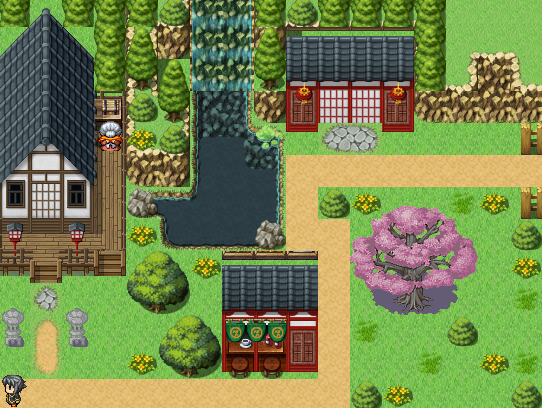
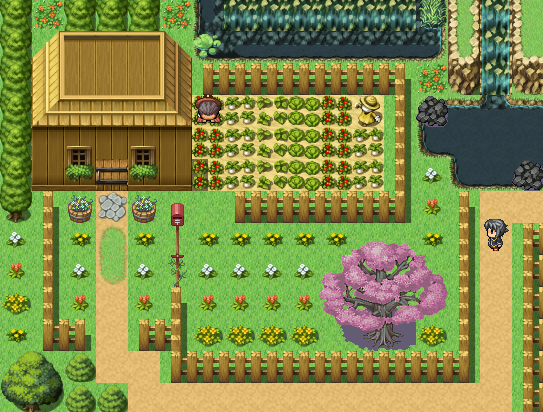
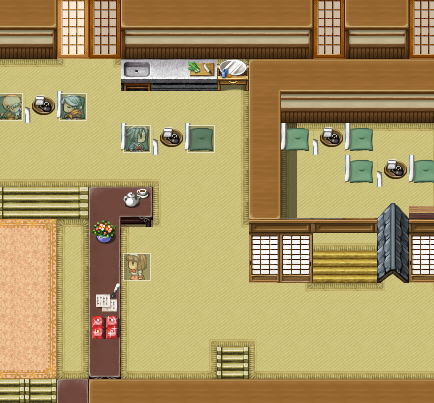
I need some input on these maps.
What you guys like?
And, what I should improve?
What you guys liked about these maps? And, what should I do better?
Don't multipost. Instead edit your previous post. I'm editing for image tags and removing the double. Keep it in mind for the future.
author=BizarreMonkey
If I just made an image on screen like this.
I'm sure you'd remember.
If only because the jokes on it were so disgraceful.
Yep. Yep, that'd do it.
But, yeah, having the text from books be meaningful in some way is fine. You shouldn't just shoehorn that kind of thing in, though, which is what I really should have said. If it's adding to the intent of the design in the right way, then I'm all for it. If your game is about exploration and discovery like the aforementioned Dragon's Quest and Earthbound, then, yeah, there's a home for that kind of thing.

@Annme090 I think you should take a look at some of Liberty's Shift Mapping tutorials
-----------
I made some changes to the map. The second story floor was a big issue, (using the same tiles as the "ground floor" made the map look odd.
 @BizarreMonkey I'm not sure what you mean by the height map being wonky. It might be that the one tile walls look like they connect to the the four (now five walls). They don't, but that might not be obvious from the 1/2 view. So I took some in game screenshots.


-----------
I made some changes to the map. The second story floor was a big issue, (using the same tiles as the "ground floor" made the map look odd.


Your outer maps aren't too bad, but the inner ones are pretty bad. Not only due to the wall heights being too small when it comes to the doors and other tiles used, but due to weirdly used tiles like the roof part next to the door of the bedroom (the blue peaked roof). What are the white things next to the cushions? They aren't chair backs/legs if that's what you think. The stairs at the bottom that just float there are really weird, as is the counter being on a higher level than the front of it, so that it'd be over peoples' heads when they tried to talk to the staff tending it. Take a look at some maps that use the same graphics and learn what different pieces are so that you can make proper use of them.
Earthbound has incredibly few interactable objects btw. Exploration and discovery maybe but but there are surprisingly few secrets / hidden things in the game at all. There's one two drawers in the whole game you can interact with. A few bookshelves have book titles but these are in one maybe two maps total. Don't cite earthbound for an example of interaction.
Or Lufia II. IIRC there are maybe a small handful of searchable shelves. The only treasure-holding items are chests and only NPCs talk to you to give you the history of the world/etc. So, yeah... you need new examples.
Know what games do the show don't tell really well? Most classic SNES games.
Know what games do the show don't tell really well? Most classic SNES games.
author=Dookie
Earthbound has incredibly few interactable objects btw. Exploration and discovery maybe but but there are surprisingly few secrets / hidden things in the game at all. There's one two drawers in the whole game you can interact with. A few bookshelves have book titles but these are in one maybe two maps total. Don't cite earthbound for an example of interaction.
I am referring not to chests per se, but actually to the random signs with odd messages, and tiny details like a grain of sand that you can talk to.
Lufia I was heavier about searchable shelves.
Is there a need to make EVERY object interactable? No, probably not. Is there a call to say having interactive objects is an evil vile practice and the only acceptable way to frame a scene is your way? God no!
It's like a song. You can have rhyme or rhythm, and the song technically works. People will play your game either way, if done well. It's part of a whole.
BUT! Both together? Powerful and best combination. Supporting writing with visual aspects helps sell the 'truth' of what the player is being told so much more. It is lazy to rely only on text and every good writer knows - show, don't fucking tell.
Oh. Yea that.
Sorry, I respond to posts as I read them, and get swept up in something. Sorta tl;dr only in posting mode. Yes, both together is a masterpiece. Even better is when music, text, and images all work together.
Of course, it doesn't have to work together to create harmony. Harmony or dissonance, either way can create a powerful effect. Consider how the sound, the imagery, and the events all sharply clash with each other in Mother 3 during the final battle sequence to create a disturbing effect (heartwarming music, trippy imagery alternating with heartwarming, the text is telling disturbing stuff like onscreen suicide WHILE the music doesn't change).
Ideally, yes, you are right, the visual and text should match up. If they don't there is dissonance. But the same reality can sometimes be not what it seems. Sometimes dissonance is an interesting thing to do.
https://www.youtube.com/watch?v=0mvXeDJ_V38
She's driving around a town seemingly happy, right? Listen closely to the lyrics. She talks about how this all a lie (in one music video version, her bf dumps her and the image visibly collapses). This is exactly what I mean, just relying on your eyes can mess up your perception, so sometimes you have to reexamine.
In the above zombie scene. If the music is uncertain, the dissonance between image and text leads to uncertainty about the situation. If the music sounds zombie horror, we are led to believe the hero is not seeing something. If the music sounds super happy, we believe the character speaking may be insane, or there is some time reversal shenanigans going on.
I think flavor text is awesome, but you gotta show the world as well!
I adapted show don't tell particularly so in P:A. In the first map you know there's some sorta big brother thing going on, that there's a religion based around some huge dude monarch guy, and that the fella who just saved you is wanted by the law.
You're also pretty clearly in a Dystopia.
Not a word needs to be spoken to get those things across, the writing is on the walls, and quite literally!
Also, I was having an issue with OriginalWij's resize and scale script which made the resolution 632x448 for some reason. And I recently found out why.
The resolution you enter resizes the window, not the screen. Setting it to 646x502 make it right.
Before:

Notice how the text is squashed, the mouth is seperated and everything looks slightly wretched?
Well after fixxo:

Yeeee! Text is perfect, facesets aren't skewered and the whole image is more crisp, this also negates the obnoxious flickering when dealing with scrolling across the screen.
I adapted show don't tell particularly so in P:A. In the first map you know there's some sorta big brother thing going on, that there's a religion based around some huge dude monarch guy, and that the fella who just saved you is wanted by the law.
You're also pretty clearly in a Dystopia.
Not a word needs to be spoken to get those things across, the writing is on the walls, and quite literally!
Also, I was having an issue with OriginalWij's resize and scale script which made the resolution 632x448 for some reason. And I recently found out why.
The resolution you enter resizes the window, not the screen. Setting it to 646x502 make it right.
Before:
Notice how the text is squashed, the mouth is seperated and everything looks slightly wretched?
Well after fixxo:
Yeeee! Text is perfect, facesets aren't skewered and the whole image is more crisp, this also negates the obnoxious flickering when dealing with scrolling across the screen.
Urgh. BizarreMonkey, when I tried to load Menagerie Remastered on my Windows 8.1 it froze. I tried again, and it froze again (it froze the entire computer so I had to hard reset not ctrl+alt+del).
Can you check whether there might be some loop or something that constant plays? Usually stuff like that (animated loop intros and the like) are what keeps a game from loading.
My first map ever in Oracle of Tao had a walled city in very RTP graphics under martial law. When I revamped it, I left the RTP look, but did stuff like make a ghetto-style crowded section of town, a bed outside, and a mansion that a tourist built. It definitely contributed to the overall feel of the town even before the flavor text.
Can you check whether there might be some loop or something that constant plays? Usually stuff like that (animated loop intros and the like) are what keeps a game from loading.
My first map ever in Oracle of Tao had a walled city in very RTP graphics under martial law. When I revamped it, I left the RTP look, but did stuff like make a ghetto-style crowded section of town, a bed outside, and a mansion that a tourist built. It definitely contributed to the overall feel of the town even before the flavor text.


