



 Full Games List
 Featured Games
 New Games
 Reviews
 Media
Media Images
 Blogs
Blogs Game Updates
 Images Feedback Summary
 Game Design Highlights
 Tutorials
 Articles
 Scripts
 Utilities / Plugins
 Resources
 Engines
 Engine Bulletins
 What is Makerscore?
 Past Events
 Achievements
 Misaos
 Forums
 Chat
Chat New to RMN?
 Full Store List
 RMN Music Pack (free)



 Profile
 Locker
 Play Lists
DESERTOPA'S PROFILE
Desertopa

775
 Close
Close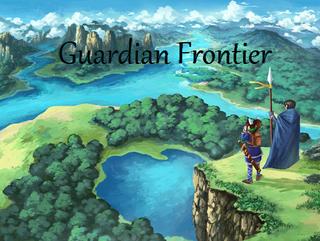
Guardian Frontier
An RPG with classic-style gameplay and a non-classic premise, inspired by the history of exploration and colonialism of the 19th century.
An RPG with classic-style gameplay and a non-classic premise, inspired by the history of exploration and colonialism of the 19th century.
Search
Filter
 All
All Game Pages
 User Statuses
 What elements from existing games would you like to see reused?
I think Magikarp Power is probably what he has in mind. You make the character weak to start with, so players have an incentive not to use them, but offer a big reward for those who choose to challenge themselves by using them anyway.
I think this works best in strategy RPGs, because it usually turns the use of weak characters into genuine self handicapping, and requires real effort to keep the characters alive and active through battles in order to cultivate their strength, whereas in a pure RPG, powering them up usually just amounts to a lot of monotonous grinding which doesn't meaningfully threaten the party.
I believe the Fire Emblem games use this extensively, but I haven't played most of them. I'd say Brigandine is an example of a game which pulled it off well, while Cloud in Final Fantasy Tactics, with its experience accumulation which barely scales to level differences between characters, exemplifies really bad implementation.
The only game I can think of off the top of my head where all new characters start off at level 1, and new characters are introduced regularly through the game, is Valkyrie Profile on Hard mode, which actually pulled it off quite well; it helped that it gave you a mechanic which allowed you to stockpile some experience and hand some out to new characters to get them up to scratch before they even participate in their first combat.
I think this works best in strategy RPGs, because it usually turns the use of weak characters into genuine self handicapping, and requires real effort to keep the characters alive and active through battles in order to cultivate their strength, whereas in a pure RPG, powering them up usually just amounts to a lot of monotonous grinding which doesn't meaningfully threaten the party.
I believe the Fire Emblem games use this extensively, but I haven't played most of them. I'd say Brigandine is an example of a game which pulled it off well, while Cloud in Final Fantasy Tactics, with its experience accumulation which barely scales to level differences between characters, exemplifies really bad implementation.
The only game I can think of off the top of my head where all new characters start off at level 1, and new characters are introduced regularly through the game, is Valkyrie Profile on Hard mode, which actually pulled it off quite well; it helped that it gave you a mechanic which allowed you to stockpile some experience and hand some out to new characters to get them up to scratch before they even participate in their first combat.
What elements from existing games would you like to see reused?
author=RyaReisender
I wouldn't generally say that puzzles are a concept I'd like to see, many games are better off without them, especially if they are just push the boxes on the switches and stuff like that. Well executed and uniquely dungeon-themed puzzles can be fun, though.
I think my personal preference would be to have occasional puzzle solving in the mandatory portion of the game, but make the puzzles things which, in the context of the story, are not puzzles deliberately designed by some agent. For instance, you have to figure something out by reconciling multiple pieces of information in an unintuitive way, or figure out how you can properly reinforce a damaged building so you can get through it without destroying it, etc. These help give the player the impression that their characters aren't simply solving every problem with brute force, and also acculturate them to the fact that the game actually contains puzzles. But these mandatory puzzles are not intended to be seriously difficult.
Then, in optional content (side dungeons and such,) I'd implement much harder puzzles, some of which may actually be deliberately designed puzzles in the context of the story. A guide shouldn't be necessary to progress through the plot, but if you want to access the optional stuff, you have to decide whether you're going to let it be a reward for extra effort, or you're actually going to crack that guide open.
author=RyaReisender
Also what I forgot to mention:
SaGaFrontier - LP system - You have HP and LP. If your HP reach 0, you become unconcious and lose 1 LP. If you are hit while being unconcious you lose 1 LP. At the end of the battle you fully recover HP. This is an amazing system that combines "every battle is a challenge" with "resource management".
Generally I prefer "every battle is a challenge", so full recovery after every battle is pretty much one of the best imaginable systems for me.
I think making every battle a challenge without implementing an overarching challenge of resource management between them works best in games where the battles are not numerous and not repeated (the player won't have the opportunity to grind on the same fights over and over again.)
To quote a bit from this Final Fantasy XIII review
In Final Fantasy XIII, your team is automatically revitalized to full HP and status neutrality after every battle, nullifying the whole "resource management" angle of the game. And without that, there is absolutely no point in fighting the same battle ten times in a row between one cutscene trigger spot and the next. In a game set up like Final Fantasy XIII, once you figure out how to beat the "two wolves and a soldier" enemy group, that should be it. You've solved it. But Final Fantasy XIII forces you to push through The Tube and do it again. And again. And again.
When there's no element of resource management between multiple battles, then unless every battle is unique you're going to be putting your players through the same challenge repeatedly.
When you add the element of resource management though, added threats become cumulative rather than redundant. Personally, I'm a fan of the combat system used in Grandia Xtreme (the game was pretty much built around the combat system, after all.) Every battle takes a nontrivial amount of your characters' resources to complete, and the challenge revolves around preserving those resources over the course of the dungeon. You're not even given free healing before fighting bosses, because it would run counter to the challenge of making your resources persist until you've navigated the entire threat.
 [Poll] What do you think about multiple endings?
Depends on the type of game. Some WRPGs offer it because the whole playstyle is more open ended and a much smaller part of the resources go into developing things like cutscenes, since they generally all play out in the game engine.
In visual novels, it's basic fare of the medium, but naturally they're also the product of a lot fewer man-hours.
In visual novels, it's basic fare of the medium, but naturally they're also the product of a lot fewer man-hours.
What elements from existing games would you like to see reused?
author=LockeZ
- Wild ARMS 1 through 3 were full of amazing puzzle labyrinth dungeons, as did Lufia 2. Legend of Zelda is of course the series known for these kinds of dungeons, but isn't an RPG. Lots of RPGs will have dungeons with a single easy puzzle or two, but the full-on Zelda style dungeons with puzzles in every room and tools you collect over the course of the game to manipulate the environment in different ways are awesome. That kind of dungeon gameplay just fits perfectly with the way RPGs already focus on exploration, problem solving, gaining more powers as the game goes on, and slow deliberation of your available options.
Puzzles in RPGs were really common in early RPGs, but I think their prevalence was already on the decline by some time in the PS1 era. Which is a shame, because back when they were at their most popular, I was still a stupid kid and it was a huge pain trying to figure them out on my own. I'd be happy to see some tough puzzles in RPGs now, but very few games have attempted to offer that sort of challenge for a long time now.
I'll add another idea from Suikoden III (which manages to be one of my top games for providing interesting ideas I'd like to see elsewhere, above many games which I actually enjoyed more.) The actual level up mechanics of the game rendered it fairly moot, but I liked the fact that the main characters all start significantly above level 1, so that when you're introduced to characters who're actually totally lacking in combat experience, there's a clear and significant difference. A lot of games feature protagonists who start out as badass army officers or knights or whatever who're actually about as un-badass as it's possible to be in gameplay terms, and I'd like it if more games would show you tangible evidence that your character doesn't actually start at the bottom of the totem pole.
Breath Of Fire 3 is awesome!!!!!!
I think of Breath of Fire IV as following Zelda Continuity, which basically boils down to "It's a series and shares elements because there's some kind of continuity relationship, but hell if we know what it is."
I've never seriously considered making a fangame before, but I wrote up a synopsis once for how I'd prefer to continue the series, and given the announcement about the next game being a mobile phone release, maybe something to soothe the angry masses is in order.
I've never seriously considered making a fangame before, but I wrote up a synopsis once for how I'd prefer to continue the series, and given the announcement about the next game being a mobile phone release, maybe something to soothe the angry masses is in order.
GRANDIA 3 -- What's with the hate?
I didn't hate it, but I considered it a letdown compared to the previous two Grandia games. It's clearly unfinished, for one thing; it was rushed to completion and there's a lot of content which was intended but never made it into the final game, so the game feels kind of truncated compared to the first two.
Alfina is childish and saccharine, and utterly lacking in self reliance. There's less development of the relationships between the main cast members as a whole relative to the previous games, and the elements of travel and world exploration, where the charm of the first two games shone through, are severely stunted in the third. Yuki's character development arc is pretty minimalistic compared to Justin's or Ryudo's; he's practically static after the point where he gets his working airplane.
Plus, Raven is just... pointless. Someone clearly wanted him to be the coolest thing since bread slicing machines, but there's no depth to his character, and he basically just exists to look badass and have a few flashy cutscenes. He could be entirely deleted from the story without any substantial alteration to the plot.
The combat offers significantly more challenge than the first two games, more in the neighborhood of Grandia Xtreme, but it doesn't have the same degree of charm as the first installments.
Alfina is childish and saccharine, and utterly lacking in self reliance. There's less development of the relationships between the main cast members as a whole relative to the previous games, and the elements of travel and world exploration, where the charm of the first two games shone through, are severely stunted in the third. Yuki's character development arc is pretty minimalistic compared to Justin's or Ryudo's; he's practically static after the point where he gets his working airplane.
Plus, Raven is just... pointless. Someone clearly wanted him to be the coolest thing since bread slicing machines, but there's no depth to his character, and he basically just exists to look badass and have a few flashy cutscenes. He could be entirely deleted from the story without any substantial alteration to the plot.
The combat offers significantly more challenge than the first two games, more in the neighborhood of Grandia Xtreme, but it doesn't have the same degree of charm as the first installments.
Breath Of Fire 3 is awesome!!!!!!
I'm pretty certain that the "revisit" function simply does not exist. It's a rumor which spun out of an error in the old strategy guide to the game, which stated that it was possible to beat Balio and Sunder in the first fight. It's not, but people created increasingly far fetched rumors to justify it.
The conditions described on that site aren't even plausible on the face of it. The amount of time it would take to reach level 99 in Breath of Fire 3 without simply hacking the game would be absurd. Way back when I was playing it on the original console, I once spent somewhere over 15 hours killing Goo Kings in the final dungeon trying to get the Goo King Sword, and by the time I finished my level was only in the 50's. The reward for all that effort is ridiculously trivial, unless you're someone who's already sunk huge amounts of time and effort into trying to beat Balio and Sunder in that first fight on the basis of that rumor from the guide book, and expect some kind of catharsis from finally accomplishing it. The story progression of the game doesn't even make sense if you simply scare them off.
The conditions described on that site aren't even plausible on the face of it. The amount of time it would take to reach level 99 in Breath of Fire 3 without simply hacking the game would be absurd. Way back when I was playing it on the original console, I once spent somewhere over 15 hours killing Goo Kings in the final dungeon trying to get the Goo King Sword, and by the time I finished my level was only in the 50's. The reward for all that effort is ridiculously trivial, unless you're someone who's already sunk huge amounts of time and effort into trying to beat Balio and Sunder in that first fight on the basis of that rumor from the guide book, and expect some kind of catharsis from finally accomplishing it. The story progression of the game doesn't even make sense if you simply scare them off.
What elements from existing games would you like to see reused?
author=RyaReisender
SaGaFrontier (or any Kawazu game) - Character growth - Characters get stronger depending on how you use them, impossible to skill wrongly, they will automatically become perfect in the style you play them.
While the idea might be good in theory, in practice Kawazu's games tend to be known for having very poor implementations; Final Fantasy II, where he got his start, was particularly nightmarish. The systems tend to be both hard to balance and vulnerable to exploitation.
A couple more of mine:
Treasure chests as used in Suikoden III: Loads of games use treasure chests, they're a genre convention despite being largely nonsensical. What did Suikoden III do differently? It made them actual goddamn chests full of treasure. I mean, how much stuff can you fit in a chest, realistically? Quite a bit. A chest with a single bottle in it is just kind of silly. Treasure chests in video games are probably inspired by stereotypical chests of pirate booty, but in most games they've morphed into something very different, something which is both dead common, and frequently contains only small amounts of largely trivial stuff. The chests in Suikoden III are few in number, almost all hidden away in remote places and guarded by some terrible monsters, and are full of large quantities of valuable items. They're never explained in-game, but players can make sense of them as being some sort of thieves' treasure troves, or something of that nature (the fact that the chests are refilled every chapter makes much less sense, and is something I'd avoid copying.) Treasure chests are properly turned into something exceptional. The vast majority of valuable goods in-game, as you would expect in real life, are acquired directly from other people.
The party synergy of the early Wild Arms games:
When you have a cast of multiple player characters, I like to see them kept distinct, so that they each offer unique contributions to the party as a whole. The Wild Arms games have some of my favorite examples of this. In the first game, each of the main characters has their own set of abilities which are not only different in function from those of other characters, they're acquired in totally different ways. Not only that, each character has their own distinct arsenal of tools for dealing with puzzles and progressing through the game, most parts of the game require all of them pooling their resources in order to complete the challenges they face. It helps reinforce the idea that the main characters are interdependent and function as a team which is greater than the sum of its parts.
Belatedly signing in.
Several posts in, and I only just noticed that this section of the forum exists, but I suppose I should take the chance to properly introduce myself.
At the age of seven, I wanted to be a ninja wizard inventor who designed video games when I grew up. The last of these is the one remaining aspiration I still hold with the same degree of enthusiasm I had then, and by joining in this community I will either finally realize it, or kill it off for good.
I've been playing video games since the early 90's, and am mainly a fan of JRPGs, but I draw inspiration from a wide variety of genres. I've also been an active editor of tvtropes since 2007, and have written up and named a number of video game related (and other) tropes. Anyone who hasn't already had their life and vocabulary ruined by the site probably will if they collaborate with me.
Glad to meet you all.
At the age of seven, I wanted to be a ninja wizard inventor who designed video games when I grew up. The last of these is the one remaining aspiration I still hold with the same degree of enthusiasm I had then, and by joining in this community I will either finally realize it, or kill it off for good.
I've been playing video games since the early 90's, and am mainly a fan of JRPGs, but I draw inspiration from a wide variety of genres. I've also been an active editor of tvtropes since 2007, and have written up and named a number of video game related (and other) tropes. Anyone who hasn't already had their life and vocabulary ruined by the site probably will if they collaborate with me.
Glad to meet you all.
Inquiring about help for Withered Reason
Well, if it were a blog post, I wouldn't have seen it, and I might be interested in joining in.
My experience using an RPGMaker engine is currently nil, but, I'm eager to learn the ropes, have a lot of free time to commit, and this is likely to continue to be the case for a long time. I'm willing to do monotonous grunt work if it helps bring an ambitious project to fruition, at least as long as I have some opportunity to learn something about the process through observation. Also, if you want to farm out writing work, such as NPC dialogue, I'm confident I have something to offer on that front.
If you think you might need any of the sort of help I could provide, let me know, and we can try and work something out.
My experience using an RPGMaker engine is currently nil, but, I'm eager to learn the ropes, have a lot of free time to commit, and this is likely to continue to be the case for a long time. I'm willing to do monotonous grunt work if it helps bring an ambitious project to fruition, at least as long as I have some opportunity to learn something about the process through observation. Also, if you want to farm out writing work, such as NPC dialogue, I'm confident I have something to offer on that front.
If you think you might need any of the sort of help I could provide, let me know, and we can try and work something out.
 Games - Tester
 Games - Other
