



 Full Games List
 Featured Games
 New Games
 Reviews
 Media
Media Images
 Blogs
Blogs Game Updates
 Images Feedback Summary
 Game Design Highlights
 Tutorials
 Articles
 Scripts
 Utilities / Plugins
 Resources
 Engines
 Engine Bulletins
 What is Makerscore?
 Past Events
 Achievements
 Misaos
 Forums
 Chat
Chat New to RMN?
 Full Store List
 RMN Music Pack (free)



 Profile
 Locker
 Play Lists
DESERTOPA'S PROFILE
Desertopa

775
 Close
Close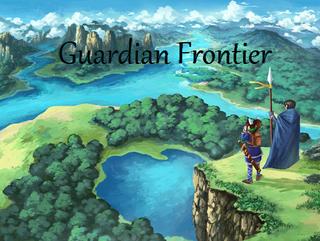
Guardian Frontier
An RPG with classic-style gameplay and a non-classic premise, inspired by the history of exploration and colonialism of the 19th century.
An RPG with classic-style gameplay and a non-classic premise, inspired by the history of exploration and colonialism of the 19th century.
Search
Filter
 All
All Game Pages
 User Statuses
 Town/Village game mechanic
I think that reputation alone is probably sufficient to create an interesting and in-depth experience in towns. Whereas a lot of existing games implement a "reputation system" which is essentially a spectrum where your reputation is either good or bad, in a slightly less open game (which doesn't allow you to influence your reputation by, say, slaughtering random NPCs and such,) you can implement it as a system of event triggers where NPCs take note of and respond to the specific things you've done.
Final Fantasy 6 Remake!
author=LockeZ
5% of FF6 is worth as much as a whole game.
Yeah, but I'm not getting a new 5% of story or characterization or whatever, just some extra tacked on dungeons or bonus bosses or something. Plus, I can't get at the additional 5% or so without replaying a game which I've already played in its entirety.
The only context in which I could see myself buying a remake of a game I've already played before is if, the first time around, the game had crappy gameplay which put me off of the story, and the rerelease manages to make the gameplay non-crappy so that this time around I can enjoy it properly. But games with crappy gameplay usually do not become popular enough to get rereleased.
Final Fantasy 6 Remake!
author=Pizza
I'm sure you all have at least two copies of it lying around somewhere, since you can get it on basically any platform that you want at this stage.
I still find it confusing that people buy new copies of games they already own for different platforms. I have never done this before, and I still don't see the point. To me it feels like buying 5% of a new game (however much new content there is) for the cost of a whole new game.
Unsung Story: Tale of the Guardians: TRPG Kickstarted by Yasumi Matsuno
I'm a fan of Matsuno's work as a story writer, but I haven't always been a fan of the games he was involved in. Tactics Ogre, for instance, I failed to get into early on, even though the story as I've heard it described sounds brilliant, because I found the gameplay really plodding. Also, it shares a hallmark of the Ogre Battle series which I really hate, where it bombards the player with a bunch of obtuse, tarot-themed questions at the very beginning of the game before you have any information whatsoever to offer you any sort of grounding, so my overriding emotion at the beginning of the game is frustration ("what do these questions even mean? What am I determining? Did I just screw myself over by giving my character terrible bonuses or railroading him into a playstyle I don't like?") And Vagrant Story was really interesting, but had some game mechanics which are never introduced to the player which make or break your combat effectiveness. Plus, the constantly dark visual aesthetic got on my nerves, and I kept getting lost (I have a terrible sense of direction.)
So I'm definitely interested to see him on board with a new project, but I don't consider his involvement to be a guarantee of quality gameplay-wise.
Also, while it seems like a lot compared to the baseline of making games completely for free, $600,000 sounds like a really small budget for a commercial game.
So I'm definitely interested to see him on board with a new project, but I don't consider his involvement to be a guarantee of quality gameplay-wise.
Also, while it seems like a lot compared to the baseline of making games completely for free, $600,000 sounds like a really small budget for a commercial game.
Town/Village game mechanic
author=Jess24
Also, try it would be great to have "dialogue challenges", where instead of fighting, you are given a dialogue tree and you have to select the "right" choice to get what you want. You can base them on the INT, LUCK or STR stats (or your game equivalent), so the more intelligent your character is the more options they get (or less options they get, so they have a higher chance to get the right choice). EX: you have to get certain item from an NPC known to be a coward. You can Intimidate it (STR), Bluff him (LUCK) or reason with him (INT).
Personally, I'm not a fan of games with an INT stat which affects options in gameplay. Whereas things like strength and dexterity and stamina are totally distinct from personality, intelligence is very intertwined with how an individual behaves.
When a character's statistical "intelligence" isn't a factor in how they respond to in-game dilemmas, as a designer, you're free to either make them blank slates for the player to project onto, or distinctly written characters with their own unique personalities. Making part of their personality beholden to their statistics takes some of that power out of both the player and the designer's hands.
The fact that video game characters often see their "intelligence" spike through the roof over the course of their games, without a corresponding change in how they act, is also one of my least favorite invocations of Statistically Speaking, which is why I favor replacing it with a Magic stat.
Making options depend both on reputation and on stats is, I think, also liable to overcomplicate matters. At least in Eastern style RPGs, where the protagonists tend to grow comprehensively rather than in a few specific parameters you choose to focus on, once a character reaches a significant level, compared to an ordinary person, all their stats can probably be lumped together under the heading of "high." If the locals know you're badass enough to slay the Marauding Gorilla-Dragon, then the technicality of your Strength stat probably isn't going to matter to them.
What do YOU look for in a (good) story? (In a video game)
That sort of thing is really easy to do badly though. It's easy to get wrapped up in pursuit of uniqueness and lose sight of what you need to make the story entertaining.
What do YOU look for in a (good) story? (In a video game)
author=Housekeeping
A note on dynamics: your characters should change from the beginning of the story to the end. This is called a round character; a character that doesn't change is called a flat character.
This is a bit of a nitpick, but a character who changes from the beginning of a story to the end is a "dynamic" character, while one who stays the same is a "static" character. "Flat" versus "round" are for describing whether the character has depth of personality versus a few basic distinguishing traits. A character can be static and round, or dynamic and flat (for example, an NPC whose only distinguishing trait is greed learns their lesson and stops being greedy.)
A character doesn't necessarily have to be dynamic in order to engage the audience. In the story I'm working on right now, for instance, the main character doesn't really change much over the course of the story (although a lot of the other characters change around him,) but as the audience learns more about him, it puts his actions from earlier on into a different context. By the end of the story, he's still largely the same person he was to start with, but at the same time, he's very different from what the audience was led to believe. Note that I'm definitely not saying that plot twists are a substitute for good characterization, but the ultimate goal is to get the audience invested in the characters, and having them change over the course of the story is a means to that end, rather than the end unto itself.
Town/Village game mechanic
If you want to implement a reputation system, I'd definitely consider making the dialogue of many, if not all random citizens change depending on how highly regarded you are in that location. Making the player feel like their deeds are actually acknowledged by other characters in the game, rather than being repaid with some shiny prize and then forgotten about forever, will make interacting with NPCs feel much more rewarding.
(If you'd like assistance implementing this sort of system on the writing side of things, I'd be happy to offer my services.)
(If you'd like assistance implementing this sort of system on the writing side of things, I'd be happy to offer my services.)
What do YOU look for in a (good) story? (In a video game)
Are we talking strictly in terms of the main plot, or are we including broader elements of story expression?
What I care about most in terms of enjoying the story of a game is a good sense of atmosphere, or character.
An unoriginal plot and setting, if executed with enough character, will still be fun, whereas a game with an original and brilliantly conceived plot, where the dialogue feels like filler and the setting feels like it's constructed out of prop board, might give the player some interesting ideas, but the game will still be a slog.
Atmosphere isn't simply a matter of writing interesting dialogue and settings though (otherwise I'd just have said "dialogue and settings.") It's more about... drawing the player's attention to the things that reinforce the sort of experience you want the game to evoke, and away from things that don't. For instance, in an epic high fantasy adventure, you can give the game a world map which features eight kingdoms and a smattering of unattached villages representing primitive tribespeople, reclusive elves, warlike barbarians or whatever, none of these locations having clear political or economic relations to each other, and the player very likely won't find anything amiss, because the character of the story doesn't encourage players to think about questions like "How the hell can you have a village of warlike barbarians here when there are no identifiable neighbors they could possibly be at war with?" or "Why do international relations seem to basically not exist in this world?" As long as each location plays its role in the narrative suitably, the player shouldn't end up worrying too much about how much sense the whole setting would make in other contexts.
If the basis of the story is a complex political conflict though, and you still have a world map consisting only of a handful of kingdoms and villages, you're a lot more likely to give the player a sense of artificiality. The setting isn't well constructed for the type of story it's supposed to support, and the player's attention will be attracted to places you don't want it to go.
There are some particular elements I particularly favor or disfavor (for instance, I'm pretty much sick or post-apocalyptic stories, and rarely enjoy them regardless of their quality,) but I don't think it's these sort of specific elements which determine whether or not a story is actually "good."
What I care about most in terms of enjoying the story of a game is a good sense of atmosphere, or character.
An unoriginal plot and setting, if executed with enough character, will still be fun, whereas a game with an original and brilliantly conceived plot, where the dialogue feels like filler and the setting feels like it's constructed out of prop board, might give the player some interesting ideas, but the game will still be a slog.
Atmosphere isn't simply a matter of writing interesting dialogue and settings though (otherwise I'd just have said "dialogue and settings.") It's more about... drawing the player's attention to the things that reinforce the sort of experience you want the game to evoke, and away from things that don't. For instance, in an epic high fantasy adventure, you can give the game a world map which features eight kingdoms and a smattering of unattached villages representing primitive tribespeople, reclusive elves, warlike barbarians or whatever, none of these locations having clear political or economic relations to each other, and the player very likely won't find anything amiss, because the character of the story doesn't encourage players to think about questions like "How the hell can you have a village of warlike barbarians here when there are no identifiable neighbors they could possibly be at war with?" or "Why do international relations seem to basically not exist in this world?" As long as each location plays its role in the narrative suitably, the player shouldn't end up worrying too much about how much sense the whole setting would make in other contexts.
If the basis of the story is a complex political conflict though, and you still have a world map consisting only of a handful of kingdoms and villages, you're a lot more likely to give the player a sense of artificiality. The setting isn't well constructed for the type of story it's supposed to support, and the player's attention will be attracted to places you don't want it to go.
There are some particular elements I particularly favor or disfavor (for instance, I'm pretty much sick or post-apocalyptic stories, and rarely enjoy them regardless of their quality,) but I don't think it's these sort of specific elements which determine whether or not a story is actually "good."
WYRM WARRIORS! Design a character!
The way I would probably try pulling that off is to set up a basic framework, and request for people to PM submissions for their contributions to the work, and then select some predetermined number of people to stay on the project.
(I'd recommend keeping the submissions private, because it preserves some element of secrecy about what's going into the game, and because I think the people whose submissions don't get accepted might find it easier to deal with if they don't know what was picked over them.)
Projects which takes input from everyone who offers it will tend to end up... lacking in cohesion, at the very least. It's probably not a big deal for a two day game, but a longer game probably needs a more unified direction.
(I'd recommend keeping the submissions private, because it preserves some element of secrecy about what's going into the game, and because I think the people whose submissions don't get accepted might find it easier to deal with if they don't know what was picked over them.)
Projects which takes input from everyone who offers it will tend to end up... lacking in cohesion, at the very least. It's probably not a big deal for a two day game, but a longer game probably needs a more unified direction.
 Games - Tester
 Games - Other
