



 Full Games List
 Featured Games
 New Games
 Reviews
 Media
Media Images
 Blogs
Blogs Game Updates
 Images Feedback Summary
 Game Design Highlights
 Tutorials
 Articles
 Scripts
 Utilities / Plugins
 Resources
 Engines
 Engine Bulletins
 What is Makerscore?
 Past Events
 Achievements
 Misaos
 Forums
 Chat
Chat New to RMN?
 Full Store List
 RMN Music Pack (free)



 Profile
 Locker
 Play Lists
DESERTOPA'S PROFILE
Desertopa

775
 Close
Close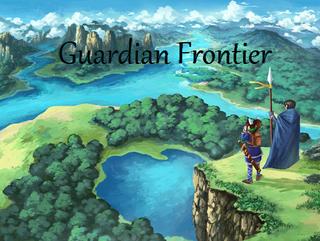
Guardian Frontier
An RPG with classic-style gameplay and a non-classic premise, inspired by the history of exploration and colonialism of the 19th century.
An RPG with classic-style gameplay and a non-classic premise, inspired by the history of exploration and colonialism of the 19th century.
Search
Filter
 All
All Game Pages
 User Statuses
 The Elder Scribes of RMN: Reviewrim
Is it against the spirit of the contest to stake out titles you're intending to review so other people will know that if they pick those ones, they're liable to be beaten to the punch?
 Necessity of a Walkthrough?
On the one hand, I agree with Housekeeping from his original comment, that just having access to a walkthrough tempts me to use it, even though I'll probably find it more satisfying to find or figure things out on my own.
But honestly, I practically never use game guides to figure out how to win games, going back at least for the last decade or so. Games which offer challenges which are sufficiently tricky that I can't figure them out on my own are extremely rare. I use game guides, for the most part, to avoid missing things. I'm pretty completionist by inclination, and it bugs me to just not know if there are sidequests or events or valuable items I've just passed by.
For me, the ideal game would be one where I wouldn't be tempted to use a guide because the optional content can all be accessed without recourse to trial and error or sheer dumb luck. It should be challenging, but the challenge shouldn't lie in finding it in the first place.
But honestly, I practically never use game guides to figure out how to win games, going back at least for the last decade or so. Games which offer challenges which are sufficiently tricky that I can't figure them out on my own are extremely rare. I use game guides, for the most part, to avoid missing things. I'm pretty completionist by inclination, and it bugs me to just not know if there are sidequests or events or valuable items I've just passed by.
For me, the ideal game would be one where I wouldn't be tempted to use a guide because the optional content can all be accessed without recourse to trial and error or sheer dumb luck. It should be challenging, but the challenge shouldn't lie in finding it in the first place.
I need somebody to do some art work
If you're not offering compensation, you should at least be considering what you have to get artists interested in your project. Is there anything so great about it that people will just naturally want to get involved?
If you have something awesome in the works that a lot of people are totally interested in seeing come to fruition, maybe someone will want to be a part of it without monetary compensation (I haven't been here long enough to know how often this sort of thing goes on here,) but just turning up and saying "hey, I want someone to do this free art for me" is almost certainly not going to get any takers anywhere.
If you have something awesome in the works that a lot of people are totally interested in seeing come to fruition, maybe someone will want to be a part of it without monetary compensation (I haven't been here long enough to know how often this sort of thing goes on here,) but just turning up and saying "hey, I want someone to do this free art for me" is almost certainly not going to get any takers anywhere.
How the Heck do you Design a Town?
I would say that you can absolutely have a cool town idea and have it not influence how the town is mapped, and it doesn't have to be metaphysical, unless you're applying a really unusually broad definition of "metaphysical."
It could be cultural, for instance. The townspeople all display attitudes and behaviors which are completely different from what you've encountered elsewhere. Suppose that the town is an enclave of some particular ethnic group within the country, where people have concentrated in order to live among members of their own culture, and avoid feeling like members of a disenfranchised minority. They're uncomfortable seeing the protagonists, who aren't members of their in-group, inside their town, because they're defensive of what little space they have where they can escape the minority status they hold in the rest of the country. But more often than not, in real life, minority enclaves aren't actually constructed by the groups that inhabit them, people just move in, so there's no reason that the architecture and such would suggest some distinct culture.
There are ways that you could tweak the design of the town (aside from just the appearances of the inhabitants) to highlight such a theme, but it's not a strict necessity by any means, and I certainly wouldn't fault someone limited by the graphical resources of an RPGMaker engine for not doing so, especially if they use really good writing to convey the character of the town.
It could be cultural, for instance. The townspeople all display attitudes and behaviors which are completely different from what you've encountered elsewhere. Suppose that the town is an enclave of some particular ethnic group within the country, where people have concentrated in order to live among members of their own culture, and avoid feeling like members of a disenfranchised minority. They're uncomfortable seeing the protagonists, who aren't members of their in-group, inside their town, because they're defensive of what little space they have where they can escape the minority status they hold in the rest of the country. But more often than not, in real life, minority enclaves aren't actually constructed by the groups that inhabit them, people just move in, so there's no reason that the architecture and such would suggest some distinct culture.
There are ways that you could tweak the design of the town (aside from just the appearances of the inhabitants) to highlight such a theme, but it's not a strict necessity by any means, and I certainly wouldn't fault someone limited by the graphical resources of an RPGMaker engine for not doing so, especially if they use really good writing to convey the character of the town.
How the Heck do you Design a Town?
Edit: sorry about the two blank posts above, just ignore them. My computer borked while I was trying to edit my post and I ended up posting it repeatedly.
The flashback could theoretically happen just about anywhere. They could have crunched it in before leaving Midgar, but since they're wanted men there, hiding out inside the city ramps the tension up too high. They could have it out in the middle of nowhere, on a field or something, but it kind of lacks realism for the characters to stand out in the middle of nowhere having this long discussion instead of relocating somewhere more comfortable. And they could have had it on the Chocobo Ranch, but I think having the discussion on a dinky little farm full of strutting yellow birds robs it of some of its gravity.
I think it probably would have been better if Kalm and the Chocobo Ranch had been merged, but instead of having an inexplicable ranch out in the middle of nowhere serving god only knows what customers, I'd stick the Chocobo Ranch in the town, right on the outskirts. This way the flashback setting keeps the right level of tension, while the town is made more interesting, and the chocobo ranch makes more sense since it's not stranded in the middle of nowhere (one thing we haven't really discussed so far in this topic is making the geographical context of the locations work for them, but this is an area where Final Fantasy VII, like most RPGs, doesn't put in much effort.)
I agree that it's better to avoid making boring towns. I think Kalm, to continue with an example, served its purpose well in adjusting the tension of the narrative to an appropriate level for that point in the story, but it could certainly have been given more content of interest. But honestly... I really don't like random campsites with peddlers. They just bug me, a lot, because I feel like the game is saying "I have no excuse for putting a town here, but it would be a pain if you couldn't rest or buy stuff, so here, have a pit stop." It does a number on my feeling of immersion. I'm sure that players who dislike them as much as I do are seriously in the minority, but if it were me, rather than going the "campsite and peddler" route, I would go out of my way to ensure that the situation where the player was in need of supplies and an inn while separated from any plot-justified place of human habitation simply wouldn't arise in the first place. Failing that, I'd make it, I dunno, a band of deserted soldiers roughing it in the wilderness because they'll face charges of treason if they make it back to civilization, or a secret polygamist hippie commune, or some other thing which has enough character of its own to make it seem like something other than a basic gameplay contrivance.
author=LockeZ
So Kalm's role was to not matter, and thus making it less boring wouldn't have helped its role? I'm not buying it. Why do you specifically need a town that doesn't matter?
If anything FF7 could have probably benefitted from just having fewer towns, rather than making its towns more interesting. This is probably true of a lot of other games too. Cut the cruft.
I mean, you're right about why Kalm matters: its only role in the story is to provide a stark contrast to Midgar, being a mostly prosperous town where only a few of the townspeople hate Shinra instead of all of them.
But look at how it fills that role. Everything that happens "in Kalm" actually happens in a flashback in Nibelheim, so to me it's like, shit, that flashback could happen literally anywhere, why do we need a whole town dedicated to it? And the moment the flashback starts you see a very clear picture of a town where Shinra is bringing prosperity rather than squalor; why do you need that outside of the flashback too? Plus you still have Upper Junon, Gold Saucer, Icicle Inn, and Costa del Sol doing the same thing. It's very redundant and pointless.
I would have combined Kalm and the Chocobo Ranch into one location, called the Chocobo Ranch.
The flashback could theoretically happen just about anywhere. They could have crunched it in before leaving Midgar, but since they're wanted men there, hiding out inside the city ramps the tension up too high. They could have it out in the middle of nowhere, on a field or something, but it kind of lacks realism for the characters to stand out in the middle of nowhere having this long discussion instead of relocating somewhere more comfortable. And they could have had it on the Chocobo Ranch, but I think having the discussion on a dinky little farm full of strutting yellow birds robs it of some of its gravity.
I think it probably would have been better if Kalm and the Chocobo Ranch had been merged, but instead of having an inexplicable ranch out in the middle of nowhere serving god only knows what customers, I'd stick the Chocobo Ranch in the town, right on the outskirts. This way the flashback setting keeps the right level of tension, while the town is made more interesting, and the chocobo ranch makes more sense since it's not stranded in the middle of nowhere (one thing we haven't really discussed so far in this topic is making the geographical context of the locations work for them, but this is an area where Final Fantasy VII, like most RPGs, doesn't put in much effort.)
author=Sooz
Thinking about this subject, I'm reminded of a rule of thumb for writing: If you're having eternal writer's block over a scene, that is probably a sign you don't need it.
I think the same can be applied to this subject. Do you really need a town? Sure, you need a place for the characters to rest, heal, get stuff. But does it need to be a town, rather than a clearing with a peddler and a campsite? Is there a purpose served by having the characters visit a permanent settlement instead of anything else?
Basically, instead of thinking that you need to put a town in because this is the part where towns go, think of what the true purpose of your "town" is, and whether that can be better served with something simpler.
I agree that it's better to avoid making boring towns. I think Kalm, to continue with an example, served its purpose well in adjusting the tension of the narrative to an appropriate level for that point in the story, but it could certainly have been given more content of interest. But honestly... I really don't like random campsites with peddlers. They just bug me, a lot, because I feel like the game is saying "I have no excuse for putting a town here, but it would be a pain if you couldn't rest or buy stuff, so here, have a pit stop." It does a number on my feeling of immersion. I'm sure that players who dislike them as much as I do are seriously in the minority, but if it were me, rather than going the "campsite and peddler" route, I would go out of my way to ensure that the situation where the player was in need of supplies and an inn while separated from any plot-justified place of human habitation simply wouldn't arise in the first place. Failing that, I'd make it, I dunno, a band of deserted soldiers roughing it in the wilderness because they'll face charges of treason if they make it back to civilization, or a secret polygamist hippie commune, or some other thing which has enough character of its own to make it seem like something other than a basic gameplay contrivance.
How the Heck do you Design a Town?
How the Heck do you Design a Town?
How the Heck do you Design a Town?
I didn't notice (or perhaps forgot) that bit, so I guess I was mistaken regarding his position. But with respect to this
I felt that all of those locations did an effective job with respect to their roles in the story. To the extent that Kalm, for instance, "matters" in the story, it's essentially due to its role as neutral space. Giving it a more distinct flavor and presence of its own wouldn't really have assisted with that.
Towns in FF7 that didn't really do anything wrong but just totally failed to be interesting include Sector 5 Slums, Kalm, Gongaga, and probably North Corel. (Icicle Inn almost qualifies too, right up until you escape the town via a snowboarding minigame.) None of them are too big or hard to navigate or anything, they're just boring and forgettable. All of these towns basically just relied on the equivalent of using different tilesets from each-other to try to be interesting. And that was enough to make them not feel identical, but it wasn't enough to make them matter.
I felt that all of those locations did an effective job with respect to their roles in the story. To the extent that Kalm, for instance, "matters" in the story, it's essentially due to its role as neutral space. Giving it a more distinct flavor and presence of its own wouldn't really have assisted with that.
How the Heck do you Design a Town?
author=Isrieriauthor=DesertopaI don't see how that's an exception to what Craze is talking about. Those towns do have a memorable feature then: The purpose of their construction is to be the place where you get more of Clouds backstory or whatever. But just because they're offshoot villages that aren't necessarily important or even optional to visit doesn't mean that you can't or shouldn't try to make them dynamic. From my experience with I and IV Final Fantasy tends to drop important cutscences that revolve around the characters in the towns, but fail to make the towns themselves interesting (VI was an exception rather than the rule). You just stop by, do what you have to do, and then you drop out and may never return (or want to return). There's no reason to stick around and talk to anyone or go exploring except for hidden goodies I guess. VI was different because it did the very things Craze and LockeZ are talking about.
A town doesn't have to be dramatically constructed to give something to engage the player. Take the three examples LockeZ gave from Final Fantasy VII which failed to be constructed around an interesting centerpiece, Kalm, Gongaga, and North Corel. Kalm is just a waypoint which the player doesn't need to actually explore, but most of the time you're there is spent in a flashback where Cloud explains his history with Sephiroth. Gongaga (which is an interlude the player can skip entirely,) offers a hook for one of the game's central twists;
I never said, nor did I mean to imply, that towns shouldn't have memorable features. The only thing I was disputing was that LockeZ's suggestion of constructing towns around visible set pieces should be followed in every instance. That's a matter of visual aesthetics, not of how much plot or character significance or interesting content the towns have.
Craze was the one who took issue with my comments, not I with his, although I think the meaning he's reading into them is not what I intended them to convey. If I were to take his statements literally, I'd definitely disagree that "towns are the bane of RPGs," but I don't get the impression that he actually means that towns are necessarily bad (if I'm wrong, of course, he's free to correct me,) they're just done badly with such frequency that they're not usually a credible source of entertainment.
Usually, when game designers get it into their heads to "reward exploration" in towns, they scatter around items for the player to find and/or add NPCs who say things which suggest some kind of life beyond the activities of the player character. But if the NPCs say things which suggest they've got matters of their own to deal with, and those matters are a lot less interesting than the basic plot progression of the game, then talking to them isn't going to be very rewarding. And inspecting every goddamn identical barrel in town to see which ones are hiding permanent stat-boosting apples, or elixirs, or pieces of armor, or whatever the hell people put in barrels in your game, is a chore, plain and simple. Presenting tokens in exchange for the work the player puts into looking at and talking to everything might feel like a way to "reward exploration," but it's not a likely consequence of trying to make towns as fun and interesting as possible.
I don't know about you all, but a Female Squall for FF8 would have been cool.
It long ago ceased to be acceptable to dress video game leads like sensible human beings.
This Final Fantasy IV review (and I honestly recommend checking out the full review series, for anyone who hasn't already,) puts it like this:
With every new generation of video games, the designers struggle harder to make their characters memorable, to distinguish them from not only their present generation competitors, but from all the characters who've come before them. Which apparently, in the minds of the character designers, equates to dressing characters up like goddamn lunatics.
This Final Fantasy IV review (and I honestly recommend checking out the full review series, for anyone who hasn't already,) puts it like this:
author=Pitchfork
Final Fantasy IV's other problem is that it just doesn't have enough of a certain something with which today's games are overbrimming. That something... is zazz.
Final Fantasy IV's zazz factor is decidedly low. It has a quasi-medieval setting (devoid of steam, cyberpunk, space age, or any other sort of anachonistic science-fiction influence) populated by knights, wizards, and dwarves (no bunny-eared amazons, Geohounds, cyborgs, or evil parodies of Christ). Cecil wears a suit of armor (without even one decorative zipper, pouch, or patch of fashionably exposed skin) and fights with a sword (instead of a gunblade, keyblade, chainsaw-sword, etc). By today's standards, this is unacceptable.
Digression
JRPGs -- and many other Japanese games, and anime too -- are in serious danger of fatal zazz saturation.
Some zazz is good to have. Think of it like putting sugar in coffee. A sugar cube or two makes a cup of coffee less bitter, while some zazz adds flavor to a game and its characters. But just like you can ruin coffee by pouring in too much sugar, over-zazzing your game makes it irritating instead of bland. Remember back when anthromorphs with 'tude were in vogue? Sonic's 'tude levels were within acceptable parameters, and it's still hard to deny the appeal of his Sega Genesis incarnations. But then you also have Bubsy the Bobcat, who was pumped full of more focus-group tested 'tude than any single piece of intellectual property should ever be asked to contain, and if anyone actually remembers Bubsy, I'm sure their memories are not pleasant.
Here's an example of the progression of zazz saturation: a timeline of SNK fighting game flagship characters.
Terry and Ryo look like two guys out of a martial arts flick. Iori and K' look like they're from an anime. Alba and Luise look like they're from a Japanese fashion magazine. I understand that with so many other products on the market, designers have to make their franchise and its properties stand out, but it's starting to get ridiculous. Other examples include the gulf between the characters and aesthetics of Mobile Suit Gundam and Gundam SEED, Sonic the Hedgehog (1991) and Shadow the Hedgehog (2001), and to cite a stateside example, the differences between the 2D Prince of Persia titles and The Two Thrones. Style over substance.

With every new generation of video games, the designers struggle harder to make their characters memorable, to distinguish them from not only their present generation competitors, but from all the characters who've come before them. Which apparently, in the minds of the character designers, equates to dressing characters up like goddamn lunatics.
 Games - Tester
 Games - Other
