



 Full Games List
 Featured Games
 New Games
 Reviews
 Media
Media Images
 Blogs
Blogs Game Updates
 Images Feedback Summary
 Game Design Highlights
 Tutorials
 Articles
 Scripts
 Utilities / Plugins
 Resources
 Engines
 Engine Bulletins
 What is Makerscore?
 Past Events
 Achievements
 Misaos
 Forums
 Chat
Chat New to RMN?
 Full Store List
 RMN Music Pack (free)



 Profile
 Locker
 Play Lists
DESERTOPA'S PROFILE
Desertopa

775
 Close
Close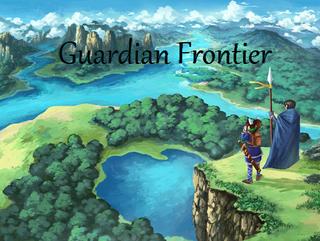
Guardian Frontier
An RPG with classic-style gameplay and a non-classic premise, inspired by the history of exploration and colonialism of the 19th century.
An RPG with classic-style gameplay and a non-classic premise, inspired by the history of exploration and colonialism of the 19th century.
Search
Filter
 All
All Game Pages
 User Statuses
 The Game of Pessimism
author=LockeZ
IMO, if you're going to make a game about pessimism, the pessimism should be completely justified and everything you do in the entire game should fail, up through and including the ending.
Final Fantasy 13 was sort of like this, except not at all in a comical way. The overarching theme of FF13 was one of predestination - you are being forced into performing horrible acts against humanity against your will, and if you stop you'll turn into a shambling stone monster forced to relive your greatest moment of regret over and over for all eternity, and even if you kill yourself someone else will just be chosen to do it instead. There's no escape. But you spend the game fighting to find one anyway. If you did something like this with an ending that actually made sense, it could be an excellent game.
I'd be careful about what sort of things you subject the player to though, even if it does fit the theme of the game. Thematically coherent doesn't necessarily equal fun.
Aside from that though, it's not as if failure is a necessary consequence of pessimism. If you're doomed to fail no matter what, then a lack of hope isn't pessimism, but realism. Real pessimism is about having more doubts and anxieties than are justified by reality. Real hopelessness would be another theme entirely.
A hopelessness themed game would probably be more depressing, whereas a pessimism themed game would be more frustrating, because you'd spend so much time second-guessing yourself.
 The Elder Scribes of RMN: Reviewrim
I didn't even notice that winning Skyrim was a possibility until after I'd already submitted my first review. I always take it for granted that I won't win raffles anyway.
I don't even know if my PC could run Skyrim or not, but if I did win, I'd take the copy of VX Ace.
I don't even know if my PC could run Skyrim or not, but if I did win, I'd take the copy of VX Ace.
Stand-up Character
author=PhantomLimb
I never found Harry Potter, Hunger Games, (insert literally any young adult fiction here) main characters interesting because they are essentially flawless.
I disagree. The protagonists of Harry Potter and The Hunger Games are far from flawless. Hell, a huge portion of Harry's actions throughout the series are completely quixotic and cause more problems than they solve due to his lack of introspection, poor planning abilities, and mistrust of authority. A character's flaws don't have to be like Tyrion's dwarfism, things that set them apart from the vast majority of the human race.
That's not to say that I'm arguing that the protagonists of Harry Potter or the Hunger games have flaws and therefore are good characters. Creating flawed characters isn't the goal, creating interestingly human characters is. Tyrion isn't an awesome character because he does cool stuff despite being a dwarf, he's an awesome character because he's a compellingly written individual, and the facts that he's short, ugly, and a disappointment to his father are all elements which shape his personality.
Breath Of Fire 3 is awesome!!!!!!
author=Feldschlacht IV
Your friend is smoking that crack rock. BoF IV is interesting however in the fact that its a technically superior game in BoF III in almost every respect
Eh, when I compare the two in technical quality, the first thing that comes to mind is IV's dramatically dumbed down dragon transformation system.
To be fair, synthesizing new dragon forms out of a mishmash of gene fragments would probably have created a significant thematic clash with BoF IV Ryu's status as a literal god, but that doesn't mean III's system wasn't more fun.
The Master/Apprentice system though, was certainly improved compared to III.
Searching for people that can improve my script of my 3 Final Tear games
You can use private messages on this site. I'm here often enough that I should get them quickly. I'll give you my email if you need to send anything with larger files.
Searching for people that can improve my script of my 3 Final Tear games
By the "script," do you mean dialogue and such, or do you mean something relating to the storyline?
Not that I can't do both, if it comes to that.
I've got some other commitments on my plate, so I can't offer it all of my time, but I might be able to help you out.
Not that I can't do both, if it comes to that.
I've got some other commitments on my plate, so I can't offer it all of my time, but I might be able to help you out.
The Elder Scribes of RMN: Reviewrim
My last couple of games have been pretty long, so I think I'll squeeze in another short one or two. John Han the Business Man next.
How the Heck do you Design a Town?
If nobody had time for that, Embric of Wulfhammer's Castle wouldn't appeal to so many players.
I wouldn't enjoy a game with absurdly long, uninteresting, interactive cutscenes, but the determinative factor there is "uninteresting."
I might have sunk an embarrassing number of hours into Triple Triad, but on the whole I found it addictive rather than actually fun. The fact that it incorporated more gameplay into towns made it more game-ey, but I did not find it more enjoyable.
Not that I think towns necessarily shouldn't contain gameplay, I just think that it's not necessary or necessarily helpful for making towns interesting.
I wouldn't enjoy a game with absurdly long, uninteresting, interactive cutscenes, but the determinative factor there is "uninteresting."
I might have sunk an embarrassing number of hours into Triple Triad, but on the whole I found it addictive rather than actually fun. The fact that it incorporated more gameplay into towns made it more game-ey, but I did not find it more enjoyable.
Not that I think towns necessarily shouldn't contain gameplay, I just think that it's not necessary or necessarily helpful for making towns interesting.
How the Heck do you Design a Town?
author=LockeZ
I wasn't saying anything about story and I'm not sure where you even got that from...? I was just trying to say that if you add a different type of gameplay, you end up with a different type of game.
I was responding to
author=LockeZ
The kind of game that I want to make, and that most non-sandbox RPG designers want to make, is a game about fighting, planning out strategies for fighting, preparing your characters for fighting, and strengthening your party by fighting.
If that's the kind of game you want to make, then by all means the towns should be devised accordingly, if you feel you have a reason to include towns at all. I just don't think that it's accurate that this is the kind of game that "most non-sandbox RPG designers want to make." I gave myself as an example of someone for whom those sorts of gameplay concerns occupy a position of importance several rungs down from other elements of game design.
author=LockeZ
But the other part was "Almost none of the Final Fantasy, Dragon Quest, or Suikoden games do anything extra in towns that's interesting enough to take the place of upgrading my characters. Triple Triad and Tetra Master, the card games in FF8 and FF9, are the only examples that were good enough to really fully take over. And most people don't want to create an entire second game that takes place in towns like what you get from Triple Triad. It creates a very different kind of RPG. One that's largely about the minigame."
Some of the games in these series have crappy towns, but the way I view the games, I wouldn't agree with the position that "almost none of them do anything interesting enough to take the place of upgrading the characters." To me, wandering around in a well devised town, interacting with people, exploring the setting and such is already much more interesting than something like upgrading characters by buying equipment and items, unless you have a really unusually genius party setup system. If I were forced to cut out either the option to upgrade your characters in towns in Final Fantasy VIII, including Triple Triad with all its gameplay advantages, or the ability to wander around talking to NPCs and picking up background information about the setting, I'd have more fun playing the version with the character upgrading including Triple Triad cut out. I'd prefer that the game have both, but as far as I'm concerned, stuff like wandering around Balamb Garden talking to people is just as much the point of the game as, say, clearing aliens off an abandoned spaceship.
Embric of Wulfhammer's Castle is an RPGMaker game which delivers the sort of thing I like to see in towns, if not necessarily in visual set design terms, then at least in terms of exploratory activity, and practically nothing else, for the entire game, and I found it extremely fun. Combat is practically nonexistent, so while you do get the opportunity to level up the main character and get her new, more powerful equipment, it's almost meaningless in gameplay terms, and functions more like trophies to remind the player of the fun things they did by which they got their hands on the equipment or experience points.
It's not that I can't enjoy a game where towns don't fill these functions. Final Fantasy Tactics, which reduces towns to a small menu of gameplay-relevant locations you can visit, is one of my favorite games of all time. But I care enough about these sorts of basic town functions that I think it's possible to make a very fun game by focusing on these elements and nothing else.
How the Heck do you Design a Town?
author=LockeZ
The kind of game that I want to make, and that most non-sandbox RPG designers want to make, is a game about fighting, planning out strategies for fighting, preparing your characters for fighting, and strengthening your party by fighting.
That might be the kind of game you want to make, but I don't think this is true of most other designers, except maybe by extremely narrow definitions of non-sandbox.
I appreciate good combat in games, but if I had to choose one or the other between a game with extensive thought and effort put into the combat, or a game with extensive effort put into the story and characterization, I'd definitely pick the latter, either as a player or as a designer.
author=LockeZ
I will say that I'm not sure why "non-combat area" and "town" seem to be interchangable, since the JRPG style of towns doesn't make a lot of sense to me. It seems to me that most of your dungeons should be buildings or districts in towns and cities, in most games. That's where most of your plot happens, after all. That's where both your heroes and your villains operate from. If you're making a game about exploring uncharted wilderness planets, or escaping a hellish prison dimension, then it makes sense, but I can't come up with a compelling reason why there's more than one or two dungeons outside of a town in Final Fantasy 6 or Suikoden 2 or basically any other game set in a civilized society.
I think Earthbound handled this pretty well. A significant portion of the action might be in places other than cities (although this makes sense considering that Ness's "sanctuary" locations are usually some manner of wilderness,) but rather than being breaks from the action where you can stock up and prepare, they usually contain most of the action for whatever part of the story they're associated with.
The tendency to pit RPG heroes mostly against wildernesses or ancient ruins or whatever rather than cities full of people I think has a lot to do with unexamined convention, but I think for a lot of game designers, there's an element of convenience involved. That is, they don't want the audience to think about the protagonists as some kind of mass murderers, so they minimize the amount of conflict that pits them directly against other human beings.
 Games - Tester
 Games - Other
