



 Full Games List
 Featured Games
 New Games
 Reviews
 Media
Media Images
 Blogs
Blogs Game Updates
 Images Feedback Summary
 Game Design Highlights
 Tutorials
 Articles
 Scripts
 Utilities / Plugins
 Resources
 Engines
 Engine Bulletins
 What is Makerscore?
 Past Events
 Achievements
 Misaos
 Forums
 Chat
Chat New to RMN?
 Full Store List
 RMN Music Pack (free)



 Profile
 Locker
 Play Lists
DESERTOPA'S PROFILE
Desertopa

775
 Close
Close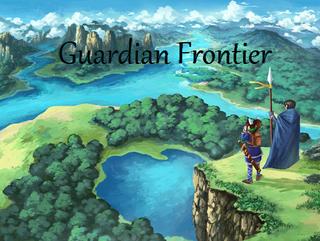
Guardian Frontier
An RPG with classic-style gameplay and a non-classic premise, inspired by the history of exploration and colonialism of the 19th century.
An RPG with classic-style gameplay and a non-classic premise, inspired by the history of exploration and colonialism of the 19th century.
Search
Filter
 All
All Game Pages
 User Statuses
 Amount of Magic in Fantasy
I didn't say that settings where magic is common are rare, when I referred to games being "that magic-centric," I meant it in the way LightningLord brought up, where instead of a sword-and-sorcery setting, the sorcery has muscled the swords offstage.
Right, it's normal to make magic a common part of the worldbuilding. But there's a world of difference between, say, Final Fantasy Tactics, where the methods of warfare and standards of living are pretty much the same as in our own world in medieval times, despite some fairly ubiquitous spellslingers mixed in, and a setting where the warfare is magic-based the way our world's warfare is munitions-based, the industries rely on magic, and magic is deeply imbedded in the social structure.
Pretty much the only game series which is analogous on that level is Pokemon, where the society is Pokemon-based to the degree that a fantasy setting could be magic-based. Except Pokemon takes it to a weirder extreme because Pokemon seem to be not just the means but also the end goal of most of their culture.
In conventional fantasy, the setting deviates from the world as we know it, but the audience already understands how. They know what typical medieval fantasy, or the typical JRPG era-confused fantasy, looks like. It's a setting to which magical elements have been added, but not a setting which has been transformed by the presence of magic.
author=LockeZ
Are they that rare? I don't think games where magic is exceedingly commonplace in the world are rare. Off the top of my head, the entire Dragon Warrior series works like that, as do Final Fantasy 1 through 5, Final Fantasy 9 through 14, the Final Fantasy Tactics series, the Final Fantasy Crystal Chronicles series, the Breath of Fire series, the SaGa series, the Tactics Ogre series, the Warcraft series, the Diablo series, the Touhou series, the Ultima series, the Lufia series, the Elder Scrolls series, the Tales of Seriesia, the Pokemon series, the Disgaea series, the Fire Emblem series, the first two Wild ARMs games, Xenogears, Legend of Mana, Chrono Cross, Baldur's Gate, Neverwinter Nights, Dungeon Siege, Chantelise, Recettear, and Legend of Legaia.
That doesn't sound rare. That sounds like 75% of my RPG library. That sounds like games where everyone in the world and takes it completely for granted has access to magic are overwhelmingly commonplace, to the point of being a serious problem.
Right, it's normal to make magic a common part of the worldbuilding. But there's a world of difference between, say, Final Fantasy Tactics, where the methods of warfare and standards of living are pretty much the same as in our own world in medieval times, despite some fairly ubiquitous spellslingers mixed in, and a setting where the warfare is magic-based the way our world's warfare is munitions-based, the industries rely on magic, and magic is deeply imbedded in the social structure.
Pretty much the only game series which is analogous on that level is Pokemon, where the society is Pokemon-based to the degree that a fantasy setting could be magic-based. Except Pokemon takes it to a weirder extreme because Pokemon seem to be not just the means but also the end goal of most of their culture.
In conventional fantasy, the setting deviates from the world as we know it, but the audience already understands how. They know what typical medieval fantasy, or the typical JRPG era-confused fantasy, looks like. It's a setting to which magical elements have been added, but not a setting which has been transformed by the presence of magic.
Amount of Magic in Fantasy
There might not be any good quotes to illustrate it, because games which are that magic-centric are so rare. I picked up the intended meaning because I've had thoughts along the same lines, but I've never seen a game which actually runs with the idea before. It probably would have been clearer if he had described the idea himself.
It's a good way to turn fantasy back into something which gives the player a sense of being exposed to a new and unfamiliar world. Generic medieval fantasy is too overexposed to cultivate curiosity at this point, but what about a setting where armored knights ride into battle and blast each other with thunderbolts, because the usefulness of magic completely supercedes weaponry, and magic-based troops are the core of armies. It gives the player reason to wonder what else about the setting is different from their usual experience, whereas in a conventional fantasy setting there's no reason to ask.
It's a good way to turn fantasy back into something which gives the player a sense of being exposed to a new and unfamiliar world. Generic medieval fantasy is too overexposed to cultivate curiosity at this point, but what about a setting where armored knights ride into battle and blast each other with thunderbolts, because the usefulness of magic completely supercedes weaponry, and magic-based troops are the core of armies. It gives the player reason to wonder what else about the setting is different from their usual experience, whereas in a conventional fantasy setting there's no reason to ask.
Amount of Magic in Fantasy
author=GreatRedSpirit
Hey, I think I saw this in a D&D campaign that I played in! Maybe, it was really boring and I spent more time bullshitting with the non-caster players for fairly obvious reasons.
Anyways magic is just another tool for a writer to use to add fantastical elements to a narrative or setting. It can be good because hey, it's magic! You don't have to explain shit. It isn't a get out of jail free card either though, if wizard mclongbeard can incapacitate their enemies in a multitude of ways with a flick of their wrist there's no tension in any scene. If there's no tension, then what's the point?
If Wizard McLongbeard can incapacitate his enemies in a multitude of ways with a flick of his wrist, the most obvious way to cultivate tension is to pit him against another wizard.
A person with a machine gun can mow down scores of unarmed fighters, or even armored knights. But it would be absurd to say that machine guns are too overpowered to give to protagonists in stories, we just give them to protagonists who're pitted against opponents with equal or superior weaponry.
Amount of Magic in Fantasy
So, I've been tossing a game idea of this style around for years, and considering the sort of graphical and coding investment it would take to make it as I'd like to, I'll probably continue to kick it around for years, but I think LightningLord's comment has a lot of sense to it.
It's not that there aren't ways to justify using both warriors and mages in combat within a single game's setting, but there's an almost complete absence of games that don't use these kind of justifications, even though they don't necessarily make much sense. Lots of the ideas we have about balancing the usefulness of magic and martial skill originate with tabletop roleplaying games like Dungeons and Dragons which offered players the chance to imagine themselves as adventurers in a variety of styles. They're designed for balance in a game which incorporates both kinds of combat, they're not explanations for why magic and martial skill logically have to be balanced in usefulness.
Considering how many JRPGs feature magic wielding teens and children, those games have already discarded the idea that magic takes long years of dedicated study to learn. The idea that mages are comparatively frail is usually preserved for game balance, but the same logic implies that there should be no buff college students. The idea that mages can't wear heavy armor is likewise a kludge- the original explanation is that it interferes with their concentration, and yet nothing prevents them from casting spells in the middle of a pitched battle surrounded by screaming and clashes of weapons. The real reason is that heavy armor is one of the main incentives to play a warrior-type character, and so it has to be restricted even though realistically speaking it's not that difficult to wear (a suit of full plate armor weighs about the same amount as the backpack overstuffed with textbooks I carried to and from high school, but the weight is much better distributed.)
If you stop deliberately making arrangements for balance, it's easy to envision a setting where magical means of warfare render skills like swordsmanship obsolete. I'd be interested to see a game where combat is all magic-based, and instead of HP, you have points representing the strength of the barriers standing between you and magical obliteration. Barriers could be shifted through a distribution of damage type affinities, so for instance if you expect to be attacked with a fire spell you can funnel most of the strength of the barrier into protecting against fire, even to the point that it'll absorb fire damage, but then if you get blindsided by another type of spell, it'll do massive damage. Healing magic only exists in a plot-based rather than mechanical context, and if any of your characters are attacked past the limits of their barrier, it's Game Over (which means the combat naturally has to be calibrated according to the assumption that a single character getting knocked out is a failure condition.)
It's not that there aren't ways to justify using both warriors and mages in combat within a single game's setting, but there's an almost complete absence of games that don't use these kind of justifications, even though they don't necessarily make much sense. Lots of the ideas we have about balancing the usefulness of magic and martial skill originate with tabletop roleplaying games like Dungeons and Dragons which offered players the chance to imagine themselves as adventurers in a variety of styles. They're designed for balance in a game which incorporates both kinds of combat, they're not explanations for why magic and martial skill logically have to be balanced in usefulness.
Considering how many JRPGs feature magic wielding teens and children, those games have already discarded the idea that magic takes long years of dedicated study to learn. The idea that mages are comparatively frail is usually preserved for game balance, but the same logic implies that there should be no buff college students. The idea that mages can't wear heavy armor is likewise a kludge- the original explanation is that it interferes with their concentration, and yet nothing prevents them from casting spells in the middle of a pitched battle surrounded by screaming and clashes of weapons. The real reason is that heavy armor is one of the main incentives to play a warrior-type character, and so it has to be restricted even though realistically speaking it's not that difficult to wear (a suit of full plate armor weighs about the same amount as the backpack overstuffed with textbooks I carried to and from high school, but the weight is much better distributed.)
If you stop deliberately making arrangements for balance, it's easy to envision a setting where magical means of warfare render skills like swordsmanship obsolete. I'd be interested to see a game where combat is all magic-based, and instead of HP, you have points representing the strength of the barriers standing between you and magical obliteration. Barriers could be shifted through a distribution of damage type affinities, so for instance if you expect to be attacked with a fire spell you can funnel most of the strength of the barrier into protecting against fire, even to the point that it'll absorb fire damage, but then if you get blindsided by another type of spell, it'll do massive damage. Healing magic only exists in a plot-based rather than mechanical context, and if any of your characters are attacked past the limits of their barrier, it's Game Over (which means the combat naturally has to be calibrated according to the assumption that a single character getting knocked out is a failure condition.)
Adding Humor and Fun to Serious Stories!
author=LockeZ
OK, FFT is actually a really good example of how to do it right. I should play the remake with the better translation so that I can actually understand the plot. It was incomprehensible in the original Playstation version.
Honestly, I thought the remake's translation was a lot worse than the original. I mean, it was better in that it didn't have any of the "this was the darkened items won't appear" bullshit that was in the first translation, but the really major translation issues were almost all confined to non-plot-related parts of the game. But most of the original version's dialogue is delivered in a style of direct simplicity. The last line in the game is quite possibly my single favorite line in all the games I've played, and it's just five words composing a question in such simple terms a kindergartener could understand it, but it's a question with the weight of a superbly developed character arc behind it. The remake, on the other hand, is full of faux-Elizabethian purple prose which I felt ruined the presentation. The remake could have shored up the weak areas and made the dialogue less stiff and more reflective of natural speech, but instead the dialogue ended up overblown and grandiloquent and thus even more unnatural.
author=Housekeeping
Maybe I'm forgetting something, but I can't remember Valkyrie Profile having any comedic moments. I loved that game.
As far as I remember, Valkyrie Profile has exactly one moment of attempted comedy, during the scenes leading up to the True Ending, which was pretty out of place considering the entire rest of the game leading up to that point. But at least it didn't break the fourth wall or otherwise trivialize the significance of the narrative, so it wasn't as disruptive as it could have been.
Valkyrie Profile didn't have particularly well written dialogue, and had a lot of weak voice acting, but it did a great job developing a consistent aesthetic and tone.
Vagrant Story probably took itself completely seriously throughout the entire narrative, but I'm not sure because I never finished it. I kept getting lost and the environments were ridiculously dark and hard to see properly, and I had trouble beating the bosses because I never figured out the bizarrely obtuse crafting system rules. I tried playing it again once I read about them online but I gave up almost immediately once I rediscovered how dark the environments are, since I was fed up with not being able to see what I was doing. It can be useful to develop a consistent aesthetic throughout the entire course of the game, but making design choices in the service of a consistent aesthetic doesn't exempt them from being obnoxious.
The only other JRPG I can think of off the top of my head which takes itself completely seriously according to a consistent atmosphere is Parasite Eve, which I'd definitely say was improved by it. The sequel seems to have had some slight fourth-wall breaking elements in the gameplay, but I never finished that one either; the transition to tank-controls along with combat mechanics heavily dependent on evasion just got on my nerves too much.
 An RPG without some of the JRPG.
author=Feldschlacht IVauthor=DesertopaI feel like...that wasn't always the case, or something??? I mean, yeah, it more or less has, but even then there seemed to be more distinction and focus on production and quality in the past at large. When I think of past titles like Xenogears/Saga, Breath of Fire III, Star Ocean 2, etc, sure, I enjoyed them as a teenager, but those titles seem to be fundamentally different than the very, very anime tropish games that saturated the market a few years afterwards. The aforementioned games may have beem marketed to teenage boys, sure, but they resonated to all ages. A lot of new JRPGs seem to be just for preteen shut ins or something.
JRPGs are mostly made with teenage boys as the primary market demographic, and every other group as a periphery demographic, and I think there are a lot of pervasive issues with the genre which are a consequence of that.
Even games like Lunar, which absolutely were made with a relatively young audience in mind, they're lightyears away in production value, creator care, and quality from the carbon copy gaijin-moe JRPG that defined the genre until relatively recently. What was the cultural shift that turned Star Ocean 2 into Star Ocean 4?
The line of thought 'this genre was made for a younger audience' can be true, sure, but quality seems pretty objective across time. The oldschool animated X-Men series? I can still watch that, it's legitimately entertaining. The Disney animated movie Hercules is one of my favorite films, period. Something being out of your age audience is one thing, but some of the stark differences we see in JRPGs is something different.
(this isn't a bemoanment on the state of JRPGs. As I mentioned, I like the genre, and the genre itself is actually rising up in a good way as of late, and there have been good gems throughout the years.)
Well, there were games without a lot of wide age group appeal in the earlier days too, but I think it's true that game designers have become a lot less willing to take risks or experiment than they used to be. The necessary man-hours to create a game at commercial standards have gone way up, and the industry seems to have responded by sticking more closely to formula. And the increase in graphical resources has given games something they can sell on even when the other elements are lackluster. In the old days, if you had a game with weak story and characters and unoriginal and tedious gameplay, you had a lousy game and nobody was likely to suspect otherwise. But with modern graphics, you can sell a game on flash and aesthetics, and convince plenty of buyers to take your game seriously. Selling games on moe appeal also might have been common years earlier if moe appeal were something you could easily achieve on SNES-PS1 hardware.
An RPG without some of the JRPG.
JRPGs are mostly made with teenage boys as the primary market demographic, and every other group as a periphery demographic, and I think there are a lot of pervasive issues with the genre which are a consequence of that.
WRPGs, on the other hand, are primarily targeted at young adult men, but that doesn't mean they generally endear themselves to me more; as Craze already alluded to, trying to create a mature or edgy story you don't have the writing chops for is generally worse than not trying in the first place.
I think that a game made according to the conventions of WRPGs could be at least as good as any JRPGs out there. But none of my favorite games are WRPGs. Why? It probably has a lot to do with the fact that there are, like, fifty JRPGs for every WRPG out there. If there were as many people trying to come up with interesting variations on the WRPG formula, the best they'd come up with would probably be a lot more impressive.
I think Matsuno is a great writer, and I'd probably have enjoyed FFXII a lot more if he'd been the one to carry it to completion. But I haven't really liked the gameplay styles of anything he's done outside of collaboration with Square/Square-Enix. Tactics Ogre is one of a small number of games I own which I've never finished, or even gotten very far in, and that's all down to design rather than narrative.
WRPGs, on the other hand, are primarily targeted at young adult men, but that doesn't mean they generally endear themselves to me more; as Craze already alluded to, trying to create a mature or edgy story you don't have the writing chops for is generally worse than not trying in the first place.
I think that a game made according to the conventions of WRPGs could be at least as good as any JRPGs out there. But none of my favorite games are WRPGs. Why? It probably has a lot to do with the fact that there are, like, fifty JRPGs for every WRPG out there. If there were as many people trying to come up with interesting variations on the WRPG formula, the best they'd come up with would probably be a lot more impressive.
author=Craze
Fake edit/addendum in reply to MOG's OP: As much as I appreciate Matsuno (which is varying... I like FF12, but hate Tactics Ogre), I find running around the disasteriffic Mt. Gagazet tutorial dungeon in punk black mage outfits or going through the nutriculture complex in palumpolum to be more memorable and engaging. idk maybe i'm weird. obviously this is all subjective
I think Matsuno is a great writer, and I'd probably have enjoyed FFXII a lot more if he'd been the one to carry it to completion. But I haven't really liked the gameplay styles of anything he's done outside of collaboration with Square/Square-Enix. Tactics Ogre is one of a small number of games I own which I've never finished, or even gotten very far in, and that's all down to design rather than narrative.
rpgmaker horror games nowadays
author=Sooz
Yeah, I'm not gonna say it'd be impossible to pull off an actually horrific sexualized child, just that it's 1) extremely, punishingly difficult to manage that while NOT attracting pedo creeps; and 2) probably not worth it, given the fact that the subject is so tainted with the pedobait brush that normal people are going to generally avoid the hell out of it. The payoff's just not really worth the sisyphean effort it'd require, unless you're the kind of person whose only validation is "I did thing." (In which case you are probably not reading this anyway.)
I don't think it's that weird to find validation as a writer in drawing something worthwhile out of a source nobody would expect. Or maybe it is, and that's just another way I'm weird. I mean, I spent a while working with the creator of Final Tear on a revamp of his game's script specifically because it was such a ludicrous prospect that it would be that much more interesting if I managed to make something good out of it. I still think it would have been possible, but I decided even if I managed it I'd probably still cause people to think I was crazy.
There are lots of weird and challenging things you can attempt as a writer which don't carry such a heavy risk to your reputation.
rpgmaker horror games nowadays
I'm with Housekeeping, considering the kind of horror we tend to imbue the idea of sexualizing children with, if you're going for horror, revulsion or anguish, I think there's a lot you could accomplish with a sexualized child character, even if there are some audience members who would take it differently.
On the other hand, I wouldn't want to be the one to try and pull it off.
On the other hand, I wouldn't want to be the one to try and pull it off.
What do you love/hate seeing in a game?
author=Craze
FFXII's "you should use a different slot" save crystals were the best. until they TRIED TO EAT YOU
You know, I honestly enjoyed that. Final Fantasy XII is like, 75% sidequests, and I'm too much of a completionist to just skip by all that, so it left me completely overleveled for the main plotline stuff, and that sort of thing helped to add a bit of tension back in. Of course, it probably would have made a lot more sense design-wise to stick that kind of stuff in sidequest areas where, if the players are more likely to get killed, at least they've kind of brought it on themselves.
author=Craze
Desertopa: I'd like to think that I write characters and dialogue in at least a fun way, but plot structure and NPCs completely elude me. traditional rpgs have so many major npcs and it's like... why write somebody that isn't a party member??? does not compute in the crazemind
Maybe I'm biased, but I feel like if a person can write good characters and dialogue, they can probably learn to write worthwhile plots, since I think you can approach plotting from a character-based perspective where putting together the overall structure of the story isn't so different from developing the structure of a conversation.
Do interactions with NPCs not interest you in the games you play, or is just about writing them? If it's the former, I guess it makes sense to focus on stories that lend themselves to an NPC-minimal setup, but if it's the latter then maybe you just need to approach the narrative with a different perspective?
If you ever feel like farming out NPC writing to someone else though, or having someone else to hammer out plot ideas with, I'd be happy to collaborate.
 Games - Tester
 Games - Other
