



 Full Games List
 Featured Games
 New Games
 Reviews
 Media
Media Images
 Blogs
Blogs Game Updates
 Images Feedback Summary
 Game Design Highlights
 Tutorials
 Articles
 Scripts
 Utilities / Plugins
 Resources
 Engines
 Engine Bulletins
 What is Makerscore?
 Past Events
 Achievements
 Misaos
 Forums
 Chat
Chat New to RMN?
 Full Store List
 RMN Music Pack (free)



 Profile
 Locker
 Play Lists
DESERTOPA'S PROFILE
Desertopa

775
 Close
Close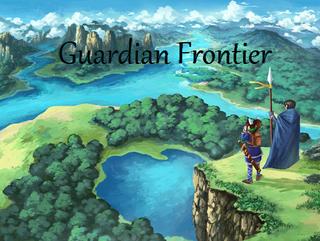
Guardian Frontier
An RPG with classic-style gameplay and a non-classic premise, inspired by the history of exploration and colonialism of the 19th century.
An RPG with classic-style gameplay and a non-classic premise, inspired by the history of exploration and colonialism of the 19th century.
Search
Filter
 All
All Game Pages
 User Statuses
 The Logomancer
I wouldn't say the combat is quite "regular RPG" fare, it's a lot more reliant on buffs, debuffs, and status effects (including some unorthodox ones) than most RPGs, and tends to demand more tactical investment even for relatively low level battles. But it's true that the differences are more of style than of kind.
 Chronicles of Tsufanubra
For what it's worth, I definitely appreciate the work you put into scripting the scenes, and I've been really happy to see you turning them into something much better than a flat recitation of the dialogue. Maybe you don't consider that part of the process your forte, but as someone who approaches games primarily from a story perspective, I think it's adding a lot to the game.
Chronicles of Tsufanubra
Considering there should be plenty of time for me to work on it once the script is finished before the game is complete, I don't see any reason not to. I'm still invested in seeing this project turn out as well as possible, and besides, I like writing dialogue.
 Your favorite RPG dungeon(s)
I got super stuck in Lufia 2 a bunch of times back when I first played it. Of course, I was a kid, and way worse at puzzles then than I am now. But the last time I replayed it, as a late teen if I remember correctly, some of them were still frustrating enough to make me resort to a guide (although I suppose I've been rather spoiled by having the option.)
I've always felt the final dungeon of Brave Fencer Musashi was really well put together. There are plenty of points in the game that demand puzzle-solving approaches which usually keep you lingering in one spot for a while while you figure them out, but the final dungeon, while not actually timed,unlike a couple other points in the game, is one of few points in the game which cultivates a sense of desperate urgency. Rather than keeping you pinned to one spot for any extended period, the final dungeon throws a barrage of obstacles which would be totally impassable without the complete complement of in-game abilities you've recently acquired, and wave upon wave of formidable enemies, which your character should by now be equipped to mow through with more or less constant momentum. It's well calibrated to make the player feel like the antagonists are throwing everything they've got at the protagonist, but he's become too much of a one-man-army for them to hold him off. Since the protagonist receives his abilities in a very piecemeal fashion over the course of the game, and most of them are only useful in very particular circumstances, but the final dungeon requires you to make full use of everything, it makes for a really satisfying conclusion.
Although none of its dungeons really featured significant puzzle content, or were particularly challenging to my recollection, I still remember the impression some of Final Fantasy VII's dungeons made on me for their atmospheric quality, especially the City of the Ancients.
The final dungeon of Dark Cloud (the Corridor of Time) also had a great atmosphere, and I thought it did a really good job integrating the exposition leading up to the final confrontation with the gameplay mechanics which had, previously in the game, been used for town-building.
I guess even though I like some good puzzles or challenging battles, it's the dungeons with exceptional atmosphere that really stick with me.
I've always felt the final dungeon of Brave Fencer Musashi was really well put together. There are plenty of points in the game that demand puzzle-solving approaches which usually keep you lingering in one spot for a while while you figure them out, but the final dungeon, while not actually timed,unlike a couple other points in the game, is one of few points in the game which cultivates a sense of desperate urgency. Rather than keeping you pinned to one spot for any extended period, the final dungeon throws a barrage of obstacles which would be totally impassable without the complete complement of in-game abilities you've recently acquired, and wave upon wave of formidable enemies, which your character should by now be equipped to mow through with more or less constant momentum. It's well calibrated to make the player feel like the antagonists are throwing everything they've got at the protagonist, but he's become too much of a one-man-army for them to hold him off. Since the protagonist receives his abilities in a very piecemeal fashion over the course of the game, and most of them are only useful in very particular circumstances, but the final dungeon requires you to make full use of everything, it makes for a really satisfying conclusion.
Although none of its dungeons really featured significant puzzle content, or were particularly challenging to my recollection, I still remember the impression some of Final Fantasy VII's dungeons made on me for their atmospheric quality, especially the City of the Ancients.
The final dungeon of Dark Cloud (the Corridor of Time) also had a great atmosphere, and I thought it did a really good job integrating the exposition leading up to the final confrontation with the gameplay mechanics which had, previously in the game, been used for town-building.
I guess even though I like some good puzzles or challenging battles, it's the dungeons with exceptional atmosphere that really stick with me.
Removing Dead Ends in Games
author=LockeZ
You're absolutely insane if you think making the player press A on every tile in the game is a good idea. It hasn't been done since the early PS1 for a really good goddamn reason: people figured out how to design video games better. Today no publisher would allow that, and no player would stomach that. Video game developers figured out a long fucking time ago to make that shit sparkle.
The most recent game I've played which used this was Golden Sun: Dark Dawn (released late 2010,) and although I never played it, considering it was a staple of the series in every preceding title, I suspect Dragon Quest IX also used it.
That's not to say I don't think it's a terrible idea. It drives me absolutely bonkers. Most of the Dragon Quest games manage to make it even worse by forcing you to use more than one button press in order to inspect random objects. But somehow, people kept, not just tolerating those games, but buying them in huge numbers (at least in Japan.) So I guess there must be a bunch of people out there who don't hate it that much.
Rather than making items sparkle or otherwise stand out, my favorite solution is to make a large portion of all objects inspectable, with interesting text on examination, with items occasionally hidden among those. It's a lot more work than just making items visually distinct, so it's really only appropriate for games with a heavy writing focus, but that's where my preferences lie in any case.
Deterministic Combat Systems
I've seen some games that did this particularly well. Kamidori Alchemy Meister had particularly engaging strategy gameplay with very transparent and predictable mechanics, but it's also an eroge (or a game with explicit sexual content,) so be aware that that's what you're in for if you decide to check it out.
Dealing with death as a plot point?
author=djbeardoauthor=FlyingJesterI think this is great, and if I was doing something like FFTactics with a giant party, I'd give it a shot. But my story right now is very character driven, so I can't afford anyone dying before the story allows them to. That said, the idea of perma-death is something that really ratchets up the tension.
Sometimes death is totally permanent in a game.
Take Fire Emblem. There is no 'faint' status. There's no 'mostly dead, so still a little bit alive'. There's just pushing up daisies.
I think there's also a lot of potential in a system that balances combat around the assumption that any of your main characters falling in battle results in a game over, rather than all of them having to fall at once. If being defeated in battle means "death," and the plot hinges on none of the protagonists dying, then you can just make each individual character's death a failure condition.
I can think of a couple games off the top of my head which did this, but both of them were more strategy game than traditional RPG. But there's no real reason you couldn't do the same thing with a more traditional RPG.
 Interesting/Inspiring RPGs
Ogre Battle actually drove me kind of crazy when I played it when I was younger. It probably would have still driven me crazy if I hadn't used a guide when I played it later. So much of the game hinges on stuff it doesn't tell you about. It's interesting that the narrative is so open (particularly for a game that came out on a console with such limitations on its memory space,) but I felt like it really didn't make it easy to either predict or explore the consequences of your choices.
For me, the top is example is probably Suikoden III. It's not generally considered the best of the Suikoden games, but it deviates from the typical RPG in a lot of ways that the other games in the series don't, and it's a source for a lot of interesting ideas I don't think I've seen anywhere else.
I talked about the character customization system in one of my earliest posts on this site, and the use of treasure chests in another post on that topic. But here's another thing it did which I found interesting. Fast turn-based boss battles. Rather than turning boss fights into a war of attrition, most of the plot-based boss battles in the game are decided one way or the other over a few turns.
Applying to the series more generally, I like the idea of having a large party of characters where a lot of the people you recruit serve purposes other than combat. It makes the protagonists' struggle seem less one-dimensional when they have to call on a bunch of people with widely different skill sets.
For me, the top is example is probably Suikoden III. It's not generally considered the best of the Suikoden games, but it deviates from the typical RPG in a lot of ways that the other games in the series don't, and it's a source for a lot of interesting ideas I don't think I've seen anywhere else.
I talked about the character customization system in one of my earliest posts on this site, and the use of treasure chests in another post on that topic. But here's another thing it did which I found interesting. Fast turn-based boss battles. Rather than turning boss fights into a war of attrition, most of the plot-based boss battles in the game are decided one way or the other over a few turns.
Applying to the series more generally, I like the idea of having a large party of characters where a lot of the people you recruit serve purposes other than combat. It makes the protagonists' struggle seem less one-dimensional when they have to call on a bunch of people with widely different skill sets.
Jimmy and the Pulsating Mass
I don't think you necessarily need a lot of writing in the demo to give people a sense of its quality. It's one thing to give people a meaningful cross section of the tone and themes across the entire plot, and another to give people enough information to make a quick judgment about how likely the writing is to be a draw for the game. I think you pulled it off well with the page intro for A Very Long Rope to the Top of the Sky. And when I'm looking for games on this site, if a game premise sounds interesting to me at all, usually the first thing I do is look to see if there are any page images featuring text. I think you can get a lot out of information out of even one or two dialogue boxes.
The Bad End
I can confirm that after all the shit I went through to get that scene, the whole thing was so inconsequential that it was basically over before I even realized it was happening. I am not about to forget that feeling of being ripped off.
There are two games I've played which made extensive use of bad endings where I felt like it really improved the tone of the game. In Fate/Stay Night, there are about twenty bad endings for every good ending in the game, but the endings follow quickly upon making the relevant choices, so you don't have to worry constantly about whether you screwed yourself over in the past and are just waiting to find out. It adds a sense of tension to the choices, and reinforces the idea that the protagonists are walking a razor's edge. As a visual novel choices are the only interactivity it has, so you'd think that this style would be a major feature of the medium, but in fact, the only other game I've played which carried off the same effect was Radiant Historia, a JRPG. The story hinged on a time travel/timeline hopping mechanic, with countless different points where the protagonist has to make decisions which may lead to disaster and may only be resolvable with knowledge or resources from other timelines, and as a result, all the "bad ends" actually do occur over the course of the game in the protagonist's personal timeline. The whole story is built around the idea that only an extremely narrow line through time leads to the desired result.
Not all games are as mechanically suited to it, but I really like the idea of using bad ends this way. Having bad endings which are more numerous than the good endings (but without giving the player the chance to get locked into them) helps cultivate the sense that the odds are stacked against the protagonists, and they have to be really careful about their choices.
There are two games I've played which made extensive use of bad endings where I felt like it really improved the tone of the game. In Fate/Stay Night, there are about twenty bad endings for every good ending in the game, but the endings follow quickly upon making the relevant choices, so you don't have to worry constantly about whether you screwed yourself over in the past and are just waiting to find out. It adds a sense of tension to the choices, and reinforces the idea that the protagonists are walking a razor's edge. As a visual novel choices are the only interactivity it has, so you'd think that this style would be a major feature of the medium, but in fact, the only other game I've played which carried off the same effect was Radiant Historia, a JRPG. The story hinged on a time travel/timeline hopping mechanic, with countless different points where the protagonist has to make decisions which may lead to disaster and may only be resolvable with knowledge or resources from other timelines, and as a result, all the "bad ends" actually do occur over the course of the game in the protagonist's personal timeline. The whole story is built around the idea that only an extremely narrow line through time leads to the desired result.
Not all games are as mechanically suited to it, but I really like the idea of using bad ends this way. Having bad endings which are more numerous than the good endings (but without giving the player the chance to get locked into them) helps cultivate the sense that the odds are stacked against the protagonists, and they have to be really careful about their choices.
 Games - Tester
 Games - Other
