



 Full Games List
 Featured Games
 New Games
 Reviews
 Media
Media Images
 Blogs
Blogs Game Updates
 Images Feedback Summary
 Game Design Highlights
 Tutorials
 Articles
 Scripts
 Utilities / Plugins
 Resources
 Engines
 Engine Bulletins
 What is Makerscore?
 Past Events
 Achievements
 Misaos
 Forums
 Chat
Chat New to RMN?
 Full Store List
 RMN Music Pack (free)



 Profile
 Locker
 Play Lists
DESERTOPA'S PROFILE
Desertopa

775
 Close
Close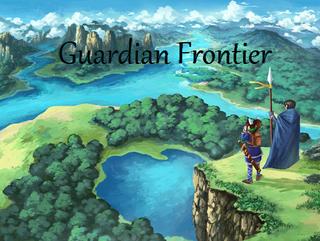
Guardian Frontier
An RPG with classic-style gameplay and a non-classic premise, inspired by the history of exploration and colonialism of the 19th century.
An RPG with classic-style gameplay and a non-classic premise, inspired by the history of exploration and colonialism of the 19th century.
Search
Filter
 All
All Game Pages
 User Statuses
 Prayer of the Faithless
author=argh
How are they maintaining that if the world's going to crap, though? Raising someone to adulthood is a huge resource investment, and it sounds like they don't have a lot of resources if parts of the continent are becoming uninhabitable. And if the knights die in battle a lot too... eventually the population will be worn down to nothing. Is a 10% stat boost really worth a 25% reduction in your able-bodied adults every year? It just seems like there are more economical ways of doing that -- modern militaries make soldiers kill dogs, which is also effective. (It also just doesn't make sense to me that people would hold back against inhuman monsters -- in real life, that hesitance is because we really don't like killing other humans in specific. But if there aren't many human enemies I suppose there's no other way to convey it...)
Going back a ways to participate in this discussion-
I agree that this seems like a poor decision tactics-wise. But I thought it still seemed fairly believable working from the assumption that the institution predates the whole issue with the miasma. If the knights have worked that way for a long time, then to change the tradition in order to conserve manpower would essentially mean doing away with the institution of the knights, or at least with the prospect of replenishing their ranks, at a time when the people's morale may particularly depend on them. It would be a bad idea to create such a tradition in conditions like these, but when it already exists and people are invested in it, it doesn't seem as strange that they would keep it.
It does seem somewhat more surprising to me that Mia would have enlisted in the first place for the sake of money, knowing that becoming a knight would inevitably mean taking another person's life, and for no especially just cause. It's hard for me to see her ever sitting down and deciding that the money was worth someone else dying for.
Prayer of the Faithless
I just finished playing through the prologue, and I'm really eager to see where the rest of the game goes from here.
I encountered a bug in my playthrough which didn't impede my progress, but occurred consistently when I re-tested the conditions that led to it, and could theoretically trap a player with an unwinnable save file. After Aeyr and Amalie return from their expedition and Amalie leaves the party, Aeyre can leave the city by himself. However, when he tries to re-enter, the screen doesn't load properly; the screen is black and static, and while it's possible to access the status menu, no other inputs outside it have any effect, so I was forced to reset whenever I reached this point. If the player for some reason saved their game in the forest at this point, it would be impossible to progress on that file.
Since there's no incentive in story terms to let the player go wandering off out of the city at this point, the problem could be resolved simply by adding a message that blocks Aeyr from leaving the city and walking back into the oncoming fog like a dumbass (which I mainly only tried in the first place just to see if the game would let me.)
I encountered a bug in my playthrough which didn't impede my progress, but occurred consistently when I re-tested the conditions that led to it, and could theoretically trap a player with an unwinnable save file. After Aeyr and Amalie return from their expedition and Amalie leaves the party, Aeyre can leave the city by himself. However, when he tries to re-enter, the screen doesn't load properly; the screen is black and static, and while it's possible to access the status menu, no other inputs outside it have any effect, so I was forced to reset whenever I reached this point. If the player for some reason saved their game in the forest at this point, it would be impossible to progress on that file.
Since there's no incentive in story terms to let the player go wandering off out of the city at this point, the problem could be resolved simply by adding a message that blocks Aeyr from leaving the city and walking back into the oncoming fog like a dumbass (which I mainly only tried in the first place just to see if the game would let me.)
 The Bonus Dungeon is the Final Dungeon?
I think that solves some of the problems with bonus dungeons at the expense of introducing completely new major problems. It gives the player a new cast which they haven't built up any investment in, A new conflict with no buildup, and a mechanical contrivance (a completely new cast which just happens to have identical equipment and abilities,) which assaults suspension of disbelief. I think that even something like the Seraphic Gate in Valkyrie Profile, which uses the same characters as the main game but has no pretense of having anything to do with the plot, would be less jarring.
Are we too generous with game reviews?
author=Pancaek
...How would you know a game is that bad if you haven't played it?
Granted it is pretty easy to spot a low quality game, but at the same time it's hard to really accurately judge a game if you haven't played it. Maybe the art is really bad but the writing and game-play is outstanding.
This is one reason I really think any game which rests to any significant extent on the quality of its writing really should contain screenshots of dialogue or other significant text on its game page. Even if it doesn't reveal anything about the narrative structure, you can tell a lot about the quality of writing in a game from just a few lines.
Lacking any particular sign that a game is good though, I'll tend to assume most games are not, and I suspect most people on this site do the same. Most people don't touch the vast majority of games on the site, after all. So it's no surprise if review scores skew higher than "average," since not only are people less likely to review games they weren't enthusiastic enough to finish, but they're going to tend not to bother playing games in the first place which they don't expect to be better than average. If anything, the average unreviewed game would probably garner ratings significantly below 3 stars if members were forced to play and review them.
RMN's (New) Favourite RM Games Of All Time Thread (2016 Edition)
I'm hesitant to put any game on my top 10 list which I haven't finished, or which isn't finished itself, so there are some good games which I've played which I wouldn't put on my list, and some other games which I have played to completion which I won't award "top 10" status over other games which don't meet my qualifying criteria, so my list is going to be under 10 entries. I've added the engines only for the entries which don't already have places on the list.
1: Last Scenario
2: Exit Fate
3: Embric of Wulfhammer's Castle: 2k3(this wasn't even on the list before, but it's my favorite 'doesn't properly qualify as an RPG' game made in an RPGMaker engine and it would take a lot to bump it further down in my rankings than this.)
4: Three the Hard Way
5: The Logomancer: VXA
1: Last Scenario
2: Exit Fate
3: Embric of Wulfhammer's Castle: 2k3(this wasn't even on the list before, but it's my favorite 'doesn't properly qualify as an RPG' game made in an RPGMaker engine and it would take a lot to bump it further down in my rankings than this.)
4: Three the Hard Way
5: The Logomancer: VXA
The Bonus Dungeon is the Final Dungeon?
author=Jeroen_Sol
Considering the heavily lauded Final Fantasy and Legend of Zelda series both do this exact thing, I question your assertion that people feel narrative is trivialized by such player freedom. Some people may feel less invested in the story if it can be put on hold, sure, but I don't think many people do.
Just because they're popular, doesn't mean they're faultless. Certainly I've known many players other than myself to complain about how silly this is.
It's not like there aren't plenty of ways around this. You can make a final dungeon where the Big Bad is waiting for the protagonists to show up for the final confrontation, and won't proceed without them. You can make the bonus content available before the Point Of No Return where the plot becomes time-critical, and make it clear what events will trigger that point so the player knows to get everything else out of the way before moving on. You can put bonus content in an epilogue after the main conflict has already been dealt with. With time travel elements, the protagonists can put the final confrontation on hold indefinitely, because it always takes place at a specific point in time, and they can approach that time whenever it's most convenient for them. You can have a final confrontation which actually occurs on the protagonists' initiative rather than the antagonists', so they can choose when to take the fight to the Big Bad.
If you don't actually care that much about the narrative, then you don't need to worry about these sorts of things. But if you want the narrative to be a major selling point for the audience, it's generally better to keep the gameplay and narrative in support of each other rather than letting one undermine the other.
The Bonus Dungeon is the Final Dungeon?
author=Jeroen_Solauthor=DesertopaI... don't agree this is a valid argument. "Just because" is a completely valid reason for the player characters to do anything. It is also the reason people backtrack to previous towns, and kill lots of monsters in order to level grind. In many games, neither of these things make sense from a plot perspective, especially while the great threat of the final boss is looming over the world. Does that mean you shouldn't allow backtracking or grinding in rpgs? No, because limiting the freedom of the player like that would be no fun whatsoever.
I agree with RedNova that I'd find it pretty weird in storytelling terms for the player characters to deliberately impose the challenge of an unnecessarily harder dungeon on themselves... just because.
"Just because" is adequate reason for the player characters to do some things. Some games do limit backtracking and grinding (a lot of designers look for ways to limit grinding,) but I also prefer it when games permit those things... as long as there isn't a pressing plot reason not to.
Like, at times when the plot doesn't carry a great deal of urgency, there's no particular reason why the protagonists shouldn't be able to wander around aimlessly, revisiting old locations, completing sidequests, etc. If the plot entails that the protagonists are on the run and are constantly being tailed by people trying to apprehend them, and you still let the player wander around aimlessly, backtracking and hanging around to complete sidequests, then you're trivializing your own narrative for the sake of player freedom.
Or, to apply this to a case which a lot of video games actually use, if you want to let the player wander around right near the end of the game completing sidequests, finishing off subplots and such, it's better to make sure that this isn't a point where the plot says the world is in imminent danger of destruction where every second counts towards ending the final conflict.
I enjoy having freedom as a player, but I don't like it when exercising that freedom means doing things that seem dumb in the context of the narrative.
The Bonus Dungeon is the Final Dungeon?
I agree with RedNova that I'd find it pretty weird in storytelling terms for the player characters to deliberately impose the challenge of an unnecessarily harder dungeon on themselves... just because. But there are ways to keep the final boss seeming climactic in story terms even when you have a bonus dungeon that's more difficult in gameplay terms. For instance, you can invoke Eleventh Hour Superpowers (tvtropes link) which make it clear that even if the final boss is mechanically easier, you wouldn't be able to beat it wielding only the same powers with which you fought the bonus boss. Personas 3 and 4 both provide good examples of this; both have bonus bosses that require extreme leveling and tweaking to beat, but have final bosses which would be undefeatable without powers which you only wield in the specific circumstances of those battles. Also, if the point of the final boss was never that they were the strongest and largest scale threat to the world which nobody else could overcome, but that they're personally behind the conflict which the protagonists are most invested in, then I think you can maintain a lot of weight for the final confrontation even if you give the player the opportunity to face other challenges which are strictly harder.
Dragon Quest VI had an interesting approach to the "bonus dungeon which is also the final dungeon" idea. The plot features a city which was ruined in the distant past by trying to summon a being which could defeat the Final Boss for them. Unfortunately, instead of fighting the Final Boss, the summoned being just destroyed their castle and killed everybody. But once you've beaten the final boss normally (or cheated to unlock every job class before the final dungeon,) you go back to a point before you beat it, but can now access a final dungeon which, after a long winding trip, leads you to that same being which was summoned back then. It provides a much more difficult bonus boss fight, and if you beat it, you get an alternate ending sequence where it performs the service it was originally summoned for: kicking the ass of the final boss for you.
Dragon Quest VI had an interesting approach to the "bonus dungeon which is also the final dungeon" idea. The plot features a city which was ruined in the distant past by trying to summon a being which could defeat the Final Boss for them. Unfortunately, instead of fighting the Final Boss, the summoned being just destroyed their castle and killed everybody. But once you've beaten the final boss normally (or cheated to unlock every job class before the final dungeon,) you go back to a point before you beat it, but can now access a final dungeon which, after a long winding trip, leads you to that same being which was summoned back then. It provides a much more difficult bonus boss fight, and if you beat it, you get an alternate ending sequence where it performs the service it was originally summoned for: kicking the ass of the final boss for you.
 Would it bother you guys, and girls if I make it so you can't enter houses in towns, but can enter shops?
author=Linkis
WRONG !!!! :)
Sorry Desertopa but other than being called a thief, I love searching for things.
If you feel that way, then you also don't like finding chests in caves.
That clearly doesn't follow. Treasure chests in caves are a visually distinct marker of something that you can search for an item. If you see one, you know there's an item there, even if you can't get to the chest as soon as you see it it's an obvious target.
If you hide items in random boxes and barrels and such, there's no such distinct marker, so instead if the player wants to seek out the available treasure, they have to wander around clicking on random objects most of which do nothing. It's one thing to "explore" a map by wandering around and seeing all the content the designer saw fit to include, it's another to "explore" the map by scouring the perimeter clicking on every object, when most of them aren't even interactive. Still worse when you get some kind of message like "there's nothing inside the barrel" most of the time.
If you want the player to enjoy a game, it's better not to incentivize them to engage in activities they would find unfun if they weren't doing it for a reward. If NPCs in your game are interesting and fun to talk to, rewarding the player for interacting with them occasionally gives them positive feedback for something they would have liked doing anyway. If they're boring and tedious, rewarding the player for interacting with them gives them an incentive to engage in activity which would normally be a slog.
If your environments are full of interactive objects which offer interesting feedback for players who examine them, then by all means give the player the occasional material reward for engaging in an activity that's designed to be fun anyway. But scouring maps clicking on nondescript, mostly non-interactive items is not something anyone would normally do for fun without a reward.
Would it bother you guys, and girls if I make it so you can't enter houses in towns, but can enter shops?
I look for some pretty different things in games from LockeZ, but I'm going to broadly echo his advice here. I personally think that you should never allow the player party to enter NPC houses unless you have some particularly interesting content to justify it. Personally, I love wandering around talking to people and examining things for interesting dialogue and text, but not only does letting player characters randomly walk into strangers' house not make a lot of sense, most games just don't fill them with interesting enough content to reward the completionist impulse to explore them. I'd especially advise against letting the player explore NPCs' houses for the sake of finding random items hidden around them. Yes, it can be nice finding some extra loot to reward your exploration, but when the "exploration" consists of wandering around clicking random objects to see if items come out, you're rewarding activities which are intrinsically not very fun. You don't want to motivate your players to engage in drudgery.
If you have some particularly interesting content in mind to include in NPCs' houses, I think that by all means it's worth keeping in the game, but I think that if you're in the position of already having interesting ideas for the content, you're probably not at the point of contemplating whether to cut it out entirely.
If you have some particularly interesting content in mind to include in NPCs' houses, I think that by all means it's worth keeping in the game, but I think that if you're in the position of already having interesting ideas for the content, you're probably not at the point of contemplating whether to cut it out entirely.
 Games - Tester
 Games - Other
