



 Full Games List
 Featured Games
 New Games
 Reviews
 Media
Media Images
 Blogs
Blogs Game Updates
 Images Feedback Summary
 Game Design Highlights
 Tutorials
 Articles
 Scripts
 Utilities / Plugins
 Resources
 Engines
 Engine Bulletins
 What is Makerscore?
 Past Events
 Achievements
 Misaos
 Forums
 Chat
Chat New to RMN?
 Full Store List
 RMN Music Pack (free)



 Profile
 Locker
 Play Lists
DESERTOPA'S PROFILE
Desertopa

775
 Close
Close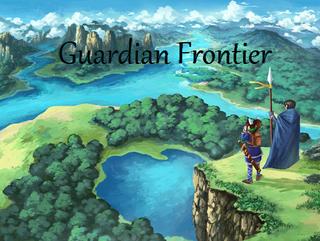
Guardian Frontier
An RPG with classic-style gameplay and a non-classic premise, inspired by the history of exploration and colonialism of the 19th century.
An RPG with classic-style gameplay and a non-classic premise, inspired by the history of exploration and colonialism of the 19th century.
Search
Filter
 All
All Game Pages
 User Statuses
 Amount of Magic in Fantasy
Well, I don't think games with heavier use of fantastical elements are inherently better. There's a lot of potential to do interesting stuff with them, but the same potential exists for less fantastical works for pretty much the same reason; it pushes you to do something original with the setting and mechanics.
Amount of Magic in Fantasy
If you count healing factors, I've seen quite a few, but there's a difference between tanking damage because you regenerate almost immediately, and alternating between wailing on someone and patching yourself up. Having to divide your attentions between hurting your opponent and un-hurting yourself is generally going to look sillier, and I can't think of any media other than video games which use it off the top of my head (although maybe it's showed up in stuff I haven't seen?)
Which is another way you could get novel strategy out of different healing mechanics. If all healing is regeneration-based, rather than restoring health in one shot, it forces the player to plan around the relative rates of damage taken and healed per time.
Which is another way you could get novel strategy out of different healing mechanics. If all healing is regeneration-based, rather than restoring health in one shot, it forces the player to plan around the relative rates of damage taken and healed per time.
Amount of Magic in Fantasy
author=LightningLord2
In defense of in-battle healing, it is usually necessary because combatants deal very high damage relative to their health, which makes healing needed to keep the battle from being over in a few turns. Also, it is your only answer to damage in turn-based games usually as you can't prevent your opponent from dealing damage in most games.
Well, yes, characters usually receive very high damage per turn relative to their total health, in games where the combat is designed to account for in-battle healing.
The reason I'm interested in systems that do away with in-game healing isn't because I particularly hate in-game healing as a mechanic (although it does seem pretty silly if you try to portray it in any context other than video games. Imagine any movie based on a video game showing the protagonists fighting powerful enemies by getting wailed on and healing themselves over and over.) It's because doing away with it basically forces you to do something significantly original with your game's combat tactics.
'Just these four, and leave the rest alone'. A discussion on Players and Parties.
author=Feldschlacht IVauthor=DesertI'm not sure I agree with that. Yes, once you get to a certain level of play, you realize that some characters are just flat out more useful in battle than others (Opera and Ashton being top tier freaks, and Ernest and Noel warming the bench...forever), but all of the characters had plenty of outside battle diversity due to the Item Creation system, and different characters having different Talents and items that only certain characters could make and possess.
Star Ocean 2 was kind of similar. Gameplay-wise, there's not a lot of incentive to use your full team of characters
See, I think this was the beginning of a good system of incentives to have a diverse party even if you don't use them much in combat. But in practice, since the crafting abilities and such are tied to level ups, everyone can learn all the skills (except for Alchemy, which requires the Gift of Mana talent, but about half the characters have that,) and characters' unique crafting items aren't often useful for anyone but themselves, it doesn't offer that much incentive to recruit characters you don't want for combat. On the other hand, the Private Actions system does offer plenty of incentive for mixing things up, if you care about the character relations at all.
I think it would be cool to sort of mix and match elements of the crafting system from the early Star Ocean games with a system of roles and talents like the one used in Suikoden 3.Some characters are just much better at certain crafts than others, and trying to train up the less talented one for that role would be a waste. Let's say that you also get either no money or a paltry sum from fighting regular battles, so you need characters with other skills to raise money. And eventually you get a base, as in the Suikoden games, but you need money for its upkeep. So you have some characters who you want for fighting, and others who you want to perform various roles around the base which are essential to its upkeep and operations. Maybe have some characters be mutually exclusive and make the characters choose between crafts they want available, or between a good base character or an A team fighting character.
'Just these four, and leave the rest alone'. A discussion on Players and Parties.
I feel like, if you have significantly more party members in a playthrough than you can use in an active party at once, there should be something interesting they can do aside from just participate in battles.
I think the Suikoden games had a good approach to this- lots of characters serve roles entirely separate from combat, and they liven up your base and participate in scenes even if you have very little actual use for them. The tactical battle sequences offer some gameplay reward for collecting extra fighting-oriented characters even if you don't actually use them much in active combat, but I usually felt like the gameplay reward to getting a lot of the character was secondary to the aesthetic or story-related reward.
Star Ocean 2 was kind of similar. Gameplay-wise, there's not a lot of incentive to use your full team of characters. But the party dynamics are interesting enough to make the game worth replaying with different characters recruited on different playthroughs, even though some characters may just be objectively less useful in gameplay.
Tricks to keep party diversity tactically useful can be fun, but sometimes the games which make me care most about the makeup of my party are the ones where I end up thinking of the characters more in terms of cast members rather than team members.
I think the Suikoden games had a good approach to this- lots of characters serve roles entirely separate from combat, and they liven up your base and participate in scenes even if you have very little actual use for them. The tactical battle sequences offer some gameplay reward for collecting extra fighting-oriented characters even if you don't actually use them much in active combat, but I usually felt like the gameplay reward to getting a lot of the character was secondary to the aesthetic or story-related reward.
Star Ocean 2 was kind of similar. Gameplay-wise, there's not a lot of incentive to use your full team of characters. But the party dynamics are interesting enough to make the game worth replaying with different characters recruited on different playthroughs, even though some characters may just be objectively less useful in gameplay.
Tricks to keep party diversity tactically useful can be fun, but sometimes the games which make me care most about the makeup of my party are the ones where I end up thinking of the characters more in terms of cast members rather than team members.
 Character-Specific Abilities
I'd suggest maybe changing the name of Bad Breath to Curse or Hex. Bad Breath is pretty strongly tied to Final Fantasy, and Lifa does demonstrate some familiarity with curses in the course of the game. Plus, her breath is probably better than Sando's at least.
Amount of Magic in Fantasy
author=Crystalgate
Personally, if you're going to go with with low magic or no magic, I think it would be more interesting to expand the fighter skills instead of trying to replace magic with science or something else. A multi target debuff would not make much sense for fighters, but it's easy enough to imagine a strike stunning or crippling an enemy. That blow should also deal damage, it makes no sense if you injured an enemy's muscles, but said enemy is still considered uninjured as far as HP goes. So, you may not have a multi target debuff anymore, but instead you get single target debuffs that also deals damage.
Defense can be expanded so that it's less about being tanky and more about different defenses working in different situations. If you're up against a giant, one swing from it will probably hurt a lot even if you have plate armor, but if it's slow and clumsy, a character with high evasion will not get hit. On the other hand, if you're up against a lot of wolves, it's very hard to avoid them when many of them are pouncing you simultaneously, but the wolves will have a hard time biting trough plate. So, armor is good against a massive number of weak blows while evasion is good against strong, but slow, attacks.
What we get then is an RPG that doesn't have magic, but is instead more focused on martial skills.
I personally like the idea of an RPG without magical elements, which separates characters' abilities into "techniques" and "armaments." Characters become progressively more versatile through accumulation of techniques, but have limited space in which to carry auxiliary weapons like crossbows, flails, naphtha grenades, etc. Combined with real-time combat and mobility over the battlefield (as in the Star Ocean games, for example,) distance, timing and area become as important to the value of abilities as damage, cost and weakness exploitation.
Also, since the mechanics enable tactics involving outright avoidance or control of the enemies' ability to effectively attack your characters, it becomes more practical to minimize or eliminate the role of in-battle healing (something that generally doesn't make a lot of sense without the invocation of magic.)
Amount of Magic in Fantasy
author=Sooz
Given how LL2 is basically saying, "Anything that isn't just normal attacks counts as a thing magic users can do to beat a warrior," I can't see that interpretation. Your own statements have been all over the map, to the point that I can't tell what you're trying to say, other than "I like when games are made good, also magic."
My point is: in videro game mechanics terms, there is no such thing as magic user vs. not-magic user. There is only "character that uses a command that does this thing." It does not matter one jot whether the "hit all" command is magical lightning, a hail of bullets, or a really fast guy punching the shit out of the enemy's stupid faces. It does not matter whether the "heal" command is woogety, potions, or candy. This is all flavor, and doesn't make a difference to the point of game balance.
In terms of story, there's plenty to be covered, but in the majority of cases, it doesn't matter a lot to the core narrative, and too much focus can leave the player feeling confused and bored. I'm all for faffing about with flights of worldbuilding fancy, but you don't always need to show your work, at least in the narrative itself.
Basically, I just don't see why anyone feels like there needs to be more focus on magic anywhere; it seems pretty popular and thought out in just about any pro game I've seen.
Okay, honestly at this point I'm not entirely sure what point LightningLord2 is trying to make either, so I'm content to leave that out of the discussion. But I'll try to sum up what I've been trying to say more clearly.
There's a well established tradition in RPGs of including fantastical elements, but employing a system where the usefulness of outright magical elements is kept balanced with the usefulness of nonmagical elements. Like, in every one of the games LockeZ brought up as examples of settings where fantastical elements are common, there's a system of balance in play where hitting stuff with a sword is a viable component of strategy alongside blasting stuff with spells. And I think this suggests a significant gap in the genre that could be filled in an interesting way, by creating settings that don't work like that. Settings where magic is strictly dominant over things like hitting people with swords, and the story and gameplay are designed to reflect that, are underexplored in the medium. Like, if the set of fantasy works were all invariably set in a medieval world, someone could notice "hey, we could make a fantasy story that's not set in a medieval world," and start exploring the potential of urban fantasy.
In terms of game mechanics, you're right, at a certain level of abstraction, there's no real distinction between "magic" and "not-magic." But story elements affect how players interpret that gameplay, and provide a framework that helps designers shape their gameplay decisions. In pure gameplay terms, there's nothing in particular that says that Manifest is a game which features both magic and physical attacks, and The Logomancer is a game which doesn't contain either. But the fact that The Logomancer was written to be an RPG "without fighting" gave a novel character to the story, and also gave incentive and justification for a more unorthodox "combat" system. If The Logomancer had gameplay which were more or less identical to games like Manifest, players would probably have felt more shortchanged by the premise.
I think that, like the idea of RPGs where conflict is resolved through discourse rather than combat, which has led to some interesting and original games (another example here,) the idea of fantasy RPGs where magic is strictly dominant over mundane skills like swordsmanship or thievery, and conflict mostly occurs in the context of magic vs. magic, is one with a lot of unexplored potential.
Amount of Magic in Fantasy
author=Sooz
Nah, it was in response to this:author=Desertopa
I think it's only "boring" to design the world that way if you attempt to make accommodations for other types of characters in gameplay, but do it badly. If you have both fighters and wizards in the game, but the wizards make the fighters look shitty, that's bad game design. But if you have a game where there are no "fighters," just various kinds of wizards, then it's not a flaw in the setting's magic design that it isn't balanced for parity with dudes swinging swords.
I think that's a really uncharitable response to the point I've been trying to make here.
LightningLord2 opened with a post about a game where, instead of being balanced for gameplay parity with fighters, rogues and such, the player characters are all magic users and the game is balanced entirely in terms of magic use. Other commenters interpreted this as a statement suggesting that magic users ought to be balanced to be stronger in comparison to non-magical characters, and disagreed- magic users should be well balanced with nonmagical characters for good gameplay. I commented that magic users don't have to be balanced against nonmagical characters if the game focuses on conflict between magic users and other magic users, where the disparity between wizards and swordsmen and such isn't relevant in context. I claimed that games which develop this kind of magic-centric setting are rare, and that I thought it would be interesting to create more works along these lines. You and LockeZ replied that there are plenty of game settings where magic is common, but drew entirely on examples where magic is intended for gameplay balance with nonmagical characters, which is exactly what I was saying I thought it would be interesting and original to not do.
When Liberty made the comment that
author=Liberty
Magic would only 'own' everything if you were boring and designed your world that way. It's limitations are up to you, the creator, so if it's a case of magic being overpowered, that is your fault as the creator. Obviously.
I responded that while I thought it was bad game design to have magic be overpowered against everything else when there's an "everything else" for it to be overpowered against, you can make a game where magic is balanced against other magic, and that doesn't have to be boring. Because I felt that the comment missed the point that LightningLord2 and I had been making over the course of the thread, that "balance" doesn't have to be defined in terms of balance between some specific set of roles which includes warriors, wizards, rogues and such. And you interpreted this as a comment that, I don't know, it's better to have balance than not to have it?
I guess I haven't been expressing myself very clearly in this thread, but it feels like you've reached a point where you're interpreting my comments in light of a presumption that I don't have anything sensible to say on the subject.
Amount of Magic in Fantasy
author=Liberty
Magic would only 'own' everything if you were boring and designed your world that way. It's limitations are up to you, the creator, so if it's a case of magic being overpowered, that is your fault as the creator. Obviously.
There are tons of magic out there in books that have drawbacks - using up the life of the user, only being able to be cast during certain phases of the moon, requiring certain items in order to be cast and the like. If you make a game with magic that doesn't have drawbacks then that's your problem. Fix it.
For example, I have one game where elemental magic can only be used by Masters of the art. One character has the power of a Master but none of the control, so during battle she'll occasionally draw in too much power to deal with and create a shockwave that will hit both enemies and allies - so you have to keep a watch on her. As for enemies, they have enchanted pieces of armour (most enemies are guards that are part of an evil Lord Magician's army, so kitted out against attack from magic).
It's your world, create a way to protect your melee characters ffs.
_____________________
I think it's only "boring" to design the world that way if you attempt to make accommodations for other types of characters in gameplay, but do it badly. If you have both fighters and wizards in the game, but the wizards make the fighters look shitty, that's bad game design. But if you have a game where there are no "fighters," just various kinds of wizards, then it's not a flaw in the setting's magic design that it isn't balanced for parity with dudes swinging swords.
I'm not clear on what LightningLord2 is arguing at this point, but if I go ahead and self-servingly interpret it in terms of what I already agree with, I think the point is that while it's boring to make a game with wizards, rogues, fighters, etc., which is completely unbalanced and the wizards own everyone, there's a lot of potential for gameplay and story originality in a setting where rather than having fighters, rogues and such, the wizards are all balanced against other kinds of wizards.
 Games - Tester
 Games - Other
