



 Full Games List
 Featured Games
 New Games
 Reviews
 Media
Media Images
 Blogs
Blogs Game Updates
 Images Feedback Summary
 Game Design Highlights
 Tutorials
 Articles
 Scripts
 Utilities / Plugins
 Resources
 Engines
 Engine Bulletins
 What is Makerscore?
 Past Events
 Achievements
 Misaos
 Forums
 Chat
Chat New to RMN?
 Full Store List
 RMN Music Pack (free)



 Profile
 Locker
 Play Lists
DESERTOPA'S PROFILE
Desertopa

775
 Close
Close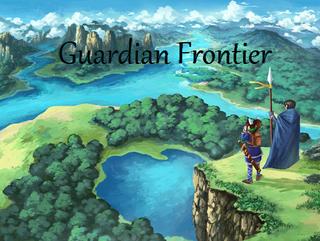
Guardian Frontier
An RPG with classic-style gameplay and a non-classic premise, inspired by the history of exploration and colonialism of the 19th century.
An RPG with classic-style gameplay and a non-classic premise, inspired by the history of exploration and colonialism of the 19th century.
Search
Filter
 All
All Game Pages
 User Statuses
 To new game+, or not to new game+?
I think the New Game+ store or menu option is a good idea, but I'd add to that that you shouldn't necessarily restrict yourself to offering the player options that'll preserve challenge. The players being offered a New Game+ have already completed the game; some of them may want to find more ways to challenge themselves, others will want different ways to get enjoyment out of the game. Sometimes a New Game+ can be a source of catharsis, allowing players to obliterate obstacles which were challenging the first time around.
 Discrimination within the narrative
author=emmych
idk. I don't like to directly address discrimination because I already do that irl. I like my escapism. I'm sick of lazy narratives that end with the radical thought "DISCRIMINATION... IS WRONG MAYBE... WOW" since w/e man a literal 4 year old could tell you that. If you can't do better than that, don't include it (not addressing you personally, here, that was a general you!)
This is something I get tired of a lot too. I feel kind of similarly to how LockeZ described his own attitude, although I don't think it's so much that I'm cynical by preference as that the stories which don't take such a tired and cliched approach to moral issues tend to be more cynical, and I find it refreshing just to see them taking a more original approach. I'd be happy to see narratives that resolve everything with a happy ending if they would at least acknowledge that the problems they're dealing with are difficult and require more than pat moral platitudes to resolve them.
To me, really the most appealing thing about the prospect of making prejudice or discrimination a significant part of a narrative is the fact that so many writers stick to the same trite messages that, as you put it, a four year old could tell you, that it's pretty easy to come up with an approach that the audience hasn't seen before and won't see coming.
Discrimination within the narrative
author=emmych
tbh i don't really like writing stories about discrimination because
a) if i'm talking about certain topics, like race, it's probably Weird for me as a white person to write an impassioned story about what it feels like to be a POC and experience racism when i have never experienced that in my life (like legit, why would i want to tell that story so bad), and
b) when it comes to discrimination i actually face irl, i don't usually feel like spending my time creating something getting upset about real bullshit i have to deal with. i recognize the place and value of stories that folks like me will tell about their experiences (case and point: Dorian from DA:I being written by a gay man and having part of his plot revolve around Fantasy Conversion Therapy), but maaan i just don't wanna do it? if i'm gonna tackle a serious topic, i'd rather it not be "here have a collection of characters you're all supposed to empathize with. now let's make one of them be a blatant homophobe so the gay character can get Uncomf but ultimately teach the homophobe to not be homophobic."
i just wanna make a game about underrepresented people being excellent, man. if you wanna write a v personal story, go for it! it can be real cathartic (THE LAST ENCOUNTER IN FREE SPIRITS IS BASICALLY MY MOMMA ISSUES) and can do some real cool things for other folks who share that experience/teach people who want to learn, but for the most part, nah. count me out.
I realize this doesn't appear to actually answer your "but how to do this" question, but it does! My answer is "don't bother, write about something nicer than systemic oppression unless that's the point of the story" which is not the "correct" response here, but it is the stance I usually take.
I think it's good to be able to incorporate elements of prejudice or discrimination into a narrative without feeling compelled to make the story about those things. They're significant elements of human experience, and as a writer I prefer to be able to draw on them whenever it seems narratively appropriate. Prejudice isn't pleasant, but neither is violence, and lots of stories are made more interesting by the inclusion of violence, even if they're not stories about violence.
As far as writing about things you haven't experienced, I think it's perfectly appropriate to draw on the experiences of others. If you want to preach or moralize to your audience, people will tend to tolerate it more if you have the right credentials, but I don't really want to do those things in the first place.
Character development with a large cast
One element which I think sets the Suikoden games above, say, Chrono Cross, is not making all the recruitable party members available for combat. It's one thing to give party members conversation events with each other at various point when they're out on the field if you have, say, five characters (Hell, in the Grandia games, one of the major points of appeal for a lot of players is just watching the characters sit and eat dinner together.) But if your active party is composed of six members out of a pool of 60, and you want to write distinct conversations depending on your party makeup, you're liable to get fed up after a few million or so.
Giving the characters different roles gives an excuse to create interactions with specific party members in reliable contexts. Like, if one character is your party's armorer, then whoever you put in your active party, that character will always be there to discuss your armoring needs. You might even give separate options when you talk to them for "shop" and "talk," so that conversation with these types of support characters is always available for the player to seek out.
You can't realistically give every member of a large cast something specific to say to every other member, so mostly you'll want to have party members talking to the main character. But if you let the player know that certain characters have relationships with each other, they're likely to bring those characters in contact on purpose to see what sort of interactions they get.
Giving the characters different roles gives an excuse to create interactions with specific party members in reliable contexts. Like, if one character is your party's armorer, then whoever you put in your active party, that character will always be there to discuss your armoring needs. You might even give separate options when you talk to them for "shop" and "talk," so that conversation with these types of support characters is always available for the player to seek out.
You can't realistically give every member of a large cast something specific to say to every other member, so mostly you'll want to have party members talking to the main character. But if you let the player know that certain characters have relationships with each other, they're likely to bring those characters in contact on purpose to see what sort of interactions they get.
Encounter System: Touch Encounters
author=eplipswich
Yeah, I don't think this is really a problem. I mean, if I'm underleveled and I find that I can't beat a boss, the natural thing I would want to do is to grind some more so that I'll be strong enough to fight the boss.
Well, at least that's for experienced gamers like me. But beginners will slowly learn to do the same.
EDIT: Actually, I wouldn't grind. I prefer to beat a boss by strategy rather than grinding :)
The trouble is, there are a lot of players who avoid battle as much as possible when it's easy to do so, and if they end up significantly behind the level curve, then that will tend to necessitate a large amount of grinding to get up to an appropriate level. So the player will have to deliberately impose on themself an extended period of exactly the thing they've been going out of their way to avoid.
Like Alice said in Alice and Wonderland, it's pretty bad to go a week without eating, but it'd be even worse to have to eat a week's worth of meals at once.
author=kalledemos
Huh. This makes me feel weird because I've experienced the opposite: easily avoidable touch encounters make me wanna fight battles. If anything, hard to avoid touch encounters are the kind that seem silly to me: If you're gonna have dozen touch encounters running aroound mach 200 in a narrow 3-tile wide corridor (yes an actual rpgmaker game I played did this; I forget which one) you might as well give me random encounters, cuz' at that point, it's just the illusion of choice. I feel if you deprave the player of the usual & inevitable random encounters, they'll actually have a sense of choice, being passively encouraged to engage in battles from their periods of non-action instead of going "OHHHH GOD I ONLY TOOK 10 STEPS ANOTHER BATTLE ALREADY?!" or "GEEZ ANOTHHER ROOM FILLED WITH INSTA-AGGROED SONIC SPEED SPAWNS" to the other encounter options available.
I think it's best when avoiding enemies is possible, but risky. You can get past some enemies without fighting, but attempting to do so carries a risk, usually of being subject to an ambush. So players may attempt to avoid some battles, but facing the enemy doesn't feel like a self-imposed obstacle.
Even if touch encounters are very difficult to avoid, they're still meaningfully differentiated from random encounters in that, once you defeat an encounter, that area is free of enemies, at least until you go through a zone transition. A random encounter system will tend to impede exploration more than a touch encounter system, because in a random encounter system you can always get attacked while backtracking or wandering, whereas with a touch encounter system you'll only be facing enemies in the parts of the map you haven't explored yet.
Encounter System: Touch Encounters
I think I generally prefer touch encounters to random when they're implemented well, but I've seen a lot of touch encounter systems hit a failure mode which I think is important to avoid, where the encounters are so easy to avoid that players feel like encounters are something they have to impose on themselves. When it's that easy for the player to prevent most non-boss encounters, then the players who avoid combat when possible tend to end up way behind the players who don't in terms of experience and other combat resources, and its hard to calibrate bosses so their strength is still appropriate to the range of players who'll be challenging them.
Discrimination within the narrative
I'm going to second AlterEgo here. I think it's generally a mistake to treat character flaws as something that must be corrected over the course of a narrative, or have a spotlight shone on them calling attention to how wrong they are, and I think it's better to treat bigotry according to the same standards, rather than putting it in a class of its own.
In fact, because so many audience members expect authors to grant it special status, I think those strong expectations can give an author interesting material to work with. It's one of the reasons Deliberate Values Dissonance can throw audiences for such a loop.
You can also play off audience expectations by, say, creating a conflict between species, where one species deeply mistrusts the other, and presumes them to be inherently evil and dangerous, so that the audience will expect some kind of pat message on tolerance and understanding, and then subvert that by showing that the other species really is inherently dangerous and has values utterly incompatible with human society. Lampshade the fact that the protagonists erred by trying to generalize lessons about tolerance and understanding between humans, who're all fundamentally very similar in the grand scheme of things, to an entirely different species with completely different psychology.
That's just one possibility. I think that there are a lot of other interesting ways you could play around with themes of tolerance and bias, specifically because audience members so strongly expect writers to retread the same lessons over and over.
In fact, because so many audience members expect authors to grant it special status, I think those strong expectations can give an author interesting material to work with. It's one of the reasons Deliberate Values Dissonance can throw audiences for such a loop.
You can also play off audience expectations by, say, creating a conflict between species, where one species deeply mistrusts the other, and presumes them to be inherently evil and dangerous, so that the audience will expect some kind of pat message on tolerance and understanding, and then subvert that by showing that the other species really is inherently dangerous and has values utterly incompatible with human society. Lampshade the fact that the protagonists erred by trying to generalize lessons about tolerance and understanding between humans, who're all fundamentally very similar in the grand scheme of things, to an entirely different species with completely different psychology.
That's just one possibility. I think that there are a lot of other interesting ways you could play around with themes of tolerance and bias, specifically because audience members so strongly expect writers to retread the same lessons over and over.
 Romancing Walker
I'll probably take you up on that. I'm not always going to consider myself bound strictly to the letter of the original text, but I want to preserve the spirit of the original.
Romancing Walker
I asked the original translator for permission to do an edited version quite some time back. I've been putting it on hold until my work with Chronicles of Tsufanubra is finished, so it's not an immediate prospect, but I haven't discarded the project. I may put out a call for support when I pick it up, so if you or anyone else wants to get involved, I could probably use the help putting it all together.
Fiddler on the Airship: The Best Traditions in RPGs
author=GreatRedSpirit
I fukkin' love world maps for no sufficiently rational reason. I even had a poster of the FF6 one on my wall (and I want to get better ones besides what I take from old Nintendo Power magazines)
These are definitely something I wish more RPGs still did. I especially like ones that don't cover the whole world, but just the specific portion of it that the game takes place in. It's a nice way to abstract away distances and make the world seem larger, because otherwise you end up with entire continents which can implicitly be traversed in about five cumulative hours on foot.
I really like how they handled it in the Suikoden games, where travel is always within a single country or between a few small countries, but it still implicitly takes days to travel between locations, and all the installments in the series take place in the same world. It helps drive home that the world is big enough to fit lots of stories into, not barely big enough for a one-off game.
 Games - Tester
 Games - Other
