



 Full Games List
 Featured Games
 New Games
 Reviews
 Media
Media Blogs
Blogs Game Updates
 Images Feedback Summary
 Game Design Highlights
 Tutorials
 Articles
 Scripts
 Utilities / Plugins
 Resources
 Engines
 Engine Bulletins
 What is Makerscore?
 Past Events
 Achievements
 Misaos
 Forums
 Chat
Chat New to RMN?
 Full Store List
 RMN Music Pack (free)



 Profile
 Locker
 Play Lists
DESERTOPA'S PROFILE
Desertopa

775
 Close
Close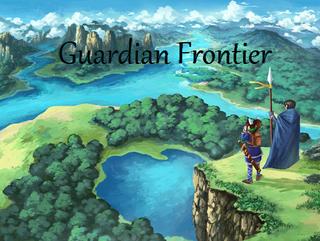
Guardian Frontier
An RPG with classic-style gameplay and a non-classic premise, inspired by the history of exploration and colonialism of the 19th century.
An RPG with classic-style gameplay and a non-classic premise, inspired by the history of exploration and colonialism of the 19th century.
Search
Filter
 All
All Game Pages
 User Statuses
 Relationship System?
I'm personally a big fan of relationship value systems, when the character writing is at all good. Obviously though, some implementations work out a lot better than others. Here are some of my thoughts on the subject:
Rather than simply letting the player make one character display signs of preference or attraction for one character over another (such as choices that boil down to a question of "which character do you want to be nice to? Do you compliment her or insult her? Who do you give the gift to? etc.) set up situations where the characters can display their compatibility and build rapport with each other. Maybe they discover a shared love of nature, or have fun trashing a play they both think is terrible, or have an argument where they fiercely disagree with each other but come away with increased respect for each others' intellect and integrity. Make sure the audience sees why and how the characters are into each other, not just that they're into each other.
Try to avoid systems that make characters' attraction seem too mechanistic. Can you improve every relationship with a well chosen gift? It starts to look silly when you can get someone to like you just by piling sufficiently large quantities of stuff on them. Make sure to avoid any situation where you can "farm" affection points by doing the same thing over and over.
Having alternate endings influenced by relationship values is nice, but having continual payoff over the course of the game is better. Try to work in occasional situations where characters interact with each other differently depending on the state of their relationship values.
My favorite framework for relationship values would be something closer to the Private Action systems of the early Star Ocean games, which I described in this comment if you're not already familiar.
Rather than simply letting the player make one character display signs of preference or attraction for one character over another (such as choices that boil down to a question of "which character do you want to be nice to? Do you compliment her or insult her? Who do you give the gift to? etc.) set up situations where the characters can display their compatibility and build rapport with each other. Maybe they discover a shared love of nature, or have fun trashing a play they both think is terrible, or have an argument where they fiercely disagree with each other but come away with increased respect for each others' intellect and integrity. Make sure the audience sees why and how the characters are into each other, not just that they're into each other.
Try to avoid systems that make characters' attraction seem too mechanistic. Can you improve every relationship with a well chosen gift? It starts to look silly when you can get someone to like you just by piling sufficiently large quantities of stuff on them. Make sure to avoid any situation where you can "farm" affection points by doing the same thing over and over.
Having alternate endings influenced by relationship values is nice, but having continual payoff over the course of the game is better. Try to work in occasional situations where characters interact with each other differently depending on the state of their relationship values.
My favorite framework for relationship values would be something closer to the Private Action systems of the early Star Ocean games, which I described in this comment if you're not already familiar.
 The Logomancer Review
You don't actually have to escape, if you finish a battle in the first turn, it stays between battles, and goes away at the beginning of the next battle.
The foreshadowing of the final conflict, I would say
The foreshadowing of the final conflict, I would say
related not just to the interlude with the composer at the beginning, but to the discussions about ancient logomancers which were sparked by the Soldier's Heirloom and Fill In the Blank subquests, and the idea of stuff they created persisting in the dreamscape, and to the Nicolus subquest, which was revealed on completion to have been sparked by an event in the distant past.
 Logomancer_SS05_Motality_Play.jpg
I took it that Ludro's rant does have basis in fact, but I wouldn't say the plot threads evaporated. There are other hints elsewhere in the game that Powell-Mercer is pretty ruthless and up to some sketchy stuff, but it doesn't pay out as part of the final conflict. It might be a sequel hook, but it might just be another worldbuilding detail. I don't think the author is going to respond to comments on the game page any time soon though; I had to track down his youtube account in order to get in touch with him.
The Logomancer Review
The exploit I was referring to
I'm surprised you didn't feel the final conflict was foreshadowed at all. I felt it was foreshadowed quite extensively, but never really elucidated. I could see that it was built up to in advance, but that didn't make it entirely clear what was going on when it happened.
The artistic commentary, I wouldn't really call veiled at all. It's direct and explicit commentary on writing, it just occurs in the context of a work of fiction. I honestly don't remember the context for any discussion of prequels, but I'm thinking maybe Ardus rejects the prospect of writing a prequel to his novel? I wouldn't take it for granted that all of Ardus's views are direct reflections of those of the author, but for Ardus's story in particular I think that any prequel would face major obstacles related to the foregone conclusion set up by the first book.
does involve the fact that you can grind epiphanies off the Final Horizon, but I guess the shop in the secret area would work too, although I missed that. If you finish a battle with the Esprit D'escalier status effect on, it persists during the status screen between battles, and you can apply the epiphanies to your persuasion and elocution stats while the modifier is on. When you do this, the stats rise exponentially rather than linearly, and the bonuses remain when the Esprit D'escalier status effect is removed.
I'm surprised you didn't feel the final conflict was foreshadowed at all. I felt it was foreshadowed quite extensively, but never really elucidated. I could see that it was built up to in advance, but that didn't make it entirely clear what was going on when it happened.
The artistic commentary, I wouldn't really call veiled at all. It's direct and explicit commentary on writing, it just occurs in the context of a work of fiction. I honestly don't remember the context for any discussion of prequels, but I'm thinking maybe Ardus rejects the prospect of writing a prequel to his novel? I wouldn't take it for granted that all of Ardus's views are direct reflections of those of the author, but for Ardus's story in particular I think that any prequel would face major obstacles related to the foregone conclusion set up by the first book.
 How do you make random encounters feel welcome?
There are two types of mazes, "simple" and "complex." A "simple" maze can be extremely byzantine, but is defined by having no wall sections which are encircled by corridor. In a "simple" maze, you can eventually reach your destination by hugging one wall, although it might take a long time (although RPGs often apply obstacles which will force you to visit other destinations and backtrack, hugging one wall will eventually force you to traverse the entirety of the maze.) A "complex" maze, on the other hand, has at least one wall section encircled by corridor. This makes it impossible to traverse the entire maze by hugging one wall. Think of a city block, where if you keep to one side, you'll just go in circles endlessly.
How do you make random encounters feel welcome?
How do you make random encounters feel welcome?
author=RyaReisenderIt's totally not hard to design a maze complicated enough that most players will get lost in it even without random encounters, but I don't think wandering around trying to get some kind of handle on where you're going is very interesting gameplay.
Random encounters add a lot more than just game length if done well.
Imagine a huge maze-like dungeon without random encounters. That would get pretty boring over time. Also random encounters "help" to get the player lost. If he doesn't get distracted through combat, he could probably solve every dungeon easily, no matter how hard you design it to be. On top of that, random encounters also serve as a sort of time limit on how fast you need to clear the dungeon before running out of resources and have to teleport out (yes, good games offer teleportation skills to leave the dungeon).
I still think the main flaw of most random encounter is lack of variety. If people would just ensure a very high variety, they don't need to think of other "improvements".
I've argued in favor of random encounters before, but I think "distracts you so you lose track of what you're doing" is practically never a point in their favor.
author=LockeZ
Wild ARMs 3 had a few major systems happening in dungeons that affected random battles, and when they came together they turned into something magical and beautiful.
1) Almost every room in every dungeon was chock full of puzzles, to an extent that only Lufia 2 and the Zelda series have really ever matched. This meant you ended up walking back and forth a lot, and if you were better at solving puzzles, you got in fewer random battles.
2) Instead of just instantly getting in a battle after a random number of steps, the game would put an exclamation mark over your head. Two seconds later, the battle would start... unless you prevented it. There were multiple ways to do this:
3) In the corner of the screen was an encounter gauge. It started filled up with 10/10 points at the beginning of each dungeon. If you pressed the Cancel button while an exclamation point was over your head, you would not get in a battle, but you would lose one point from your encounter gauge. If you fought a battle and won, it refilled one point. When the gauge is empty, you can't cancel random battles any more.
4) There were gems scattered throughout dungeons that, when you walked over them, they would refill one point of your encounter gauge. Most of these were behind puzzles or out of the way, sometimes requiring cleverness in order to save more encounter points than you spent getting to them.
5) If you walked off a ledge that dropped down to a lower platform, while an exclamation point was over your head, the act of falling off the ledge would avoid the battle without costing a point from your gauge. However, getting back up to where you were wasn't always easy. But sometimes you needed to fall anyway, and could wait to fall until a battle was about to start, so you could avoid a battle for free!
6) Opening a treasure chest while an exclamation point was over your head would also cancel the battle for free. Yay!
7) If you walked off into a bottomless pit while an exclamation point was over your head, it would cancel the battle, but also send you back to the room entrance. This reset any unsolved puzzles in the room, but not the solved puzzles, and also not the treasure chests. You could strategically use this to avoid battles in many cases, such as when you messed up a puzzle, or when you had just solved a puzzle and could safely reset the room, or when you had just gotten a chest that involed going the wrong way and needed to undo what you'd done to the room's puzzles.
All of this combined into making the act of avoiding random encounters into an actual game. A puzzle game, one that was really fun. Yeah, the battles were still pretty fun too - don't get me wrong, I like turn-based RPG battles more than almost any other type of gameplay in video games. And I understand what people mean when they complain about designers who try to "fix" their battles by just making them avoidable. But when avoiding them is fun instead of just a design cop-out? That's totally different. Avoiding battles in some games feels like subtracting gameplay from the game - but in Wild ARMs 3, it feels like diversifying the gameplay. You're replacing half the gameplay with a different type of gameplay. And when that type is puzzles, it totally works, because puzzles and RPGs are like peanut butter and chocolate.
You left out one of the important parts. Stronger random encounters over the course of the game cost more and more points from your meter to avoid, but at the same time, you find items over the course of the game which increase the length of your meter, and decrease the cost of avoiding encounters. This means that you keep roughly the same ability over the course of the game to avoid random encounters throughout dungeons appropriate to the point of the game you're in, but if you backtrack, it becomes increasingly easier to avoid battles, to the point that you can eventually do so indefinitely.
what would be a good fictional or fantasy artisan craft or trade
Grimoire binder. Much more difficult than regular book binding, since the spells inside sometimes don't get along.
Alchemist wholesaler. Provides raw ingredients for alchemy practitioners. This could a prime location for selling Vendor Trash.
Runic tattoo artist. May or may not tattoo legitimate spells onto their clientele; most of their customers wouldn't know the difference regardless.
Glass blower. Not a fantasy profession, but probably much more significant in a setting with lots of potion bottles and such, but no industrialized glassware trade.
Surveyor: Measures the geography, leylines, spiritual presences, and prospective monster infestations of land slated for development.
Alchemist wholesaler. Provides raw ingredients for alchemy practitioners. This could a prime location for selling Vendor Trash.
Runic tattoo artist. May or may not tattoo legitimate spells onto their clientele; most of their customers wouldn't know the difference regardless.
Glass blower. Not a fantasy profession, but probably much more significant in a setting with lots of potion bottles and such, but no industrialized glassware trade.
Surveyor: Measures the geography, leylines, spiritual presences, and prospective monster infestations of land slated for development.
Your stuff is MINE
Stealing an enemy's weapon while they're actually using it is kind of bizarre though. I mean, trying to take someone's sword while they're trying to kill you with it is a lot more likely to result in a shiny new stab wound rather than a new weapon. I think it might be interesting to have stealing of enemy equipment have a 100% success rate when the enemy is incapacitated (asleep, paralyzed, etc.) but a 0% success rate when they're still active.
If you incorporate several different status effects that can incapacitate an enemy, you could spice up stealing a bit, since instead of just spamming steal over and over, you'd want to find what status effect they're vulnerable to.
If you incorporate several different status effects that can incapacitate an enemy, you could spice up stealing a bit, since instead of just spamming steal over and over, you'd want to find what status effect they're vulnerable to.
Opinions on Grandia Xtreme/my future RPG
Well, I consider the combat system and dungeon crawling in Grandia Xtreme to be exceptionally high quality, and I'd be happy if someone else could replicate those strengths, but the weakness of the story and character development put it behind the main games in the Grandia series for me. As a player, I'm always happier with a good story than without one, however good the gameplay might be.
 Games - Tester
 Games - Other
