



 Full Games List
 Featured Games
 New Games
 Reviews
 Media
Media Images
 Blogs
Blogs Game Updates
 Images Feedback Summary
 Game Design Highlights
 Tutorials
 Articles
 Scripts
 Utilities / Plugins
 Resources
 Engines
 Engine Bulletins
 What is Makerscore?
 Past Events
 Achievements
 Misaos
 Forums
 Chat
Chat New to RMN?
 Full Store List
 RMN Music Pack (free)



 Profile
 Locker
 Play Lists
DESERTOPA'S PROFILE
Desertopa

775
 Close
Close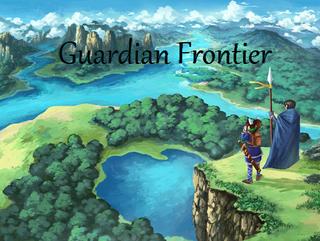
Guardian Frontier
An RPG with classic-style gameplay and a non-classic premise, inspired by the history of exploration and colonialism of the 19th century.
An RPG with classic-style gameplay and a non-classic premise, inspired by the history of exploration and colonialism of the 19th century.
Search
Filter
 All
All Game Pages
 User Statuses
 Little efforts in your RPG go a long way... right?
These kinds of efforts definitely do have an impact on the player, but I'll note that they're generally not so "little," since what you're looking at is not the time investment to add one extra tidbit, but to apply that level of investment consistently across the game. It's not for nothing that these elements appear much more in commercial games which can distribute the labor across a large number of team members.
Making the story into a journey
author=LockeZ
Take FF7 as an example. The entire middle third of FF7 - from the time you leave Midgar until when you arrive at the Great North Cave and Cloud gives Sephiroth the black materia - is technically nothing but filler, chasing Sephiroth from one place to the next when you could have just bought a plane ticket and headed straight from Midgar to wherever Sephiroth was.
Well, not really, since the protagonists didn't know ahead of time where Sephiroth was going, and Black Materia plot point hadn't been introduced yet at that point.
I think that this can be an effective way to direct the flow of journeys in general; it's not that the protagonists couldn't skip ahead, if they had all the right information, but not having it, they're forced to move ahead step by step.
With a mission like "catch and stop Sephiroth," you've got a solid overarching goal for the story, a reason that you can't skip ahead through intended stops in the narrative (because you don't know where Sephiroth is going in advance,) and a clear basis to reveal more information (stop Sephiroth from doing what?)
If your mission is something like "travel to Mount Fear to meet the Onion King and force him to give back your video collection," then you already know the endpoint and what you'll be doing when you get there, and every diversion from the direct route becomes a transparent attempt to drag out the narrative.
Fast Times at Aremen High: Sign-Ups
You don't have to feel obligated, but if you can think of anything interesting to use me for, you're free to add me in.
 [Poll] Which Final Fantasy had the best character development system?
Long before you reach the point of actually having the Tournesol though (if you ever jump through all the hoops to get it,) you've probably filled out the license board for all your characters.
[Poll] Which Final Fantasy had the best character development system?
Honestly, the character development systems have never been a real selling point of the Final Fantasy games for me. I wasn't a big fan of the equipment skills system, but I think it may still take the top spot, because I really prefer systems that don't end up making characters effectively interchangeable.
The job system was pretty good, I guess, but my opinion of it is colored by the fact that I wasn't really a fan of Final Fantasy V. I liked the implementation in Final Fantasy Tactics, at least.
The job system was pretty good, I guess, but my opinion of it is colored by the fact that I wasn't really a fan of Final Fantasy V. I liked the implementation in Final Fantasy Tactics, at least.
What happened to manuals?
author=Zachary_Braun
The replacement of the manual by in-game tutorials was a conscious act by developers to finally excise the cost of paper manuals from the game production process, and to minimize player attrition through players who wouldn't want to look up how a game's system worked.
As game production just becomes bigger and more expensive, studios analyze and streamline production into only the most addicting aspects of the game product.
Well, the Persona series is awfully popular for something that hasn't released an installment since the PS2 generation (next game is slated for a 2015 release,) and Persona 4 had a big art book that came with each copy of the game. Atlus seems to still try and maintain that sort of relationship with their audience.
Anyone have any ideas for a 'metal temple' dungeon?
author=BurningTyger
That's actually a wonderful idea: caves full of glowing crystals where golems or robots roam. But are they self-replicating or do we see them coming off conveyor belts? Combining it with my own suggestion, a "Temple of Industr"' full of razor pendulums, automatons, and conveyor beltsthat emphasizes machinelike precision- would make a refreshing blend. There are various places to gather visual elements- Lennus/Paladin's Quest, Alcahest, and others.
I haven't played Alcahest, and I'm a long way from an expert mapper or artist, so maybe other people can see potential I can't, but my impression is that the visual style of Lennus will tend to clash with anything that's not Lennus.
Anyone have any ideas for a 'metal temple' dungeon?
Tech stuff was the first thing that came to my mind, but I'm dubious on that one, because so many RPGs have a lost technological Golden Age that at this point it seems more original not to have one.
Possibly an underground shaft filled with metal crystals (you can do a google image search for ideas on these) which gives way to an entire metallic interior. Filled with magnetic-themed traps or puzzles if you want your game to include any, metal golems, maybe magnetic elementals...
Possibly an underground shaft filled with metal crystals (you can do a google image search for ideas on these) which gives way to an entire metallic interior. Filled with magnetic-themed traps or puzzles if you want your game to include any, metal golems, maybe magnetic elementals...
What happened to manuals?
That, and there's a difference between extra information which you can peruse before the game, to build your enthusiasm, and extras you can view within the game, and may even have to go out of your way to collect. They serve very different purposes.
 Games - Tester
 Games - Other
