



 Full Games List
 Featured Games
 New Games
 Reviews
 Media
Media Images
 Blogs
Blogs Game Updates
 Images Feedback Summary
 Game Design Highlights
 Tutorials
 Articles
 Scripts
 Utilities / Plugins
 Resources
 Engines
 Engine Bulletins
 What is Makerscore?
 Past Events
 Achievements
 Misaos
 Forums
 Chat
Chat New to RMN?
 Full Store List
 RMN Music Pack (free)



 Profile
 Locker
 Play Lists
DESERTOPA'S PROFILE
Desertopa

775
 Close
Close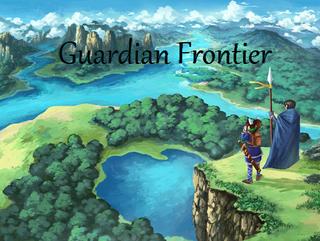
Guardian Frontier
An RPG with classic-style gameplay and a non-classic premise, inspired by the history of exploration and colonialism of the 19th century.
An RPG with classic-style gameplay and a non-classic premise, inspired by the history of exploration and colonialism of the 19th century.
Search
Filter
 All
All Game Pages
 User Statuses
 [Poll] Super Nintendo Vs. Sega Genesis
 Twitching the Trope
Honestly, I think nearly every story idea I've ever had involves the twisting or subversion of at least a few tropes. This probably isn't a very good way for most people to try and come up with ideas, but it's not like I ever had a choice in the matter, since it's totally compulsive (and of course, I've been doing it since long before I encountered tvtropes, or knew what a "trope" was.) Rather than drawing inspiration from great stories worthy of emulation, a lot of my favorite ideas come from stories that I don't like at all, since they make me start to think of what could have happened differently that would have made them interesting.
The earliest story idea I had that I still remember (I've forgotten loads of crappy ones that came before it) was a subversion of the Rebellious Princess stories I'd read so often. I decided that after seeing so many stories where a headstrong princess resists an arranged marriage, breaks things off, runs away, and usually finds an opportunity to marry for love or otherwise make good for herself, it would be refreshing to see this result in total disaster. A rebellious princess and prince have an arranged marriage, but can't stand the idea, so they agree between each other to run off and avoid the whole thing. The political scandal between the two countries, which were trying to marry their heirs to promote peaceful relations, results in the countries being plunged into war. Tens of thousands of people die, while the prince and princess struggle to survive in the ravaged countryside with their lack of marketable skills. When they meet again, they come to the conclusion that, as much as they dislike each other, this whole disaster is their faults, and they deserve each other.
This is why I was really disappointed by the movie Brave. For the first Pixar movie with a female protagonist, I was really hoping for something fresher than a Rebellious Princess story, something I'd already gotten tired of more than a decade earlier.
The earliest story idea I had that I still remember (I've forgotten loads of crappy ones that came before it) was a subversion of the Rebellious Princess stories I'd read so often. I decided that after seeing so many stories where a headstrong princess resists an arranged marriage, breaks things off, runs away, and usually finds an opportunity to marry for love or otherwise make good for herself, it would be refreshing to see this result in total disaster. A rebellious princess and prince have an arranged marriage, but can't stand the idea, so they agree between each other to run off and avoid the whole thing. The political scandal between the two countries, which were trying to marry their heirs to promote peaceful relations, results in the countries being plunged into war. Tens of thousands of people die, while the prince and princess struggle to survive in the ravaged countryside with their lack of marketable skills. When they meet again, they come to the conclusion that, as much as they dislike each other, this whole disaster is their faults, and they deserve each other.
This is why I was really disappointed by the movie Brave. For the first Pixar movie with a female protagonist, I was really hoping for something fresher than a Rebellious Princess story, something I'd already gotten tired of more than a decade earlier.
How do you feel about profanity in RPG Maker games?
author=nurvuss
The line about Arche kinda tickled me to be honest--if I recall, that's the only bit of inappropriate profanity in that translation (correct me if I'm wrong, it's been over a decade since I played that version). If the characters continued speaking like that, I would've been annoyed and probably would've stopped playing. Moderation is key!
I'm pretty sure it was the only instance of the word "fuck," but it wasn't the only instance of sexualized content.
Personally, I felt that content improved the translation; the characters don't spend more time preoccupied with sex than ordinary people their age, if anything they spend less, but far from being out of place I feel like it added some verisimilitude.
How do you feel about profanity in RPG Maker games?
author=UPRC
People have said in the past that they don't mind profanity if it's done tastefully, but just what is tasteful profanity? I feel like tasteful and profanity are two words that extremely contradict one another!
I think that "tasteful profanity" is profanity that accurately reflects and gives a faithful impression of how people really interact with each other and the situations they find themselves in, rather than being inserted with the intention to seem "mature" or "edgy." I don't think that there's anything inherently distasteful in the words themselves.
author=UPRC
\ You can make up expressions that fit your own self created world that can define a character's displeasure more than a "FUCK YOU" or something.
I use this sometimes, if I'm working with a game where modern swearing feels out of place in the constructed setting (you'll see a bit of this in Dragon Fantasy: REMADE when it comes out, for instance,) but I think this sort of thing is much more likely to come off as hokey and affected than ordinary cursing is. There are some authors who're well known for their ability to come up with interesting, novel language, usually sci fi authors exploring unfamiliar societies and such. The overwhelming majority of writers are not known for this, and for good reason. It's much easier to do badly, and most authors who attempt it end up embarrassing rather than distinguishing themselves.
My recommendation is that authors be neither afraid nor eager to use swearing in dialogue. It's just another way that people talk. If you're planning to show off how mature you are by using it, chances are you're not ready to do it well. But if the most natural and realistic way for your characters to talk in a given situation includes profanity, then trying to find a way around that is likely to sound silly.
Valentine's Day: Proposal in a game!
author=Nerdybastard
I think it'd be cool if you make the game based off something that'd interest them, but not obviously set-up for a proposal. Then you can have an area where "two lovers" are, maybe even make them legendary lovers in story and have the ghost representing you ask the person out. The story for the two lover could just be telling your memories with the person you love, leading up for the proposal. I dunno, just my idea.
Sounds to me like this would seriously risk coming on too strong. You probably don't want to set up a story where your hypothetical love is already "legendary," prior to the other person even saying "yes."
I thought when I saw the topic that this would be about characters proposing to each other in a game. Personally, I could stand to see a lot more well-done romances in games, so if it were handled at all well I'd be happy to see this.
I've read a fair few lists of top video game romances, and some of them are downright depressing; you know that in-game romance is really in a sorry state when some of the top rated romances don't even exist in their games, and are entirely fanon interpretations of character relationships.
 Of Sephiroth and Ganondorf
author=Crystalgate
My opinion is that even if you want to make a character deep, it's actions should still hit even if the player doesn't dig and stays at the surface. Making digging a requirement seems suicidal too me, chance is the player won't dig at all, especially if there's noting on the surface.
As for a villain specifically, other than making it hit on a basic level, try giving it a lot of style.
"Style" is awfully vague though; I feel like, as advice, this is basically on the level of "write them well." Trying to aim for "style" without a clear, concrete idea of something that will appeal to players, the results are usually cringe-worthy.
Not having owned a Zelda game since Link to the Past, I have nothing to say about Ganondorf, but-
For Sephiroth, I think that a major component of what made him work as a character was something that basically everyone adapting and reusing his character has failed to imitate. When Sephiroth has appeared in later works written by Square/Square-Enix, he tends to come off as a grandiose, Evil Is Hammy figure. But this really wasn't the case in his original incarnation. Sephiroth's character arc is that of someone who goes from being relatable and accessible to other people, to alien and inaccessible. He and Cloud share some significant history together, but this means much, much more to Cloud than to Sephiroth. Their rivalry is almost completely one-sided. Sephiroth is a villain who has personally, by his own hands, wrecked Cloud's life, and he doesn't care, because he hardly regards Cloud as a person at all; Cloud is just an incidental figure to him.
It's really not even a case of their past having lopsided, significance, a But For Me, It Was Tuesday situation. Cloud was there for some experiences that were formative to Sephiroth as well, but Sephiroth has basically stopped identifying with human beings. Sephiroth doesn't assign importance to Cloud for being there during some of the most important events of his life, any more than an ordinary person would assign importance to a bird for being present on an important occasion. It doesn't matter, it's just a bird.
(This also ties in to the central reveal of Cloud's character. Whereas most Final Fantasy protagonists find that they're prophesied heroes, or have some close personal connection to the antagonist which is meaningful to the antagonist as well, or are otherwise Chosen or special, Cloud's reveal is that he really isn't anyone special or important, except, like anyone else, on a personal level to a few people who know him.)
This, I think, is the significance of that final scripted battle between Cloud and Sephiroth at the very end of the game; it's not enough that Sephiroth be defeated, he must be brought down to a level where he can personally acknowledge the one defeating him.
Of course, while the conflict dynamic was interesting, it might not have meant much without all the length that the creators went to to characterize the Planet itself (the way that they constantly capitalize the word throughout the game is yet another measure to encourage you to think of it as a character in its own right.) Loads of villains have a goal of destroying the world, but very, very few games go to comparable pains to make you take the destruction of the world personally. For all that people joke today about the block-people graphics of Final Fantasy VII, the pre-rendered environmental graphics of the game, in many locations, still look really good today, and by the standards of the time were absolutely jaw-dropping. And over that, the writers developed a theme of exploring the Planet and humanity's place in it, and how we relate to our world.
These are the sort of considerations that made Sephiroth such a powerful figure in his original incarnation. Developers in later games trying to reduce those factors to "style" is, I think, why he's been so poorly copied in subsequent games.
In terms of making a character "deep," I think that what you should really be aiming for is to develop some kind of theme which will affect the player even if they never consciously notice and analyze it. The player doesn't have to notice that the writers of Final Fantasy VII were developing a theme of exploring humanity's relationship with the world they live in to be affected by it and feel a closer relationship to the setting of the game than they would to the settings of most other games.
Half of What's There (There's only FOUR TOWNS?!)
Personally, I'm really not a fan of most "park a merchant in front of a dungeon" implementations. In gameplay terms, it makes sense, especially when there's really no justification for a full town at that point in the game. But in terms of internal logic, it usually comes off as an extremely half-assed way of shoring up that section of the game, since it usually just doesn't make sense under even the most cursory examination for the merchants to be where the player needs them.
Since I'm involved in the writing for this game, I'll be trying to ensure that any oddly placed vendors in the game come off as more than conspicuous patches.
Since I'm involved in the writing for this game, I'll be trying to ensure that any oddly placed vendors in the game come off as more than conspicuous patches.
Fight it out!
author=InfectionFiles
I agree with you, it's not that complicated to learn most skills in JRPGs quickly but I have to fight the surprise factor you mentioned.
Most people prefer knowing what they are getting rather than be surprised by a new skill, at least that's what I've seen and gathered just from playing newer games.
(not saying surprise isn't good, but a lot of gamers like to mentally set up what they are gonna do)
What evidence are you basing that on?
In terms of MMORPGs or other games with a major online component, I would agree that this is the case. In that situation, I'd want to too. But for me, and I think for a lot of other players, this has a lot more to do with the displeasure of falling behind the curve or being out of the loop when player/player interaction and cooperation are major game components.
For me, there's definitely a measure of pleasure in setting up what I'm going to do. But if I can make that decision with any measure of completion early on, then I'll do it, and... that's it. Most of the pleasure of directing the growth of my character is spent right at the beginning of the game, way before it actually happens.
With a game like Final Fantasy Tactics, where you have leeway to direct your characters' growth at any given point in the game, but not unlimited access to information about future growth from the beginning, and also not that much capacity to screw yourself over in terms of future balance, I think that you can get that pleasure of directedness, without losing the pleasure of surprise.
I'd add that in terms of newer games, there's a substantial part of the gaming population that feels alienated by modern design choices, and while they might be in the minority (games are, after all, still selling,) if anything I think they're likely to be disproportionately concentrated in the amateur RPG playerbase.
Fight it out!
author=InfectionFiles
^Why I think the sphere-grid or a skill tree are good ideas over level ups, is that the player has a lot of time to recognize the power of the skill or more importantly be prepared for them and know how they work(or atleast an idea of how they work)
this eliminates the need to explain recently acquired skills every time one that is off-beat comes up
If the skills are sufficiently well explained in advance that you get a significant edge in this manner over learning about skills as you learn them, then you've essentially eliminated all the capacity for positive surprise right from the outset.
In most games, the amount of time it takes to come to terms with the effects of a new skill is pretty minimal, and in those games where there are skills or interactions complex enough that it takes a long time, learning to employ them effectively is a significant part of the fun.
A tutorial that teaches you proficiency in every skill you're going to need throughout gameplay eliminates the downtime in training as you acquire each new skill throughout the game, but how many people actually prefer to play that way?
Fight it out!
Personally, not a fan of "skill tree" type progression in RPGs. If you have too much foresight into what future skills you'll have access to, it limits the opportunity for pleasant surprise. When you finally get a high tier skill, you've already had plenty of time to come to terms with the implications of having it.I also didn't like the Sphere Grid for this reason; you can see the entire grid laid out from the beginning of the game, and it gives so much opportunity to scrutinize and obsess over the powerups that you're going to get in advance that they've lost a lot of their interest by the time you get them.
Or, on the other hand, if you don't get to see in advance what skills your choices are leading to, you have too much opportunity to screw yourself over, leaving you with reason to worry every time you make a choice with major impact on your future playstyle under limited information.
"Skills acquired through level-up" doesn't leave much leeway for customization, but is at least transparent enough that it's not so hard to avoid major pitfalls with it.
I prefer some measure of compromise between these, where the player has some ability to direct their skill learning at a given time, but doesn't have the ability to see ahead indefinitely, and their choices don't limit their future options too much. For example, the job system in Final Fantasy Tactics, or the equipment skill system in Final Fantasy IX.
Or, on the other hand, if you don't get to see in advance what skills your choices are leading to, you have too much opportunity to screw yourself over, leaving you with reason to worry every time you make a choice with major impact on your future playstyle under limited information.
"Skills acquired through level-up" doesn't leave much leeway for customization, but is at least transparent enough that it's not so hard to avoid major pitfalls with it.
I prefer some measure of compromise between these, where the player has some ability to direct their skill learning at a given time, but doesn't have the ability to see ahead indefinitely, and their choices don't limit their future options too much. For example, the job system in Final Fantasy Tactics, or the equipment skill system in Final Fantasy IX.
 Games - Tester
 Games - Other
