



 Full Games List
 Featured Games
 New Games
 Reviews
 Media
Media Images
 Blogs
Blogs Game Updates
 Images Feedback Summary
 Game Design Highlights
 Tutorials
 Articles
 Scripts
 Utilities / Plugins
 Resources
 Engines
 Engine Bulletins
 What is Makerscore?
 Past Events
 Achievements
 Misaos
 Forums
 Chat
Chat New to RMN?
 Full Store List
 RMN Music Pack (free)



 Profile
 Locker
 Play Lists
DESERTOPA'S PROFILE
Desertopa

775
 Close
Close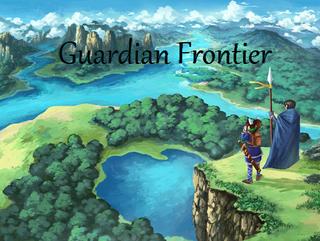
Guardian Frontier
An RPG with classic-style gameplay and a non-classic premise, inspired by the history of exploration and colonialism of the 19th century.
An RPG with classic-style gameplay and a non-classic premise, inspired by the history of exploration and colonialism of the 19th century.
Search
Filter
 All
All Game Pages
 User Statuses
 Ballin': An examination of money in games.
What area is that? I completed the game recently, and I don't remember ever encountering such a place, so I'm interested to know what I missed.
Your stuff is MINE
Well, if your success rate is 100%, and some non-unique enemies carry really valuable stuff, that can be rather game-breaking. If you compensate by not making any enemies carry anything especially valuable, the player stops caring so much. And if things are too easy to get, you don't care so much when you get them.
How do you make random encounters feel welcome?
author=Sooz
I like stealing the way it is in a lot of games because it's like hitting a piñata to see what comes out.
I tend to agree that hidden items in scenery should be a supplemental reward, with the main reward being the viewpoint character's observations about the scenery. (I tend to inspect everything several times just to see things like that.)
It may be that I'm an abnormal human who has fun the wrong way, though. :V
I like examining the environment when this leads to interesting character observations or interactions with scenery, but in my experience this is less common than games which hide items around the environment without interesting interactions for objects that don't contain items (although in commercial games I think this has become less prevalent over time, for good reason.) After all, there's a big difference between rewarding behaviors that are generally fun anyway, and rewarding behaviors that are generally boring.
Your stuff is MINE
Here's a method which I think might address some of the absurdity of only being able to steal from enemies while they're still alive and resisting, and limit some of the frustration of keeping an enemy alive to steal from it over and over. Instead of having a "steal" technique which takes an item from the enemy during battle, have a skill that represents marking them to be carefully stripped of valuables after the battle is over. The skill always works- if the enemy type carries any kind of item, you increase your chance of receiving it at the end of the battle, and if they never drop anything, you get a message telling you so (possibly the enemy is marked as an invalid target so you can't eve use it on them in the first place.) Some enemies such as certain bosses may have their drop chance changed from 0% to 100% when targeted with this skill (after all, you're only going to fight them once,) and possibly some uncommon enemies with noteworthy items will have their drop rate changed from 0% to something lower than 100%, to enforce a bit of extra effort in acquiring the item (since at least within reason receiving an item may be more satisfying if it took some effort to get,) but depending on whether it's something that would be gamebreaking to collect in large quantities, further enemies of the same type might be marked as invalid targets for the skill after that.
How do you make random encounters feel welcome?
author=Feldschlacht IV
Besides, there's gameplay rationale for encountering the same enemy twice. What if there's something you want to steal?
I'm not a fan of the whole video game stealing trope in general. I mean, when it's implemented, I'll usually take advantage of it, especially when it gives me the opportunity to get equipment that's ahead of the curve for that point in the game or that I otherwise couldn't get. But I think having to either steal from every damn thing or read a guide to find out what drops what is an obnoxious way to keep ahead, and I think I'm happier not having to worry about it.
It's like hiding objects randomly in barrels and pots and stuff around the map. I'll check for treasure if that's a feature of the game, but I'm happier not clicking on every goddamn barrel, when there's nothing interesting about clicking on the barrels with nothing in them.
I think it's usually more fun when games don't incentivize behaviors which are mostly boring to engage in. Keeping an enemy alive to spam the same skill against it to get an item is generally not fun in my experience. Any game which features a steal skill which doesn't offer items which aren't otherwise accessible at that point in the game, I just ignore the ability entirely.
[WEEKLY EVENT] Idea Bounce!
For high profile creative figures with a history of success in a commercial context, having their ideas stolen by other people in the industry, where actual money is at stake, not just creative pride, is probably a legitimate concern.
I think we'd all love to have to worry about our ideas being stolen.
I think we'd all love to have to worry about our ideas being stolen.
How do you make random encounters feel welcome?
I'm not particularly a fan of random pattern touch encounters. If they're going to attack you on contact, it stands to reason that they'd actively pursue you on sight as well. My favorite implementations of touch encounters generally have the enemy track the player rather than moving around at random.
How do you make random encounters feel welcome?
A few people so far have mentioned the downside of avoidable encounters wherein the player risks becoming underleveled and not being prepared to complete the mandatory fights, but I think there's another important issue that this doesn't address.
Encounters should constitute some kind of meaningful challenge, or if not challenge then some other sort of entertainment. If the only purpose of all the non-plot-mandated encounters in the game is to give you money and experience so you're strong enough for the next point in the game, then you should be cranking the rate way down, and the the returns per battle way up, or just doing away with them entirely and giving the player all the experience they need from bosses.
In the earliest RPGs, random encounters constituted a meaningful challenge. Even if it wasn't that hard to get through one battle, the attrition from dealing with them repeatedly over the course of the dungeon was a legitimate threat. Full healing before boss encounters was often not provided, so you had to face the challenge of preserving your strength over a series of encounters and having enough left at the end to beat a powerful enemy. But as RPGs in general became more accommodating to players over time, the essential purpose behind random encounters was lost from many games. They no longer posed a realistic threat of defeat on their own, and access to free healing and saves before bosses became standard, meaning that they served little purpose as pre-boss attrition either. Players started to decry them as nonsensical and antithetical to fun, because they were divorced from the context where they had once added something to the gameplay experience.
You don't necessarily have to use random encounters to create a meaningful attrition challenge. Earthbound, for instance, used a touch encounter system, but enemies were powerful enough and difficult enough to avoid that they imposed a challenge the player couldn't simply choose to sidestep. But if you do give the player the option to generally avoid encounters, then you'd better find something other than challenge to make the encounters worth having there at all. Declaring that you'll make things easy for the people who don't want to be challenged, but give the people who want challenge the option to challenge themselves, is generally a shoddy compromise, because for most people who want to be challenged, there's a distinction between the game challenging them, and their having to go out of the way to make challenges for themselves.
Encounters should constitute some kind of meaningful challenge, or if not challenge then some other sort of entertainment. If the only purpose of all the non-plot-mandated encounters in the game is to give you money and experience so you're strong enough for the next point in the game, then you should be cranking the rate way down, and the the returns per battle way up, or just doing away with them entirely and giving the player all the experience they need from bosses.
In the earliest RPGs, random encounters constituted a meaningful challenge. Even if it wasn't that hard to get through one battle, the attrition from dealing with them repeatedly over the course of the dungeon was a legitimate threat. Full healing before boss encounters was often not provided, so you had to face the challenge of preserving your strength over a series of encounters and having enough left at the end to beat a powerful enemy. But as RPGs in general became more accommodating to players over time, the essential purpose behind random encounters was lost from many games. They no longer posed a realistic threat of defeat on their own, and access to free healing and saves before bosses became standard, meaning that they served little purpose as pre-boss attrition either. Players started to decry them as nonsensical and antithetical to fun, because they were divorced from the context where they had once added something to the gameplay experience.
You don't necessarily have to use random encounters to create a meaningful attrition challenge. Earthbound, for instance, used a touch encounter system, but enemies were powerful enough and difficult enough to avoid that they imposed a challenge the player couldn't simply choose to sidestep. But if you do give the player the option to generally avoid encounters, then you'd better find something other than challenge to make the encounters worth having there at all. Declaring that you'll make things easy for the people who don't want to be challenged, but give the people who want challenge the option to challenge themselves, is generally a shoddy compromise, because for most people who want to be challenged, there's a distinction between the game challenging them, and their having to go out of the way to make challenges for themselves.
FOUR STARS...for what ??
author=Raveauthor=LockeZLockez, learn basic statistics, mostly that funny thing called statistical significance so you can see why asking 1000 people to see which political party (example) is more popular is better than asking 10 people same thing.
That's not more accurate. That's just more people.
A survey population of ten people can be better than a population of a thousand, if the ten people are selected through a properly randomized process and the thousand people are subject to a sampling bias.
Randomization isn't the one and only magic ingredient here though. What you really want is to ensure that the overall results of your testing method are determined by the answer you're trying to discover (such as how popular a political candidate is, or how entertaining a video game is,) rather than something else.
With a large enough random sample size, noise tends to cancel out and you can extract a signal from the overall feedback. But in the case of most games on this site, decreasing the barrier to rating isn't going to net you a large sample size, random or otherwise. Requiring reviews is another method of filtering signal from noise, by blocking out ratings which are clearly given for some random dumb reason which won't apply to most players.
 [Poll] Your favourite magic element!
I've seen all or nearly all of these used before, but some of them only once. Star Ocean 2 had a huge set of elements, some of which didn't even make this list (such as Void and Star,) the upshot of which was that all the elemental affinities except Fire, which was used more than the others, were nigh irrelevant, because the chance of affinity matchups was small enough that you could just ignore it most of the time.
If you're going to have a large list of elements, I think it's better to ensure that they all do something interesting besides "extra damage to things weak against this element."
If you're going to have a large list of elements, I think it's better to ensure that they all do something interesting besides "extra damage to things weak against this element."
 Games - Tester
 Games - Other
