



 Full Games List
 Featured Games
 New Games
 Reviews
 Media
Media Images
 Blogs
Blogs Game Updates
 Images Feedback Summary
 Game Design Highlights
 Tutorials
 Articles
 Scripts
 Utilities / Plugins
 Resources
 Engines
 Engine Bulletins
 What is Makerscore?
 Past Events
 Achievements
 Misaos
 Forums
 Chat
Chat New to RMN?
 Full Store List
 RMN Music Pack (free)



 Profile
 Locker
 Play Lists
DESERTOPA'S PROFILE
Desertopa

775
 Close
Close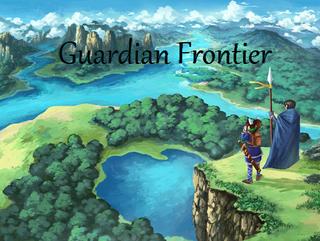
Guardian Frontier
An RPG with classic-style gameplay and a non-classic premise, inspired by the history of exploration and colonialism of the 19th century.
An RPG with classic-style gameplay and a non-classic premise, inspired by the history of exploration and colonialism of the 19th century.
Search
Filter
 All
All Game Pages
 User Statuses
 Monster encounters that make sense.
author=Treason89
I don't know if this fits on this discussion but here I go!
Another important thing to have in mind when designing encounters is the monster location. In Legend of Legaia the world was filled with monster because of the mist (or whatever name it had) but after you progressed through the game, the mist was cleaned and monsters (Seru) didn't appeared anymore in that area. That makes sense.
In the other hand, some RPG games put enemy encounters just outside the countryside of even a little defenseless town. The monsters are SO intelligent, bold and nice not to swarm against the town (even if you see them cooperating in enemy encounters), but once you put just a step outside the "WELCOME" sign they rush for your meat... That's nonsense and unrealistic for me. Why should the monsters cooperate with townsfolk but go against you? Well of course it could be justified if it is the Necromancer/Witch town mentioned before by Kaliesto.
Edit: Whoa! CashmereCat, I like that point of view. I would surely work nice if it properly fits in the game.
A lot of RPGs apply the handwave that due to the evil influences of whatever Bad Stuff is driving the plot, monster populations are increasing, or normally harmless creatures are becoming more aggressive.
Here's an idea that appeals to me; use this as a plot element, but don't make this something that's been going on for a few months or so, make it something that's been going on for decades. Human civilization has already battened down hatches to weather the storm; less defensible communities have been abandoned and people have consolidated in larger communities for their own protection. The population of humans has dropped precipitously due both to fatalities from monsters and to loss of habitable land.
Human towns are basically safe, but only because the ones that still exist are all adequately guarded. It's not that monsters politely avoid trespassing in places of human habitation, but that places of human habitation are the ones that can prevent monsters from trespassing. As a consequence, populated areas have been forced to become much more self-sufficient, since the cost of trade has gone way up due to the necessity of protection against monster attacks.
If you're going to apply genre conventions like distantly spaced towns separated by hordes of random encounters, you might as well consolidate them as story elements.
Ballin': An examination of money in games.
I've been playing Three the Hard Way recently, and aside from a few sticky spots, I really enjoy the way the game handles money. All randomly encountered enemies in the game drop only 1 GP each. The majority of the money in the game comes from one-off events: completing jobs, killing bosses, finding treasure, or outright extorting people. The scarcity of money in the game helps the player relate to one of the core traits of the main character- his greed. He's used to a lifestyle where money is hard to come by, where you don't know what's going to be paying for next month's bread, so you're constantly on the lookout for opportunities to net some more cash. If you could make good money just wandering back and forth killing Money Spiders, his worldview would basically stop making sense. But when you spend so much of your time in the game teetering on the verge of being broke, you end up a lot more sympathetic to his attitude.
How do you feel about profanity in RPG Maker games?
author=Aegix_Drakan
Depends on context.
If you're making a medieval game, words like "shit" and "fuck" will feel out of place, especially if the characters are plucky young adventurer types or paladins or whatever.
While there's definitely something to be said for keeping the language evocative of the setting, I think that trying to deliver an antiquated style of speech often leads to shoddy, affected dialogue. Since your setting probably isn't our own world several centuries in the past, and even if it is, you're almost certainly not going to pull off dialogue that's accurate to the period, I think that in many situations, it's reasonable to assume that the whole game is operating under a Translation Convention. As long as the audience sees the dialogue as being in keeping with the spirit of the game, then questions of whether it's period appropriate become immaterial.
I for one have a very low tolerance for inexpert attempts at "period appropriateness." The original Final Fantasy Tactics is known for having a bad translation, but I consider the dialogue of the War of the Lions remake to be vastly worse because of the faux-Elizabethian purple prose. Aside from some mangled parts in the tutorial and some irrelevant quest events, the original game had dialogue which tended to be simple, direct, and didn't sound like it was trying to evoke any particular time period or setting, so my focus generally remained on the content rather than the language. On the other hand, the flowery speech of the War of the Lions translation got under my skin, because it constantly triggered my "real people don't talk like this!" response.
Twitching the Trope
Well, yeah, that's the problem. The consequence is that humans end up as a lame species, while whatever else you've got end up as lame characters.
Twitching the Trope
I think that a lot of the time that's a more or less inevitable consequence of having the vast majority of the characters be human. If you have fifty human characters and an elf, then however unique an individual the elf might be among their own people, out of that cast their most visible distinguishing trait will be their elf-ness. If you had a cast of fifty elves and one human, the human would stand out for their human-ness.
Since we naturally tend to think of humans as the default though, it's easy to think of other races as being Human + X, where, once X has been added, you don't see much room for other facets of their personality. It's like how people of any race in real life, lacking significant exposure to members of another race, tend to have a hard time telling members of that race apart. At low levels of exposure, we tend to identify members of a group by the most obvious ways in which they differ from ourselves, and not by how they differ from each other.
Sometimes this implicit bias gets canonized as an explicit fact about the differences between species, with humans being more diverse than other intelligent species (of course we seem more diverse to ourselves!) This is also kind of ironic considering that in the real world, despite our huge population, humans have an unusually low level of genetic diversity within our species compared to most mammals, because we went through a fairly narrow population bottleneck recently in evolutionary time.
Since we naturally tend to think of humans as the default though, it's easy to think of other races as being Human + X, where, once X has been added, you don't see much room for other facets of their personality. It's like how people of any race in real life, lacking significant exposure to members of another race, tend to have a hard time telling members of that race apart. At low levels of exposure, we tend to identify members of a group by the most obvious ways in which they differ from ourselves, and not by how they differ from each other.
Sometimes this implicit bias gets canonized as an explicit fact about the differences between species, with humans being more diverse than other intelligent species (of course we seem more diverse to ourselves!) This is also kind of ironic considering that in the real world, despite our huge population, humans have an unusually low level of genetic diversity within our species compared to most mammals, because we went through a fairly narrow population bottleneck recently in evolutionary time.
Twitching the Trope
It's hardly possible to make a story that's not full of tropes; they're the recognizable building blocks of stories. Using tropes doesn't mean being unoriginal, like using support beams in the construction of a building doesn't make you an unoriginal architect.
Some tropes are cliches. People have gotten tired of them and want to see alternatives. But some tropes can't really get stale. They're such basic parts of our construction of stories that we'd be hard pressed to think of something as a story without them.
Some tropes are cliches. People have gotten tired of them and want to see alternatives. But some tropes can't really get stale. They're such basic parts of our construction of stories that we'd be hard pressed to think of something as a story without them.
Twitching the Trope
The whole discussion on elves (which I was going to comment on earlier, but got sidetracked) reminds me of another trope that's gotten pretty stale to me.
In fantasy and sci fi works, humans tend to be relatively dull and unremarkable. "Humans are average" isn't even that apt a description of the trend; in fantasy works, it's common for humans to be the shortest-lived of all intelligent races, or the only ones without innate magical gifts, or otherwise deficient compared to other races in general. Hell, even the Humans Are Superior page begins, "Humanity, despite all our weaknesses in comparison to most of the other alien races-" the notion of humans not being riddled with weaknesses compared to most other races being scarcely explored in fiction.
The two most common reasons I've seen for humans ascending to positions of dominance over other intelligent species are "technology" and "fast breeding." But when humans have an edge in technology, it's frequently portrayed as a bad thing, with other races being closer to nature, and being portrayed as not adopting technology, not because they couldn't come up with it themselves, but because they don't want to despoil their way of life with it. And humans being the fastest breeding among intelligent beings is awfully ironic considering that in the real world, we're some of the slowest breeding animals on Earth. If our population growth seems fast, it's because our survival rates are so exceptional.
I think there are some interesting dynamics to explore with races with differing abilities from humans, where in some ways to them, humans would appear exceptional, not just in terms of our societal infrastructure and such, but in terms of individual abilities. Like a race that has the verbal intelligence for stories and poetry, but is psychologically incapable of math. Or a race that's much less fierce and warlike than humans, like bonobos compared to chimps, but rather than being a wise and enlightened race that that knows better than to engage in violence, they're really just not mentally equipped for it at all, and by human standards they're all extremely cowardly in the face of danger.
In fantasy and sci fi works, humans tend to be relatively dull and unremarkable. "Humans are average" isn't even that apt a description of the trend; in fantasy works, it's common for humans to be the shortest-lived of all intelligent races, or the only ones without innate magical gifts, or otherwise deficient compared to other races in general. Hell, even the Humans Are Superior page begins, "Humanity, despite all our weaknesses in comparison to most of the other alien races-" the notion of humans not being riddled with weaknesses compared to most other races being scarcely explored in fiction.
The two most common reasons I've seen for humans ascending to positions of dominance over other intelligent species are "technology" and "fast breeding." But when humans have an edge in technology, it's frequently portrayed as a bad thing, with other races being closer to nature, and being portrayed as not adopting technology, not because they couldn't come up with it themselves, but because they don't want to despoil their way of life with it. And humans being the fastest breeding among intelligent beings is awfully ironic considering that in the real world, we're some of the slowest breeding animals on Earth. If our population growth seems fast, it's because our survival rates are so exceptional.
I think there are some interesting dynamics to explore with races with differing abilities from humans, where in some ways to them, humans would appear exceptional, not just in terms of our societal infrastructure and such, but in terms of individual abilities. Like a race that has the verbal intelligence for stories and poetry, but is psychologically incapable of math. Or a race that's much less fierce and warlike than humans, like bonobos compared to chimps, but rather than being a wise and enlightened race that that knows better than to engage in violence, they're really just not mentally equipped for it at all, and by human standards they're all extremely cowardly in the face of danger.
 The Logomancer
I only started participating in the RPGMaker community fairly recently, and I'm still pretty puzzled at what apparently constitutes a "large" file size within it. I've played a fair number of visual novels that are over ten times that file size. I don't have a particularly new or powerful computer, but the idea of a file of a few hundred megabytes being a big deal to download is positively weird to me.
Twitching the Trope
author=Pizza
I do, indeed. Can you honestly name any idea that isn't based on something else?
How strict are your criteria here? You're not going to find a story that isn't inspired by something that already existed in some form outside the author's head. But this is still probably stretching "based on" to the breaking point. I can pretty easily come up with stories with core plots that are pretty distinctly unlike those of any stories I'm aware of (and probably any stories that have presently been written,) and may be "inspired" by other stories mainly to the extent that I use them for ideas on what not to do. There are some criteria that pretty much all stories are going to share, simply in order to be stories (LockeZ already linked that graphic where the far end of the "expected" end of the scale includes "there are events" as a feature.) And there are some criteria that most stories are going to share, in order to be good stories (it would be easy to write a story with a climax near the beginning, but also stupid, so that and many other hypothetically possible story structures are almost universally avoided.) But not just in terms of minutiae of content, but broadly in terms of theme and concept, I'd say that there's quite a lot that could be done but never has.
Of course, a lot of these things haven't been done for good reasons, which is why, as I've mentioned in a number of my reviews before, it's easier to be original than it is to be entertaining. If I wanted to come up with a really original story, from scratch, fast, I'd start by coming up with themes or messages that wouldn't appeal to any ordinary human being, since these are the naturally less likely to have been used before.
 [Poll] Super Nintendo Vs. Sega Genesis
In terms of how much I like the games that were available on one versus the other, the SNES wins hands down. Talking about physical specs independent of what the developers actually did with them doesn't seem very meaningful to me.
But there is one thing the Sega Genesis system had going for it that nobody seems to have brought up so far.
Some of the Sonic games on the Genesis (maybe some other games on the system too, but none that I ever saw) could be physically linked and inserted into the system and played as a single game with components of both. That hardware capability might have been barely utilized, but when I was a kid, that on its own was enough to convince me that the Sega Genesis was by far the more awesome of the two consoles.
But there is one thing the Sega Genesis system had going for it that nobody seems to have brought up so far.
Some of the Sonic games on the Genesis (maybe some other games on the system too, but none that I ever saw) could be physically linked and inserted into the system and played as a single game with components of both. That hardware capability might have been barely utilized, but when I was a kid, that on its own was enough to convince me that the Sega Genesis was by far the more awesome of the two consoles.
 Games - Tester
 Games - Other
