



 Full Games List
 Featured Games
 New Games
 Reviews
 Media
Media Images
 Blogs
Blogs Game Updates
 Images Feedback Summary
 Game Design Highlights
 Tutorials
 Articles
 Scripts
 Utilities / Plugins
 Resources
 Engines
 Engine Bulletins
 What is Makerscore?
 Past Events
 Achievements
 Misaos
 Forums
 Chat
Chat New to RMN?
 Full Store List
 RMN Music Pack (free)



 Profile
 Locker
 Play Lists
DESERTOPA'S PROFILE
Desertopa

775
 Close
Close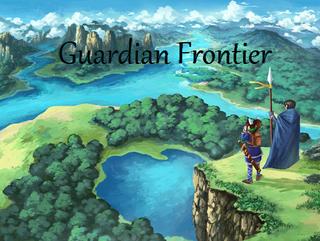
Guardian Frontier
An RPG with classic-style gameplay and a non-classic premise, inspired by the history of exploration and colonialism of the 19th century.
An RPG with classic-style gameplay and a non-classic premise, inspired by the history of exploration and colonialism of the 19th century.
Search
Filter
 All
All Game Pages
 User Statuses
 The Death Penalty
Two heaviest penalties for death in RPGs I can think of, not counting strategy RPGs with permanent character deaths, are in Azure Dreams and Breath of Fire: Dragon Quarter.
Azure Dreams offers no permanent level-ups for the main character; you're reset to level 1 every time you re-enter the main dungeon. You can only take five items into the dungeon with you when you enter, and you can only leave the dungeon if you have a specific item which appears randomly, so unless you find an extra one and sacrifice a valuable item slot to take one with you, there's always a risk that you'll get killed before you find one. It's a pretty tricky roguelike format, and you're rarely ever completely safe.
The main progression that allows you to get further through the main dungeon in successive playthroughs comes from leveling up your monster familiars, who don't lose their levels upon re-entering the tower, but who can only fight for a limited amount of time before running out of magic, and by gradually improving your equipment, which both from finding pieces scattered randomly through the dungeon, and from finding occasional items which permanently boost their stats. These permanent boosts add up a lot, and are likely to become your primary source of progression. The highest base attack power for weapons you can find is +7 or +10 for a pair of extremely rare weapons (Why list both, when +10 is clearly higher? Because the only weapon with that attack power comes with a substantial cut to your accuracy, so many players will prefer not to use it even if they find it.) But even without using cheats or exploits I've discovered through later play or game guides, I've built up weapons with attack power dozens of points higher than that.
When you die, you lose all the items in your inventory. Not just everything you collected on your trip, but everything you brought with you into the dungeon. Since leaving behind your best equipment means probably not being able to make it further through the dungeon, it's very likely that dying will cause you to lose a huge part of the assets which allow you to progress further in the game.
This one can be circumvented with a relatively simple exploit though. It's a PS1 game, and you can prevent the game from overwriting your save file when you die by simply taking out your memory card while you explore the dungeon.
Breath of Fire: Dragon Quarter has a system that's pretty conceptually similar. Basically, the game is only a few hours long for a single playthrough, but you're practically required to restart the game multiple times with a New Game + system which carries over elements from partial progress in order to make it through. Dying rather than deliberately restarting doesn't just knock you back to the beginning of the game, it eats up pretty much all the bonuses you get from the game progress you've accumulated. Unlike Azure Dreams, this one has some pretty strict systems to prevent you from avoiding this by just taking out your memory card or copying your save file.
Both games play this for pretty much the same payoff. The final bosses of both require you to reach what would be Game Over conditions anywhere else in the game in order to finish. Lots of games pull this, but it never has the same level of impact as when the game has taught you to instinctively freak out at the prospect of getting a game over. Whether it's worth putting up with for the entire rest of the game for the sake of that depends a lot on how you feel about games which force you to operate under high stakes.
Azure Dreams offers no permanent level-ups for the main character; you're reset to level 1 every time you re-enter the main dungeon. You can only take five items into the dungeon with you when you enter, and you can only leave the dungeon if you have a specific item which appears randomly, so unless you find an extra one and sacrifice a valuable item slot to take one with you, there's always a risk that you'll get killed before you find one. It's a pretty tricky roguelike format, and you're rarely ever completely safe.
The main progression that allows you to get further through the main dungeon in successive playthroughs comes from leveling up your monster familiars, who don't lose their levels upon re-entering the tower, but who can only fight for a limited amount of time before running out of magic, and by gradually improving your equipment, which both from finding pieces scattered randomly through the dungeon, and from finding occasional items which permanently boost their stats. These permanent boosts add up a lot, and are likely to become your primary source of progression. The highest base attack power for weapons you can find is +7 or +10 for a pair of extremely rare weapons (Why list both, when +10 is clearly higher? Because the only weapon with that attack power comes with a substantial cut to your accuracy, so many players will prefer not to use it even if they find it.) But even without using cheats or exploits I've discovered through later play or game guides, I've built up weapons with attack power dozens of points higher than that.
When you die, you lose all the items in your inventory. Not just everything you collected on your trip, but everything you brought with you into the dungeon. Since leaving behind your best equipment means probably not being able to make it further through the dungeon, it's very likely that dying will cause you to lose a huge part of the assets which allow you to progress further in the game.
This one can be circumvented with a relatively simple exploit though. It's a PS1 game, and you can prevent the game from overwriting your save file when you die by simply taking out your memory card while you explore the dungeon.
Breath of Fire: Dragon Quarter has a system that's pretty conceptually similar. Basically, the game is only a few hours long for a single playthrough, but you're practically required to restart the game multiple times with a New Game + system which carries over elements from partial progress in order to make it through. Dying rather than deliberately restarting doesn't just knock you back to the beginning of the game, it eats up pretty much all the bonuses you get from the game progress you've accumulated. Unlike Azure Dreams, this one has some pretty strict systems to prevent you from avoiding this by just taking out your memory card or copying your save file.
Both games play this for pretty much the same payoff. The final bosses of both require you to reach what would be Game Over conditions anywhere else in the game in order to finish. Lots of games pull this, but it never has the same level of impact as when the game has taught you to instinctively freak out at the prospect of getting a game over. Whether it's worth putting up with for the entire rest of the game for the sake of that depends a lot on how you feel about games which force you to operate under high stakes.
Beginnings and Endings: How to Write the Hardest Parts of your Story.
I think coming up with the beginning and ending can be both the easiest and hardest parts of the game in different ways.
In a sense, they're the most obvious parts of the premise of the game. If you know what the premise of your game is, then in broad terms the beginning and the ending are the parts that are most likely to follow directly from that premise. The ending most of all, because when you know what the plot is supposed to be, how to introduce it is generally a more open question than how to resolve it.
On the other hand, in terms of the actual execution of the scenes, the beginning and the ending are some of the most unforgiving parts of the creative process, because they do so much to determine the audience's feelings about the work.
As far as actual advice, this might be too vague to be useful, but I think you want to aim for a good medium where you introduce enough about your story and setting to get players interested, but not enough to bog them down. On the one hand, if you just toss them into things without feeding enough information to pique their interest, then they're going to think "okay, why do I care about what's going on?" (recently started up a game which got this reaction out of me, didn't get far in.) On the other, it's very easy to become convinced that your player needs to start off with a really clear idea of what your setting is like, so you tell them a bunch of details about its history, about important people, about the mechanics of the setting, etc. and the player is like "I have no idea why I should care about any of this," because they don't have the context to make any of it meaningful.
In a sense, they're the most obvious parts of the premise of the game. If you know what the premise of your game is, then in broad terms the beginning and the ending are the parts that are most likely to follow directly from that premise. The ending most of all, because when you know what the plot is supposed to be, how to introduce it is generally a more open question than how to resolve it.
On the other hand, in terms of the actual execution of the scenes, the beginning and the ending are some of the most unforgiving parts of the creative process, because they do so much to determine the audience's feelings about the work.
As far as actual advice, this might be too vague to be useful, but I think you want to aim for a good medium where you introduce enough about your story and setting to get players interested, but not enough to bog them down. On the one hand, if you just toss them into things without feeding enough information to pique their interest, then they're going to think "okay, why do I care about what's going on?" (recently started up a game which got this reaction out of me, didn't get far in.) On the other, it's very easy to become convinced that your player needs to start off with a really clear idea of what your setting is like, so you tell them a bunch of details about its history, about important people, about the mechanics of the setting, etc. and the player is like "I have no idea why I should care about any of this," because they don't have the context to make any of it meaningful.
1799 instrumental songs by Antti Luode, free for commercial or noncommercial use
Total was about 5 gigabytes.
Some of them are quite good, but I've had a very hard time searching through them all to find any particular thing at a time. Over 1300 songs in a folder will do that.
Some of them are quite good, but I've had a very hard time searching through them all to find any particular thing at a time. Over 1300 songs in a folder will do that.
 Guardian Frontier
I'm having a difficult time understanding a lot of that, but...
You can't train the other Guardians before the Deen mission; they're not in your party before that, and the levels of party members when they join isn't determined by your party's level.
I like to encourage some trial and error in combat, but since there are so few Forest Hulks to do trial and error on, I don't think it would hurt if I let you guys know that fire magic can help you a lot with them. Bolt may have higher base damage than Fire, but that doesn't mean it's more useful for every situation. Most of the attack spells in this game have status effects they can inflict occasionally, and some enemies are much more vulnerable, not just to damage from the elements, but to the status effects that go along with the spells.
You're right that you don't get money from fights, but a higher level will make the missions easier. But there is another source of money aside from missions; you can find stuff when you're out exploring combat areas which you can exchange for money. In the case of the areas so far, it's only queenswhite, but there are going to be more over the course of the game.
I think you have to grind on encounters on the world map for either of your characters to make it as high as level 15 by the end of this update. I didn't do that in my own playtesting (I didn't want my characters to be extra strong and have an easier time than most players would,) and I never made it up that high. It definitely shouldn't be necessary in order to beat all the plot-required battles.
Here's another hint on something I hope too many players haven't been missing. It's a good idea talk to people around town after plot events like finishing a job. Guardians live on the gratitude of the public! In very concrete, material terms. You'll be sleeping in strangers' houses a lot, but also getting gifts from people who want to help you out.
Edit: As an added note, I don't think of what's out so far of the game as a "demo." I don't plan to get to a point where I'm going to tell my audience "Okay, I've demonstrated enough, now you have to wait for the whole rest of the game to come out at once." Releasing the game in gradual updates helps keep me on something like a proper schedule. That doesn't mean I'm going to be releasing every new update month by month. The next update is almost certainly going to take longer, since it has a lot of large areas and far more NPCs to write for than the previous updates. This isn't part of some serial escalation where I'm developing bigger and bigger plans for each update until it becomes unsustainable, those elements of this update have been planned since way before I started the game. The first update of the second chapter (which is still quite a while off) is also going to take a lot longer, because the gameplay will start to become more nonlinear at that point. But in general, I want to keep these releases coming at a pretty frequent pace.
You can't train the other Guardians before the Deen mission; they're not in your party before that, and the levels of party members when they join isn't determined by your party's level.
I like to encourage some trial and error in combat, but since there are so few Forest Hulks to do trial and error on, I don't think it would hurt if I let you guys know that fire magic can help you a lot with them. Bolt may have higher base damage than Fire, but that doesn't mean it's more useful for every situation. Most of the attack spells in this game have status effects they can inflict occasionally, and some enemies are much more vulnerable, not just to damage from the elements, but to the status effects that go along with the spells.
You're right that you don't get money from fights, but a higher level will make the missions easier. But there is another source of money aside from missions; you can find stuff when you're out exploring combat areas which you can exchange for money. In the case of the areas so far, it's only queenswhite, but there are going to be more over the course of the game.
I think you have to grind on encounters on the world map for either of your characters to make it as high as level 15 by the end of this update. I didn't do that in my own playtesting (I didn't want my characters to be extra strong and have an easier time than most players would,) and I never made it up that high. It definitely shouldn't be necessary in order to beat all the plot-required battles.
Here's another hint on something I hope too many players haven't been missing. It's a good idea talk to people around town after plot events like finishing a job. Guardians live on the gratitude of the public! In very concrete, material terms. You'll be sleeping in strangers' houses a lot, but also getting gifts from people who want to help you out.
Edit: As an added note, I don't think of what's out so far of the game as a "demo." I don't plan to get to a point where I'm going to tell my audience "Okay, I've demonstrated enough, now you have to wait for the whole rest of the game to come out at once." Releasing the game in gradual updates helps keep me on something like a proper schedule. That doesn't mean I'm going to be releasing every new update month by month. The next update is almost certainly going to take longer, since it has a lot of large areas and far more NPCs to write for than the previous updates. This isn't part of some serial escalation where I'm developing bigger and bigger plans for each update until it becomes unsustainable, those elements of this update have been planned since way before I started the game. The first update of the second chapter (which is still quite a while off) is also going to take a lot longer, because the gameplay will start to become more nonlinear at that point. But in general, I want to keep these releases coming at a pretty frequent pace.
'Game Length' Specific
I think there's a lot of value even in imprecise measures here.
It's less useful than a descriptor that would have accurately told them that it would take them an hour and a half to two hours to finish. But it's useful if they were thinking "I want something pretty short, I don't have time for something that'll take me 5+ hours or so."
Or, if a game developer says on their page that their game should take about 8-10 hours to beat, and someone finishes it in 6, they might be a little put out, but they'll probably be a lot less put out than if they downloaded it under the mistaken impression that it was going to be a 30+ hour epic.
If someone is using game length descriptions as an element of how interested they are in playing the game, then a lot of the usefulness of that measure is going to be retained even at low levels of precision. A person who's interested in a fifteen hour game is probably also going to be interested if the game actually takes them about ten hours, and a person who'll go for a one hour game will probably also go for a two hour one. A person who's interested in a fifteen hour game quite possibly isn't interested in a two hour one, but self-rating by a developer is unlikely to result in a discrepancy that large.
author=Liberty
If someone downloads an 'under 1 hour' game expecting something around half an hour long and then get an hour and a half or two hours of game because of how they played vs the creator, then the descriptor just wasn't useful for them.
It's less useful than a descriptor that would have accurately told them that it would take them an hour and a half to two hours to finish. But it's useful if they were thinking "I want something pretty short, I don't have time for something that'll take me 5+ hours or so."
Or, if a game developer says on their page that their game should take about 8-10 hours to beat, and someone finishes it in 6, they might be a little put out, but they'll probably be a lot less put out than if they downloaded it under the mistaken impression that it was going to be a 30+ hour epic.
If someone is using game length descriptions as an element of how interested they are in playing the game, then a lot of the usefulness of that measure is going to be retained even at low levels of precision. A person who's interested in a fifteen hour game is probably also going to be interested if the game actually takes them about ten hours, and a person who'll go for a one hour game will probably also go for a two hour one. A person who's interested in a fifteen hour game quite possibly isn't interested in a two hour one, but self-rating by a developer is unlikely to result in a discrepancy that large.
Guardian Frontier
Guardian Frontier
I'm flattered if you think so. I'm trying to at least keep the mapping in the realms of the not-crappy (should get some more screenshots to add soon which aren't indoors.) It's one of the harder parts of the game making process for me, but some of my favorite games have mapping which most people would probably only rate as "decent." I'd hope that I can at least do a good enough job with the mapping that it doesn't become a disqualifying factor for potential players.
Other RPG Maker games that inspire you?
There are a lot of RPGMaker games which have inspired me; I'm mostly into long form story-based games, so the ones that have made the biggest impression on me are mostly games of that type which do something which commercial games generally don't do. There were already plenty of examples of "tell an interesting story with video games" before I got into RPGMaker, so the things that make a lasting impression on me tend to be things which break established conventions of commercial work.
Last Scenario and Exit Fate were my introductions to the genre, and a big part of why I got invested in it in the first place, because they were my introduction to the idea that there are people out there making high level amateur games which just don't have to follow conventional commercial tropes.
Embric of Wulfhammer's Castle is one of my favorites which stands as an example of how much fun you can put into a game just by focus on the "walk around and talk to people and inspect objects" elements.
Three the Hard Way, both for the unconventional gameplay elements which reinforce and help the player identify with the protagonist's essential character trait of greed, and for the absurd degree of variability and open-endedness it offered. There's so much to explore in that game which you can't possibly get to in just one playthrough, it boggles my mind that one person committed to putting that all in there.
The Last Sovereign (rated 18+, but worth checking out for anyone for whom that's not a dealbreaker,) combines linear gameplay with a tremendous amount of player choice, and you feel the impact of all the decisions you're making. It's a great demonstration of how expansive you can make a game while still sticking to a carefully laid out story track.
Last Scenario and Exit Fate were my introductions to the genre, and a big part of why I got invested in it in the first place, because they were my introduction to the idea that there are people out there making high level amateur games which just don't have to follow conventional commercial tropes.
Embric of Wulfhammer's Castle is one of my favorites which stands as an example of how much fun you can put into a game just by focus on the "walk around and talk to people and inspect objects" elements.
Three the Hard Way, both for the unconventional gameplay elements which reinforce and help the player identify with the protagonist's essential character trait of greed, and for the absurd degree of variability and open-endedness it offered. There's so much to explore in that game which you can't possibly get to in just one playthrough, it boggles my mind that one person committed to putting that all in there.
The Last Sovereign (rated 18+, but worth checking out for anyone for whom that's not a dealbreaker,) combines linear gameplay with a tremendous amount of player choice, and you feel the impact of all the decisions you're making. It's a great demonstration of how expansive you can make a game while still sticking to a carefully laid out story track.
Harvest Moon type game!!
author=Mirak
Ditch this idea until you're experienced enough. It's too high level a project for someone new to this, you need to be comfortable with eventing, using variables and common events, and even then your options might be limited, requiring you to involve yourself with scripting, which is advanced stuff in rpgmaker.
Make a few short games first, to get your feet wet in the software.
I can understand why most people endorse it, but personally, I don't entirely agree with the "make a few short games first" prescription for RPGMaking.
I'm currently working on my first solo project, and it involves some reasonably complex eventing, and I've learned most of that during and for the sake of the process of making it. By comparison, I learned a lot less from my briefly attempted practice project, because it wasn't that interesting to me, so I didn't have the same enthusiasm to learn in order to get it done. I think there's a lot to be said for learning by doing something you're enthusiastic about, and not everyone can get enthusiastic about short practice games.
That said, one thing I think anyone should absolutely do before they start any project is work out a clear picture of what the project is going to entail, and build up at least enough familiarity with the game engine to understand what it's going to require of you to implement it. It's one thing to start a project knowing you're going to have to build certain skills in order to execute it, it's another thing entirely to start a project without knowing what skills you're going to need. If you have to start with smaller and simpler projects in order to get a sense of the skills you'll need for a larger one, by all means do so.
On a related note, I think that rather than deciding to make a Harvest Moon-style game, and then looking for feedback on what sort of setting and features it should have, it's better to try and work out what you would want a Harvest Moon-style game to be like. The premise should be something that you, personally, are enthusiastic about, since you're the one who'll going to have to carry the weight of actually making it.
Guardian Frontier
I tend to be the same way. But if I designed a game based around my own inclinations, I'd probably wreck the difficulty curve.
So, instead of letting the player feel powerful by letting them grind indefinitely and kick the asses of enemies that are supposed to be challenging, my approach is to give the player the chance to feel powerful by keeping the story grounded with a sense of how difficult and dangerous the protagonists' work is for ordinary people. If the player struggles against a Forest Hulk, they can still remember how dangerous imps are to ordinary civilians.
I also want to give players the opportunity to feel rich by making them poor!
Lots of video games let the player gradually accumulate huge amounts of money, so you might eventually get the sense that "at this point, realistically, my characters are probably pretty wealthy." But usually the narrative doesn't really do much if anything to establish this, and the gameplay doesn't highlight it because you've very likely spent the entire game always having as much money as you needed for all the stuff you wanted as it became available. Besides which, NPC shopkeepers can buy unlimited quantities of stuff from you and always have enough cash on hand to pay out, which takes away from the sense that that quantity of money means much of anything.
So, I think that if you want to give players a sense of their characters being wealthy, it helps to first establish a contrast where they get used to scarcity being the norm, so that later on, they can notice its absence.
So, instead of letting the player feel powerful by letting them grind indefinitely and kick the asses of enemies that are supposed to be challenging, my approach is to give the player the chance to feel powerful by keeping the story grounded with a sense of how difficult and dangerous the protagonists' work is for ordinary people. If the player struggles against a Forest Hulk, they can still remember how dangerous imps are to ordinary civilians.
I also want to give players the opportunity to feel rich by making them poor!
Lots of video games let the player gradually accumulate huge amounts of money, so you might eventually get the sense that "at this point, realistically, my characters are probably pretty wealthy." But usually the narrative doesn't really do much if anything to establish this, and the gameplay doesn't highlight it because you've very likely spent the entire game always having as much money as you needed for all the stuff you wanted as it became available. Besides which, NPC shopkeepers can buy unlimited quantities of stuff from you and always have enough cash on hand to pay out, which takes away from the sense that that quantity of money means much of anything.
So, I think that if you want to give players a sense of their characters being wealthy, it helps to first establish a contrast where they get used to scarcity being the norm, so that later on, they can notice its absence.
 Games - Tester
 Games - Other
