



 Full Games List
 Featured Games
 New Games
 Reviews
 Media
Media Images
 Blogs
Blogs Game Updates
 Images Feedback Summary
 Game Design Highlights
 Tutorials
 Articles
 Scripts
 Utilities / Plugins
 Resources
 Engines
 Engine Bulletins
 What is Makerscore?
 Past Events
 Achievements
 Misaos
 Forums
 Chat
Chat New to RMN?
 Full Store List
 RMN Music Pack (free)



 Profile
 Locker
 Play Lists
DESERTOPA'S PROFILE
Desertopa

775
 Close
Close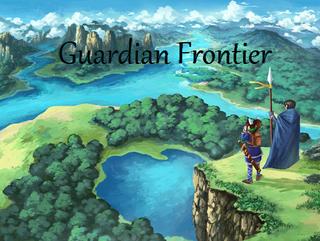
Guardian Frontier
An RPG with classic-style gameplay and a non-classic premise, inspired by the history of exploration and colonialism of the 19th century.
An RPG with classic-style gameplay and a non-classic premise, inspired by the history of exploration and colonialism of the 19th century.
Search
Filter
 All
All Game Pages
 User Statuses
 Democratic RPGs?
author=Professor_Q
True. But urban fantasy usually isn't particularly political, whereas for RPGs and fantasy novels set in monarchic settings, politics are part of what makes them fun!
Not usually, perhaps, but it could be. Not to give away too much, but I'm planning something along these lines. Not that the setting is exactly urban fantasy either, it's actually a comedic mishmash of RPG conventions alongside a modern day setting (i.e. swords and elves and magic spells and ragtag bands of misfits saving the world, alongside the internet, multinational corporations, rap and pop music and celebrity endorsements.) But a comedic setting can still carry off a serious plot (Earthbound is one of my formative examples here,) and I'm planning a conflict that's essentially political.
author=Professor_Q
Looking forward to it! Is there a game page up already? I'll head over and subscribe.
Not yet. I'm working in collaboration with another member (my art skills are terrible, and I'm still a newbie with the software, pooling our abilities is necessary to get it done properly,) so progress is slowed by the speed of our coordination. When we do have something up, I'll be sure to let you know.
When I don't actually expect to get a work done, I default to not talking about it so other people don't expect anything, but on the flipside, I feel like if I'm actually committed to getting something finished, I should stake my reputation by telling people about it. But I'm afraid I'm kind of hijacking your own blog at this point, so I'll leave it at that. Good luck with Year of the Cat!
Democratic RPGs?
Part of this arises from the literary pedigree of the RPG, which has its ancestry in the literary genre of fantasy. By definition, fantasy novels take place in a quasi-medieval setting, and the monarchic and feudal settings are part of that package.
I wouldn't say that this is in any way part of the definition of fantasy. Indeed, there's no shortage of recognizably fantasy-genre works which don't invoke such a setting at all. The entire Urban Fantasy subgenre is essentially built on a single alternative to the widely used quasi-medieval setting.
Far from being simpler and less nuanced than conflicts between democratic states, I would say that real monarchical history has actually tended to be more complex than that of democratic societies, because major changes can easily arise out of personal-scale conflicts which would fade into irrelevance in a democratic society. If video games set in monarchical societies are more simplistic than the politics we're used to, that's a reflection of their writing, not the politics of monarchy.
While medieval-style politics can be arbitrarily byzantine (indeed, it's no coincidence that the very word "byzantine" is derived from the political operations of an empire from the middle-ages,) the fact that so much power is invested in specific individuals, rather than the will of a nebulous populace, can make plots easier to construct and resolve. When a war, or law, or religious revival, or whatever other plot movement, is spearheaded by the will of an individual, rather than public consensus, there's much more opportunity for characters to trace those movements to their source and confront them.
All that said, the game project I'm working on isn't going to be using a quasi-medieval setting either, even though it does lie within the fantasy genre, but it's not for lack of nuance or originality available in that kind of framework.
 What makes you want to play one game over another?
author=SnowOwl
Interesting to see so many people say that walls of text on the gamepage is a no-no. What would you people saying so think that the right amount of text is?
Not saying I disagree, just curious since I'm currently editing one of my own gamepages.
To paraphrase something I said in another thread, your goal isn't to get the audience's understanding, it's to get their attention. Say what you need to to get across the things which will interest your target audience.
Suppose you're creating a game which stars a young mercenary named Theodore, who's joined an army invading a country called Fiore to the South of his homeland, and gradually comes to question the morality of his own actions and the expansionist policies of the king in whose service he's enlisted. I have absolutely no opinion about whether I'd like to play a game about a mercenary named Theodore, or a war in a country called Fiore, or whether South is a good direction for it to be. I do have an opinion on whether I'd like to play a game where the protagonist is forced to confront his conception of his own morality, make difficult choices, and change his world outlook. I have opinions about whether I'd like to play a game focusing on a complex political drama, an epic fantasy confrontation or what have you. Focus on the sort of information that helps people decide whether the game will be interesting to them or not, not the sort of information which would help them know what was going on if they jumped into the game midway.
Obviously, this doesn't answer the "how long should it be?" question, but I think that if you leave out everything that's not really relevant, you'll rarely run into the problem of your game description being too long.
Relationship values - It takes two.
I considered discussing the matter of relationship values more in the comments of your Romancing Walker review, but this is a better place for it.
The game which, to me, sets the standard for doing interesting things with relationship values is the second Star Ocean game. It doesn't have the best romantic writing of the games I've played by any means, but it operates on some principles that I don't often see in video game romances, which I would like to see as the default rather than an exception.
First off, characters' relationships are built up through experiences that give them opportunities to interact and relate to each other, not simply through proximity and observation as they adventure together. Realistically speaking, people can be made to feel attraction to each other simply by going through exciting experiences together, but it's a very shallow basis for a relationship and doesn't tell you much about those people's compatibility. Rather than relying on dramatic experiences that draw characters closer to each other, I find it much more satisfying when the story presents opportunities for the characters to show things they actually like about each other.
Second, the choices which draw characters together are not simple expressions of preference or affection, but things which actually relate to the characters' individual personalities. If the choices which pull your characters together amount to "will you be nice to character A?" or "which character do you like, A, B, or C?" then it fails to reinforce the player's perception of them as people with distinct character. On the other hand, the choices should not become too obtuse, lest the player stop treating the choices in terms of their understanding of the characters' personalities, and start treating them as a guessing game where savescumming is key to success.
Third, pursuing development in character relationships is its own reward. Romance or friendships between characters aren't simply thrust at the player, they're given the opportunity to pursue them, and the incentive for doing so isn't that you have to put up with it for some Infinity Plus One Sword, ultimate spell, or achievement for one hundred percent completion, but simply because the interactions between characters are fun to see. If the player doesn't enjoy these character building scenes, they don't have to go out of their way for them. If they do want to build the relationships between characters though, it won't simply amount to making a series of choices through the narrative and having the characters' relationship values silently tick upwards, it will mean a substantial amount of additional interaction between those characters.
One thing which Star Ocean 2, and most other games with relationship values for that matter, do not do, but which I strongly recommend, is that the player receive continual payoff for investment into building character relationships, not just an eventual payoff at the ending. It doesn't have to involve big animated cutscenes or extensive dialogues (although it certainly could if you're willing to put the effort in,) but it's nice to see occasional feedback showing that your character's feelings for each other are changing. Maybe you add an extra line of dialogue now and then between characters reflecting the state of their relationship together. Maybe you vary the line a character gives when you place them in your active party depending on how much they like the party leader. Maybe you make characters stand closer to each other in certain scenes if they like each other more, or have them share a bed at inns if their relationship has reached a certain point, and so forth. I think it's more interesting if the player feels like the characters' relationships are a regular feature of the game, not something that merely comes into play in the ending.
The game which, to me, sets the standard for doing interesting things with relationship values is the second Star Ocean game. It doesn't have the best romantic writing of the games I've played by any means, but it operates on some principles that I don't often see in video game romances, which I would like to see as the default rather than an exception.
First off, characters' relationships are built up through experiences that give them opportunities to interact and relate to each other, not simply through proximity and observation as they adventure together. Realistically speaking, people can be made to feel attraction to each other simply by going through exciting experiences together, but it's a very shallow basis for a relationship and doesn't tell you much about those people's compatibility. Rather than relying on dramatic experiences that draw characters closer to each other, I find it much more satisfying when the story presents opportunities for the characters to show things they actually like about each other.
Second, the choices which draw characters together are not simple expressions of preference or affection, but things which actually relate to the characters' individual personalities. If the choices which pull your characters together amount to "will you be nice to character A?" or "which character do you like, A, B, or C?" then it fails to reinforce the player's perception of them as people with distinct character. On the other hand, the choices should not become too obtuse, lest the player stop treating the choices in terms of their understanding of the characters' personalities, and start treating them as a guessing game where savescumming is key to success.
Third, pursuing development in character relationships is its own reward. Romance or friendships between characters aren't simply thrust at the player, they're given the opportunity to pursue them, and the incentive for doing so isn't that you have to put up with it for some Infinity Plus One Sword, ultimate spell, or achievement for one hundred percent completion, but simply because the interactions between characters are fun to see. If the player doesn't enjoy these character building scenes, they don't have to go out of their way for them. If they do want to build the relationships between characters though, it won't simply amount to making a series of choices through the narrative and having the characters' relationship values silently tick upwards, it will mean a substantial amount of additional interaction between those characters.
One thing which Star Ocean 2, and most other games with relationship values for that matter, do not do, but which I strongly recommend, is that the player receive continual payoff for investment into building character relationships, not just an eventual payoff at the ending. It doesn't have to involve big animated cutscenes or extensive dialogues (although it certainly could if you're willing to put the effort in,) but it's nice to see occasional feedback showing that your character's feelings for each other are changing. Maybe you add an extra line of dialogue now and then between characters reflecting the state of their relationship together. Maybe you vary the line a character gives when you place them in your active party depending on how much they like the party leader. Maybe you make characters stand closer to each other in certain scenes if they like each other more, or have them share a bed at inns if their relationship has reached a certain point, and so forth. I think it's more interesting if the player feels like the characters' relationships are a regular feature of the game, not something that merely comes into play in the ending.
What makes you want to play one game over another?
author=unityauthor=Milennin...I totally don't have any of this in my gamepage screenshots. Damn, that's a good point. I better remedy that.
Screenshots showing dialogue that's fun to read.
By all means do. To me, this isn't merely important, it's possibly the most important thing I look for.
Fundamentally, what I'm most interested in when I'm deciding whether to download a game or not are demonstrations of skill. Lists of features tell me something about the time and effort the creator put into the game, and what they intended to accomplish, but very little about how well those goals were executed. If the game is supposed to be funny, don't wait until I've downloaded the game to try and make me laugh. If the story is supposed to be gripping, don't just tell me that the game has a strong story, show me how good a writer you are so I can believe in your ability to carry that story off. If the mechanics are supposed to be well thought out and challenging, try and find some screenshots representative of that.
I absolutely disagree with any prescription against putting walls of text on one's description page. Why? Because if the developer does that, and the description isn't actually engaging, I immediately know not to play that game. I want game pages to accurately show me the ability level of the game's creator, not disguise their deficiencies and keep me guessing at the quality they're capable of.
Not saving giving a better reward?
author=bulmabriefs144
I've actually done this. What you guys aren't getting is that it isn't to penalize you, it's a reward.
If the players feel like they're being penalized, then it really doesn't matter if it's intended to be a reward. In general, game designers try to put things into their games that they think will be fun. If they always succeeded, there would only be great games. Just because it's intended as a reward doesn't mean players won't find it harms their experience.
Not saving giving a better reward?
author=RyaReisender
Sorry, LockeZ, but I think your approach to game design is (in this case) completely wrong and with that attitude you will never be able to create a game that is actually fun for many players. Forcing your concepts onto players will not work, even if you are a good game designer as not all humans are the same. Some enjoy challenges, some want an easy game, some even have fun exploiting bugs to the max.
You really should have more trust in your players. Not everyone will exploit bugs to the max even if they could. Not everyone will use a cheat engine even when its directly included with the game.
Speaking as someone who usually will exploit pretty much every system the game lets me, I totally agree with LockeZ here. Not just as a matter of personal experience, as a matter of psychological research, there are ways to make people consistently enjoy themselves less by giving them more options. One of your jobs as a game designer is the ensure that your game is not full of these options that make the game less fun.
The linked essay explicitly mentions the applicability of this principle to video games, and in almost exactly this context. The option to make to cheat and circumvent the challenge is just the sort of thing which will harm the experience for a lot of players, whether they take it or not.
Do RPGs need a story?
author=Rod_Wadd
A lot of the games on this site, I think, overdo it with exposition in the beginning. I too want to control my character as soon as possible. I think a lot of makers think that a player needs to be told what's going on in their world in order to be invested in the game, but I feel the opposite. I want to be in your world and find out why I should care about it through playing it.
I definitely don't want to be thrust into gameplay immediately without any knowledge of why I should care what I'm doing. But a big infodump in the beginning is a flaw in most stories, not just video games. What you want to get right at the beginning isn't the audience's understanding, but their attention. The opening should contain some kind of hook, preferably within the first thirty seconds, which lets the audience know why they should care about what's in front of them.
The hook might be something which provides some information about the story, but it doesn't have to be. It might be something like "Look at this huge, awesome city! Don't you want to take a closer look at it?" or "Here is some extremely witty and engaging dialogue, so you know that listening to what the characters say to each other is worth sticking around for."
The Logomancer sets a great example for opening hooks. Within the first thirty seconds, the player will:
Encounter a weird, dreamlike landscape which doesn't look like anything from our own world.
Organically learn a couple interesting facts about the game's setting. People in this world routinely enter this strange environment, called the Mindscape, whenever they fall asleep, and the content of the Mindscape differs depending on one's physical location in the real world.
Encounter a mysterious figure who, when asked for his name, attests that his name has been "taken" from him.
And of course, this is set to some very good atmospheric music to enhance the mood. Within the first minute, the player already knows a lot about the tone of the whole game, but also has a sense of how much they don't know about the overarching plot, and a desire to find out.
If you feel like you need to lay some kind of basic groundwork to get the player to understand what's going on before you hit them with the "good parts," that's always a sign that you ought to stop and reconsider. You're already automatically invested in your own work, the player isn't.
 Romancing Walker
Do you know if the other people whose emails you provided can speak English? I don't have any evidence that Flare does, so it might be better for me to contact someone who can pass along a message.
Are there restrictions on games that can be hosted here? Specifically games aimed for more mature audiences.
If the check box would get around any legal issues, I definitely think that would be preferable to a blanket restriction on making games with more adult content.
I don't have any immediate plans for games with content that would garner an adult rating, but I'm also of the opinion that sexuality is a significant enough part of human experience that it should be able to be incorporated into stories naturally, without being gawked at or shoehorned in gratuitously, so I'd prefer it if the option to include that sort of content were left open to us.
I don't have any immediate plans for games with content that would garner an adult rating, but I'm also of the opinion that sexuality is a significant enough part of human experience that it should be able to be incorporated into stories naturally, without being gawked at or shoehorned in gratuitously, so I'd prefer it if the option to include that sort of content were left open to us.
 Games - Tester
 Games - Other

