



 Full Games List
 Featured Games
 New Games
 Reviews
 Media
Media Images
 Blogs
Blogs Game Updates
 Images Feedback Summary
 Game Design Highlights
 Tutorials
 Articles
 Scripts
 Utilities / Plugins
 Resources
 Engines
 Engine Bulletins
 What is Makerscore?
 Past Events
 Achievements
 Misaos
 Forums
 Chat
Chat New to RMN?
 Full Store List
 RMN Music Pack (free)



 Profile
 Locker
 Play Lists
MERLANDESE'S PROFILE
Merlandese

3235
 Close
Close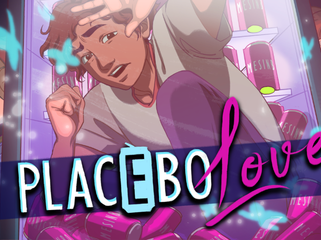
Placebo Love
A lonely office worker is guided by a silent Muse to solve the mystery behind his two Doppelganger Soulmates.
A lonely office worker is guided by a silent Muse to solve the mystery behind his two Doppelganger Soulmates.


Search
Filter
 All
All Game Pages
 User Statuses
 How much dialogue should there be in a dungeon crawler?
author=Craze
there is nothing rewarding about the dialogue in persona q when they ruined the characters and 90% of scenes are teddie trying to get his deck sucked
fucking awful game, don't do anything persona q does if you want to make a good game
however, the concept of dialogue as a reward is okay. conversations when you open chests (especially if it's pertinent to the item), before/during/after midbosses, when you reach a new level, just randomly while admiring the scenery, etc. (you'll notice tons of this if you play any of my dungeon crawlers. if you like writing all kinds of dialogue for your characters, the players will probably like them too.)
Haha, I´m glad you have some actual insight on the game because I only got to play a little before leaving my 3DS behind. It got great reviews, though, but I wouldn´t doubt the secret to that success is the advantage of a popular IP.
Still, yes, the dialogues-as-reward idea is how I would implement dialogues in a crawler.
I don´t have a lot of experience with crawlers in general to be honest, but adding a semi-optional system that allows the characters to converse in a dynamic way that also somehow benefits the growth of the characters on stats or items might be a creative and functional way to do it. I dont´t mean like full-on Persona Social Links, but something more subdued and used in place of a crafting system that also fleshes people out might be fun.
How much dialogue should there be in a dungeon crawler?
I played a little bit of Persona Q about a year ago and it's a dungeon crawler with all (and more) of the dialogue you'd expect from a Persona spin-off. JRPG'd to the max.
I think the pacing is a little lopsided. The dialogue was frontloaded so hard that when you finally crawled you didn't do so for more than a few minutes before the next cutscene. However, as you progressed the dungeon you got more engaged in the banter the characters had, as if this banter was treated like a treasure chest that you could find.
So my suggestion is exactly that: If you want to add more dialogue to your dungeon crawler, try and make it feel like something the player is being rewarded with for doing the crawl, rather than it be a distraction from the crawl.
I think the pacing is a little lopsided. The dialogue was frontloaded so hard that when you finally crawled you didn't do so for more than a few minutes before the next cutscene. However, as you progressed the dungeon you got more engaged in the banter the characters had, as if this banter was treated like a treasure chest that you could find.
So my suggestion is exactly that: If you want to add more dialogue to your dungeon crawler, try and make it feel like something the player is being rewarded with for doing the crawl, rather than it be a distraction from the crawl.
Themes as a Standard
author=pianotmLiberty
piano, you didn't read my first post properly.RE: the 'theme' of Harry Potter - as a long time reader, that is not the theme that I would have said encompassed the series. I lean more towards dual themes - 'Found Family' and 'Good vs Evil'. So, yeah, readers don't necessarily pick up on the themes you want them to.
Exactly. There's interpretation vs. what the author intended. Jo Rowling's overarching theme was Death according to her own public statements, but you and I never interpreted it that way. It underlines what I mean when I say that the theme isn't necessarily intended for the reader to notice, though it can be.
This borders Authorial Intent, which is not just another can of worms, but a can of, like, Dragonairs! XD
I think themes, like any meaning, can be interpretive. For example, even though To the Moon wasn't necessarily consciously constructed with the theme of Communication, I'd argue that Communication IS the main theme of the game, right or wrong, intended or intuitively crafted. Same with Identity in FFIX. (Side note: I loved all the input on the theme of FFVIII; that could be a topic in itself!)
But whether or not a the theme was created purposefully or subconsciously is an interesting idea. I have no doubts that some people can craft cohesive themes without ever thinking about it in technical or literal terms. And I often wonder how many people avoid it like the plague, and if those finished projects end up having a theme anyhow.
Personally I tend to think of Main Theme, then genre (as loosely as possible). As I create, I try to let other themes come in organically, but if they compromise the original Main Theme then they have to go. Without that Main Theme my workload doubles because I have to go back through every nuance of the project and realign details to the New Theme.
Themes as a Standard
If you've taken some sort of writing or literature class you're probably familiar with the idea that everything has a theme, or that at least it "should." Love, comradery, complacency, the dualism of humanity, the vastness of the universe, memory, etc.
When I asked my early writing teacher what possible themes my favorite book at the time, Wizard's First Rule, had, she immediately responded that most fantasy had the (very basic, parable-esque) theme of "Good versus Evil." Now that I'm an adult I know that the book also had another major theme: "People are stupid." This theme isn't even interpretive; the "first rule" of wizards outlined in the title is "People are stupid," and it not only pervades the "Good versus Evil" narrative but it provides the final resolution in a package that's neat and almost invisible if you aren't keen on theme-watching.
As designers/writers, do you create central themes in your game? Do you build around the theme, or let the theme dictate what you do? Or do you make what "feels" right and hope it has a theme after the fact? Or do you think that grasping for themes is contrived and that your game doesn't need to be pretentious in order to work? What are your feelings on themes in the creative process, if any?
As food for thought, FFVIII was touted on the back of the box as having the "theme of love." Although I generally agree that it has a theme of love, I found that theme to be weak in execution and cohesion throughout. In FFIX, however, no one EVER mentions it having a theme, and yet the "theme of Identity/Who Am I?" is stronger and more pervasive than any theme in any Final Fantasy.
When I asked my early writing teacher what possible themes my favorite book at the time, Wizard's First Rule, had, she immediately responded that most fantasy had the (very basic, parable-esque) theme of "Good versus Evil." Now that I'm an adult I know that the book also had another major theme: "People are stupid." This theme isn't even interpretive; the "first rule" of wizards outlined in the title is "People are stupid," and it not only pervades the "Good versus Evil" narrative but it provides the final resolution in a package that's neat and almost invisible if you aren't keen on theme-watching.
As designers/writers, do you create central themes in your game? Do you build around the theme, or let the theme dictate what you do? Or do you make what "feels" right and hope it has a theme after the fact? Or do you think that grasping for themes is contrived and that your game doesn't need to be pretentious in order to work? What are your feelings on themes in the creative process, if any?
As food for thought, FFVIII was touted on the back of the box as having the "theme of love." Although I generally agree that it has a theme of love, I found that theme to be weak in execution and cohesion throughout. In FFIX, however, no one EVER mentions it having a theme, and yet the "theme of Identity/Who Am I?" is stronger and more pervasive than any theme in any Final Fantasy.
What's been inspiring you!?
Games like Catherine inspire me constantly--attempts to deal with adult information that is neither too massive (save the world!) nor too interpretive (love will heal a frozen heart!), all with a sort of supernatural or magical-realism approach that still makes for good gaming.
Although I have to admit that Harvest Moon is my current driving inspiration in game design.
Although I have to admit that Harvest Moon is my current driving inspiration in game design.
 [Poll] A poll and discussion about random battle encounters: how they may be implemented.
author=Marrend
If I recall Wild Arms 2, it was the cancel button, and... I don't recall an animation if you succeed? There was definitely a "!" over the character's head for a limited time, though!
Maybe I'm crossing my wires on this, but I thought there was something where it made the character dash in a certain direction? Maybe it was Alter Code: F, or maybe it was my imagination because this was over ten years ago. XD
I didn't know about the WA3 system. It's interesting how certain franchises consistently experiment with changing certain traditions. Maybe that whole franchise is worth looking into for the sake of this topic.
[Poll] A poll and discussion about random battle encounters: how they may be implemented.
This didn't bring up some of the other ideas that have been used in JRPG history, a couple of which are pretty cool.
Red Light/Green Light: They used this in Legend of Dragoon for the first instance I can think of. This sort of mitigates the surprise of the random encounter: they still have a random chance of happening, but the player is informed through an indicator how soon they will happen.
This lends itself to some very basic field strategy. I can recall many times in dungeons where I'd try to rush to the exit with a handicapped party so I could save some potions or antidotes. In the Red Light/Green Light method, I'd get an idea of whether or not I can make it from Point A to Point B unmolested and use my items or plan my path differently.
Timing Un-Encounter: Obviously I have no idea what these systems are called even if they have a name, but I recall my friend playing one of the Wild Arms games and, if memory serves me well, it had a system a lot like the indicator I just described. The key difference was that if you pressed the Confirm button at the exact moment of the encounter, your sprite would do a dodging action, slide a few feet away, and the timer would reset without a battle.
I really like this. The idea is to turn your encounters into another type of manageable game, one that isn't simply the use of switches or items. You can be satisfied when you dodge a battle. And if you want to get creative, you could also add a feature where the higher your Dodge Combo is, the harder the enemy is when you encounter them, which could be used for expert grinding or rare item farming.
Red Light/Green Light: They used this in Legend of Dragoon for the first instance I can think of. This sort of mitigates the surprise of the random encounter: they still have a random chance of happening, but the player is informed through an indicator how soon they will happen.
This lends itself to some very basic field strategy. I can recall many times in dungeons where I'd try to rush to the exit with a handicapped party so I could save some potions or antidotes. In the Red Light/Green Light method, I'd get an idea of whether or not I can make it from Point A to Point B unmolested and use my items or plan my path differently.
Timing Un-Encounter: Obviously I have no idea what these systems are called even if they have a name, but I recall my friend playing one of the Wild Arms games and, if memory serves me well, it had a system a lot like the indicator I just described. The key difference was that if you pressed the Confirm button at the exact moment of the encounter, your sprite would do a dodging action, slide a few feet away, and the timer would reset without a battle.
I really like this. The idea is to turn your encounters into another type of manageable game, one that isn't simply the use of switches or items. You can be satisfied when you dodge a battle. And if you want to get creative, you could also add a feature where the higher your Dodge Combo is, the harder the enemy is when you encounter them, which could be used for expert grinding or rare item farming.
[Poll] A poll and discussion about random battle encounters: how they may be implemented.
I'm surprised the Level-Cap Disable isn't a more popular option!
If you think of something like Paper Mario where battles are field battles, those RPGs inevitably make it so that when you are too high of a level you "avoid" the battle by having an auto-victory when they touch you. And when you're high enough above the enemy in level the EXP or money gain is basically negated, so running around popping enemies has no benefit.
That's the On-Field Encounter equivalent of the Level-Cap Disable for random encounters, and I think it's probably your best option among them.
What it comes down to is Time (it always does!). If the time spent in a fight doesn't earn you enough numbers (EXP/money), then the fight isn't worth your time and you should be able to avoid it. Rather than forcing the player to manage encounters with rings and switches--the player otherwise unaware of what enemies they may be avoiding and thus making this decision in frustration rather than strategy--you can make the decision for them in a way that makes sense.
If you think of something like Paper Mario where battles are field battles, those RPGs inevitably make it so that when you are too high of a level you "avoid" the battle by having an auto-victory when they touch you. And when you're high enough above the enemy in level the EXP or money gain is basically negated, so running around popping enemies has no benefit.
That's the On-Field Encounter equivalent of the Level-Cap Disable for random encounters, and I think it's probably your best option among them.
What it comes down to is Time (it always does!). If the time spent in a fight doesn't earn you enough numbers (EXP/money), then the fight isn't worth your time and you should be able to avoid it. Rather than forcing the player to manage encounters with rings and switches--the player otherwise unaware of what enemies they may be avoiding and thus making this decision in frustration rather than strategy--you can make the decision for them in a way that makes sense.
Discussing turn-based gameplay
author=Soozauthor=Red_NovaI always felt like the "taking attacks" thing was just a side effect of the mechanic. It never occurred to me to think of it as "unrealistic" since, realistically, you wouldn't have a clump of combatants on either side just lobbing fireballs back and forth like some kind of magical tennis.
Of those two, it's usually the latter that holds the most weight, as the first one is more a symptom of lazy design rather than a flawed mechanic. It does raise an eyebrow when you see characters standing still while the enemy just powers up for a super strong attack, especially when said attack could, realistically speaking, be evaded with just a short sidestep. It's understandable that players feel at least a little cheated by taking damage when they have done nothing wrong. This usually happens when games take place in a fully 3D environment. The most extreme example I can think of right now is the Legend of Dragoon.
Realistic combat is difficult to execute in any game, just because there are so many styles and variables. (And because real melee combat tends to be over within seconds with nothing terribly exciting or spectacular having happened.)
That being said, adding an animated dodge or block function would be pretty keen. I've seen a few games that have that feature, and it's p. great.
"Taking attacks" I feel is definitely a necessity.
My friend and I once dabbled with the idea of making a turn-based game about "Deadly Strikes" that would kill you when they landed, and every turn you had to make micro-maneuvers to both try and get your sword to land in a good spot and avoid theirs.
It doesn't take too much imagining to understand why realistic dodging 99% of a fight is boring. Accuracy and Evade stats are already among the most frustrating of arbitrary RPG stats. XD
Discussing turn-based gameplay
A game that was greatly overlooked when it was released was Resonance of Fate. I love that game for a lot of reasons, but arguably the best part is Tri-Ace's amazing battle system that combines turn-based decision making with Hollywood-style run-and-gun. There are so many ways to keep the genre fresh!
I have to agree with the overall sentiment that turn-based is still good and certainly not dead.
I have to agree with the overall sentiment that turn-based is still good and certainly not dead.
 Games - Tester
 Games - Other
