



 Full Games List
 Featured Games
 New Games
 Reviews
 Media
Media Images
 Blogs
Blogs Game Updates
 Images Feedback Summary
 Game Design Highlights
 Tutorials
 Articles
 Scripts
 Utilities / Plugins
 Resources
 Engines
 Engine Bulletins
 What is Makerscore?
 Past Events
 Achievements
 Misaos
 Forums
 Chat
Chat New to RMN?
 Full Store List
 RMN Music Pack (free)



 Profile
 Locker
 Play Lists
DESERTOPA'S PROFILE
Desertopa

775
 Close
Close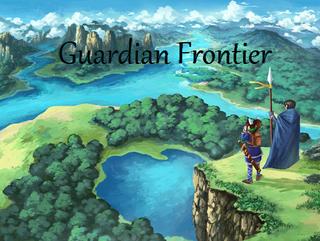
Guardian Frontier
An RPG with classic-style gameplay and a non-classic premise, inspired by the history of exploration and colonialism of the 19th century.
An RPG with classic-style gameplay and a non-classic premise, inspired by the history of exploration and colonialism of the 19th century.
Search
Filter
 All
All Game Pages
 User Statuses
 Stronger Version of Skills; is it necessary?
One implementation I liked in Lunar 2: Eternal Blue (the playstation version, I don't know if this was in the original,) was that rather than learning more powerful versions of your old skills, certain skills would be replaced by more powerful versions of themselves at certain levels.
You may be able to get most of the gameplay effect of stronger skills through stat progression, but a lot of players will feel satisfaction and enjoyment on the occasions where their characters gain some sudden, marked increase in ability, rather than the gradual incline which can tend to fade into the background. That, and they'll tend to feel cheated if they keep getting the same attack animation for the whole game.
One gameplay effect of stronger skills which can be rather significant depending on your combat system though, is increased MP cost. If your characters' MP is gradually going up over time, but the cost per use of each skill stays the same, then over time they'll become able to use those skills many times more without regenerating MP. If you gain some skill early in the game that's a powered-up version of your physical attack, but you can only use it a limited number of times, you'll have to use it strategically, but if, by late in the game, you have enough MP to spam it nonstop, then it's effectively become your basic attack. It's no longer filling the role of a powerful attack that can only be used conservatively, so it can be handy to have some other skill step in to fill that space.
You may be able to get most of the gameplay effect of stronger skills through stat progression, but a lot of players will feel satisfaction and enjoyment on the occasions where their characters gain some sudden, marked increase in ability, rather than the gradual incline which can tend to fade into the background. That, and they'll tend to feel cheated if they keep getting the same attack animation for the whole game.
One gameplay effect of stronger skills which can be rather significant depending on your combat system though, is increased MP cost. If your characters' MP is gradually going up over time, but the cost per use of each skill stays the same, then over time they'll become able to use those skills many times more without regenerating MP. If you gain some skill early in the game that's a powered-up version of your physical attack, but you can only use it a limited number of times, you'll have to use it strategically, but if, by late in the game, you have enough MP to spam it nonstop, then it's effectively become your basic attack. It's no longer filling the role of a powerful attack that can only be used conservatively, so it can be handy to have some other skill step in to fill that space.
Accepting Criticism
I think the only way to meaningfully judge a decision as "right" or not is on the basis of the information that was available at the time. Nobody can be an oracle, but they can exercise good judgment given what they know at the time, so we might as well evaluate people in terms of what's actually achievable.
A person's judgment is not invalidated by bad consequences that could not realistically have been predicted, nor is it vindicated by good consequences that they did not have the information to legitimately anticipate.
In a sense, hindsight can be even less reliable than our perspective at the time of our decision, because we tend to see the events that actually occurred as having been more predictable than they actually were.
A person's judgment is not invalidated by bad consequences that could not realistically have been predicted, nor is it vindicated by good consequences that they did not have the information to legitimately anticipate.
In a sense, hindsight can be even less reliable than our perspective at the time of our decision, because we tend to see the events that actually occurred as having been more predictable than they actually were.
Penalties for leveling up
It's pretty little compared to most RPGs in terms of the difference between level 1 and level 2, but if each level amounted to the same relative increase, that would mean exponential growth in power over time. You'd be about 2.5 times as powerful as you were at the start by level 10, but by level 40, you'd be about 45 times as powerful as you were at the start. Your power approximately doubles every seven levels. Most RPGs have something closer to a linear increase in power over time.
Large Numbers!!!!
author=Ephiam
I, for one, WELCOME our No Damage Cap overlords! But that would mean that a character's stats would also never cap, which in turn would drive some folk absolutely bat-shit CRAZY! Some people LIVE to max out their party's (or character's) stats, and being unable to would likely cause some hefty mental trauma.
Even if there isn't a hard ceiling on stats, there's still usually the practical limit of "as high as the characters' stats will be at maximum level when all stat-increasing mechanisms have been taken advantage of." So you can still "max out" characters' stats in the sense that they can't be made higher, but not in the sense of a character that's, say, hit 255 attack power, and thus will not gain any more attack power even as they continue to level up.
But when I say that I prefer to avoid damage caps, I don't mean that it should necessarily be possible to deal arbitrarily large amounts of damage in the game, I just mean that I don't want a cap at a level you'll actually run up against in gameplay. In Last Scenario, for instance, attacks dealing a few thousand damage are very powerful even by endgame standards, but it's possible to exceed 9999 damage with an attack. But this really just means that the one or two attacks capable of doing that much damage aren't arbitrarily limited; the most damage I've ever seen in that game was in the neighborhood of 13,000. The game might be capable of representing up to 65535 damage, or 99999, or maybe much more than that, but in practical terms it doesn't matter, because it really just means that in gameplay, your damage will be limited by the stats you can achieve and the moves you can learn, rather than an arbitrary cutoff point you're not allowed to exceed.
Plenty of games have these sort of soft ceilings, where there's a practical limit to how much damage you can do, but it's not a restriction imposed by how much damage the game will represent. Usually, the soft ceiling is lower than 9999, so when it's higher than that, people tend to notice and remark on the fact that the game doesn't have a damage cap, but for practical purposes it doesn't really matter whether it's higher or lower.
Large Numbers!!!!
Personally, I prefer games to either have no damage cap, or make the cap higher than you can realistically deal in gameplay. Damage caps aren't just unrealistic, they put a roadblock in the way or the sense of growth that is usually one of the major contributors to any sense of reward from playing the game.
Large Numbers!!!!
But, as LockeZ already pointed out, a lot of games transition from really low stakes conflict to epic, high stakes conflict over the course of the story. If you're dealing 22 points of damage per attack to large rats in a sewer at the beginning of the game, and 64 points of damage per attack to elephant-sized flaming demons by the end of the game, then even if the combat is balanced for those kinds of numbers, the player is probably going to feel confused or cheated, because the numbers don't reflect the kind of change in scope they've observed in the story.
Statistical Combat System
If there's anywhere where a system with anything like that level of randomization might have a place, I think it would probably be a strategy game. Something where a large number of encounters would take place at any given time across a large map, so the Law of Large Numbers gives you some grand-scale predictability out of the system, but you have to cope with a lot of variability on the fine scale, and account for it in your tactics.
I wouldn't suggest using it in a strategy RPG though. It's one thing to see, say, a platoon of Heavy Cavalry fail to rout a group of peasants due to sheer bad luck, but another to see your top-tier epic paladin do the same; randomness feels more frustrating when you're dealing with that lower level of abstraction where you actually personify the agents involved.
I wouldn't suggest using it in a strategy RPG though. It's one thing to see, say, a platoon of Heavy Cavalry fail to rout a group of peasants due to sheer bad luck, but another to see your top-tier epic paladin do the same; randomness feels more frustrating when you're dealing with that lower level of abstraction where you actually personify the agents involved.
Over the hill at 24?
author=pianotm
Cognition is not reflexes and reactions, sorry. Cognition is our comprehension of the world around us. This only increases as we get older. We can choose to fill our head with junk, like these scientific studies, which are junk science and don't even properly understand the meaning of "cognitive".
If you actually believe that you are getting dumber because you are over 25, godspeed and good luck in life.
Some studies on the trends in people's abilities as they age have focused on characteristics like reflexes, some on reasoning abilities. Before even getting into what they found, would you actually be interested in knowing? Would you read the studies and take the time to understand what the results meant, and how they were obtained, before deciding whether or not you acknowledged them?
Penalties for leveling up
author=GreatRedSpiritauthor=NebelSoftI think something like this would probably end with players doing grinding sessions by finding singular or not offensive-oriented enemies and smacking them with max-def gear but hitting with their pinkie toe or a twig or something. I'd be curious how it turns out though.
I once had a simple yet curious idea for exp "penalty" :
exp, depending on how long it takes you to kill the enemy unit ; P
that would work somewhat like this, you simple get 10 exp / hit, no matter what enemy. if you need 10 hits to kill the enemy it's 100 exp - on the other hand when you are strong enough to kill the enemy with 1 hit, it's only 10 exp. something like that.
Probably; that or they'd use status effects or other non-harmful moves to string out the battle indefinitely.
If you make it so that only damaging attacks give experience, you avoid this exploit, but you also disincentivize players from using more diverse tactics in combat when they're actually useful.
Also, this doesn't sound likely to scale very well in terms of rewarding the player according to challenge. Rather, you would probably tend to level up faster, or at least more easily, against weak enemies that you can kill in one hit than against strong enemies which can challenge your party, because you don't lose turns on the weak enemies attacking you, or healing, buffing, or anything of that sort.
Final Fantasy Tactics used a system a bit like this, and the result was that the most effective way to level up was not fighting challenging enemies, but rather finding a way to disable the enemy, and then having your party spend long periods of time using costless self-targeting skills or attacking each other.
Over the hill at 24?
author=Shinan
I thought it was sort of well-documented already that your reaction times are lower when you get older? (which is why many pro gamers are considered "peaked" what I feel is fairly early) And like the brief article says experience makes up for being slightly slower.
Actually, from what I've read, our non-cognitive reaction times (our responses to stimuli that don't require judgment,) peak much later than this, around the age of fifty.
 Games - Tester
 Games - Other
