



 Full Games List
 Featured Games
 New Games
 Reviews
 Media
Media Images
 Blogs
Blogs Game Updates
 Images Feedback Summary
 Game Design Highlights
 Tutorials
 Articles
 Scripts
 Utilities / Plugins
 Resources
 Engines
 Engine Bulletins
 What is Makerscore?
 Past Events
 Achievements
 Misaos
 Forums
 Chat
Chat New to RMN?
 Full Store List
 RMN Music Pack (free)



 Profile
 Locker
 Play Lists
DESERTOPA'S PROFILE
Desertopa

775
 Close
Close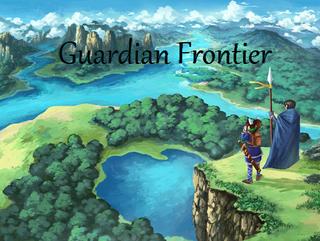
Guardian Frontier
An RPG with classic-style gameplay and a non-classic premise, inspired by the history of exploration and colonialism of the 19th century.
An RPG with classic-style gameplay and a non-classic premise, inspired by the history of exploration and colonialism of the 19th century.
Search
Filter
 All
All Game Pages
 User Statuses
 Ballin': Discussing money and how it works in gameplay
Don't forget the supply side of the equation though. If the fleece is dropped by creatures right next to the winter town, and the place is crawling with them, then it makes sense that they would already have an abundant supply, so they're not going to pay premium prices for more of them.
Trading in Suikoden III had a mechanic that attempted to account for both supply and demand, but in practice it was totally broken and exploitable. Certain locations produced certain goods, and thus the prices for them were relatively low there, while each place had particular goods that were desirable imports. The designers tried to inject some realism, by making it so that when particularly large amounts of a good were present at a trading location, the price would go down due to the elevated supply. The implementation didn't pass a basic sanity check though; it's possible to stockpile goods, sell them to a single trading outpost, leave, and return a short time later, and buy the goods back for a fraction of what you sold them for, because you've driven the price down by elevating the supply. With gold and pearls, the most valuable goods, this wasn't just a practical way to make money, it was the most effective way to make money, and practically a necessity if you wanted to upgrade a significant fraction of your characters' weapons to their highest level in endgame.
Trading in Suikoden III had a mechanic that attempted to account for both supply and demand, but in practice it was totally broken and exploitable. Certain locations produced certain goods, and thus the prices for them were relatively low there, while each place had particular goods that were desirable imports. The designers tried to inject some realism, by making it so that when particularly large amounts of a good were present at a trading location, the price would go down due to the elevated supply. The implementation didn't pass a basic sanity check though; it's possible to stockpile goods, sell them to a single trading outpost, leave, and return a short time later, and buy the goods back for a fraction of what you sold them for, because you've driven the price down by elevating the supply. With gold and pearls, the most valuable goods, this wasn't just a practical way to make money, it was the most effective way to make money, and practically a necessity if you wanted to upgrade a significant fraction of your characters' weapons to their highest level in endgame.
Ballin': Discussing money and how it works in gameplay
I think that too many games just fork over all the money you could really want just for wandering around killing things. Obviously, the idea that wandering monsters and such carry money at all generally doesn't make any sense, and this is a point that's already been done to death, but as a genre convention people generally won't question it. But the idea that anyone with sufficient fighting prowess can come by so much money so trivially is confusing in its own separate way, which I think is often to the games' detriment. Scarcity offers opportunity for gameplay challenges, and makes the game's economy a bit less nonsensical.
I think it's best if the player, under ordinary gameplay circumstances, can buy most of what they want (loss aversion means that if the player can't buy most of what they want, then the frustration over the things they couldn't get will outweigh the pleasure at the things they got,) but not everything they want. Having some tradeoffs involved makes buying things feel like more of a meaningful gameplay choice.
I think it's best if the player, under ordinary gameplay circumstances, can buy most of what they want (loss aversion means that if the player can't buy most of what they want, then the frustration over the things they couldn't get will outweigh the pleasure at the things they got,) but not everything they want. Having some tradeoffs involved makes buying things feel like more of a meaningful gameplay choice.
Would U play an FFX 2D made with RM2K3? (first screenshot)
So, something which could be completed by a skilled game designer in about three years rather than fifteen?
Would U play an FFX 2D made with RM2K3? (first screenshot)
If you're going to make a fangame, I'd suggest doing something other than a remake of a game that a large percentage of your potential audience (most people frequenting RMN probably being RPG buffs) have already played.
A creative game designer might be able to do interesting things with the setting or characters, but Final Fantasy X was made with a huge team and budget, and copying it with a one-man team is probably impractical unless you're satisfied turning out a really half-assed rendition.
A creative game designer might be able to do interesting things with the setting or characters, but Final Fantasy X was made with a huge team and budget, and copying it with a one-man team is probably impractical unless you're satisfied turning out a really half-assed rendition.
tileset artist for hire?
Sounds like an awfully backwards way of selecting employees. If they wanted a good graphic designer, they'd probably have been much better off looking at portfolios before resumes, and then using the resumes as an additional filter to check that the graphic designer(s) with the best work were trustworthy employees.
Not that it's particularly out of the ordinary. I've encountered plenty of employment situations where "experience" trumped opportunities to actually check the job skills of the applicants.
Not that it's particularly out of the ordinary. I've encountered plenty of employment situations where "experience" trumped opportunities to actually check the job skills of the applicants.
tileset artist for hire?
Division of labor is one of the fundamentals of society. Learning to do good sprite art, and then doing it all himself, would definitely take longer than hiring someone else who's already good at it, who can do the sprite art while he's working on other stuff. It's not like commercial studios hire large teams to work on their games because they're just looking for excuses to spend money.
Dynamic Difficulty in RPGs
I remember The World Ends With You also doing something like that, although the rewards for time spent not playing were pretty negligible compared to those for time spent playing.
Honestly, I think we could use some kind of anti-addiction laws for video games over here too, or we'll be seeing games race even further towards the end goal of being as addictive as possible to maximize revenue.
I have to admit a kind of personal stake here, since my dad became addicted to Everquest, probably the first major mainstream MMO, back in 1999, and it practically put an end to me or the rest of my family having any relationship with him for about ten years.
Honestly, I think we could use some kind of anti-addiction laws for video games over here too, or we'll be seeing games race even further towards the end goal of being as addictive as possible to maximize revenue.
I have to admit a kind of personal stake here, since my dad became addicted to Everquest, probably the first major mainstream MMO, back in 1999, and it practically put an end to me or the rest of my family having any relationship with him for about ten years.
Dynamic Difficulty in RPGs
I took off running in the other direction when I first came within a hundred paces of Animal Crossing.
Dynamic Difficulty in RPGs
I haven't played that one before, but the idea of a game penalizing you for time spent not playing sounds much worse to me than anything else discussed in this thread.
Dynamic Difficulty in RPGs
author=RyaReisender
You never died in normal battles? Even against Kraken? For me it was around 20% of all battles in which I died which made me save after every battle. SGF is a bit different from full recovery, though as you don't recover "LP/WP/JP". That means the real challenge is to win a battle without using any of those or using only very little. Which means that you need to estimate the difficulty of the encounter properly and only use skills that cost points if you are sure you will otherwise lose LP.
There were some points in the game where I died; I remember skipping to places where I wasn't supposed to be yet and finding that the enemies were too powerful. But I can hardly imagine losing a fifth of all the battles I'd step into in that game.
 Games - Tester
 Games - Other
