



 Full Games List
 Featured Games
 New Games
 Reviews
 Media
Media Images
 Blogs
Blogs Game Updates
 Images Feedback Summary
 Game Design Highlights
 Tutorials
 Articles
 Scripts
 Utilities / Plugins
 Resources
 Engines
 Engine Bulletins
 What is Makerscore?
 Past Events
 Achievements
 Misaos
 Forums
 Chat
Chat New to RMN?
 Full Store List
 RMN Music Pack (free)



 Profile
 Locker
 Play Lists
DESERTOPA'S PROFILE
Desertopa

775
 Close
Close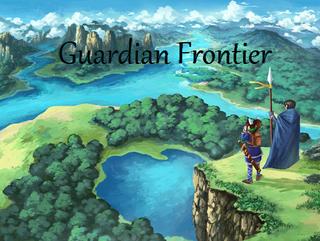
Guardian Frontier
An RPG with classic-style gameplay and a non-classic premise, inspired by the history of exploration and colonialism of the 19th century.
An RPG with classic-style gameplay and a non-classic premise, inspired by the history of exploration and colonialism of the 19th century.
Search
Filter
 All
All Game Pages
 User Statuses
 Dynamic Difficulty in RPGs
Really? I've played SaGa Frontier, and I never found the random encounters difficult, although the bosses could be fairly challenging.
I don't own a copy of Final Fantasy XIII, but from what I played of a friend's copy, my experience was more in line with Travio's; I barely had to pay attention to what was going on, and found the combat more tedious than challenging.
When you don't have to preserve resources past the end of a battle, then unless it's a really large scale battle with a lot of moving parts like a tactical RPG, I generally just don't find that working out a sufficiently effective battle strategy to come out on top takes a lot of effort.
I don't own a copy of Final Fantasy XIII, but from what I played of a friend's copy, my experience was more in line with Travio's; I barely had to pay attention to what was going on, and found the combat more tedious than challenging.
When you don't have to preserve resources past the end of a battle, then unless it's a really large scale battle with a lot of moving parts like a tactical RPG, I generally just don't find that working out a sufficiently effective battle strategy to come out on top takes a lot of effort.
Dynamic Difficulty in RPGs
author=RyaReisender
There shouldn't be any disadvantages in getting Game Over other than having to "try again" (whatever that means depends on the game structure). But advantages on Game Over are a good idea.
Unless the game has some kind of ranking element (which I'm not really a fan of,) I agree that it shouldn't give the player permanent setbacks. But I think it can help to have substantial setbacks, like forcing you to restart from the beginning of a long dungeon.
If you lose significant progress by getting a game over, the incentive to avoid them is greater, and the tension is higher. I have games which are considered to be quite difficult where I've never, or rarely, gotten a game over, because I put in the effort to avoid it. And I have games which are quite easy where I've died often, because the consequences are so minimal that it seems pointless to make a fuss over it.
Getting a game over generally doesn't make me happy (there have been a few exceptions, where it cheered me up to realize that I was playing something challenging enough that I'd have to step up my game.) But playing well and gaining a sense of having overcome challenges makes me happy, and some pressure from the possibility of losing helps me take it seriously.
I disagree with you there. How interesting and fun the battles are is completely unrelated to whether the game is resource-management-based or skill-per-battle-based. So that's not really a reason to be against healing after every fight.
The real difference is short-term challenge vs long-term challenge. The advantage of healing after every battle is that a single battle is the challenge itself. Do it right and you win, do it wrong and you have to try it again. In resource-management based games even if you do mistakes you will not die. You will lose more resources however. It can lead to that you only notice much later that your remaining resources aren't enough to complete the dungeon. I think this is a big disadvantage because you get punished for errors you did much earlier.
But of course there are people who particularly like long-term challenges over short-term challenges.
If every battle were sufficiently challenging and sufficiently unique, I think this could be interesting. In my experience, even in games with full healing after battle, combat is very rarely difficult enough that you're likely to lose if you don't play your best. You have leeway to survive suboptimal play, so you don't have to put much thought in, and the individual battles end up not being particularly challenging.
Action RPGs can get around this quite effectively, because incorporating dimensional maneuvering can make every battle really demand your attention; you can't just memorize a few simple patterns when you need to dodge, block, and pursue a dynamic opponent.
Dynamic Difficulty in RPGs
author=Travio
If it's only pushing 80%, you're missing the advantage to healing to full after every battle. Sure, it might hit 80% sometimes, but if it's that close, it should be possible for the battle to push it closer - and possibly finish you off (if you're doing battles like this, you need to either a) have save spots very frequently; b) have a restart option that starts them not too far back; or c) have avoidable combat. With the ability to push the player's resources, current content (that which you don't outlevel/outgear, not in the current area) should run the risk of defeating you - especially bosses - if you're just mashing through or it should have enough variance to actually be interesting and not a mindless drone.
Unless the results in battle are significantly randomized though, once you've made it through a particular battle with 20% of your health once you can generally make it through every successive instance of that encounter just by doing the same thing you did before. There might have been some chance of your losing the battle the first time, but if there's no cumulative challenge due to loss of resources, then the player is probably just going to repeat the same sequence for every iteration of that battle.
Here's a bit from a review which addresses how this can turn out.
author=Pitchfork
In Final Fantasy XIII, your team is automatically revitalized to full HP and status neutrality after every battle, nullifying the whole "resource management" angle of the game. And without that, there is absolutely no point in fighting the same battle ten times in a row between one cutscene trigger spot and the next. In a game set up like Final Fantasy XIII, once you figure out how to beat the "two wolves and a soldier" enemy group, that should be it. You've solved it. But Final Fantasy XIII forces you to push through The Tube and do it again. And again. And again.
Dynamic Difficulty in RPGs
There are some games I know of that do track the player's number of Game Overs; the PS1 action platformer RPG Alundra had an extremely powerful weapon that you could only get if you'd gotten enough of them, for instance. If you hadn't died enough times, the talking statue that carries it would tell you that it didn't think you needed it anyway.
If there's any disadvantage to getting Game Overs though, players are quite likely just to reload over them, which can be a real hassle to prevent.
If there's any disadvantage to getting Game Overs though, players are quite likely just to reload over them, which can be a real hassle to prevent.
Dynamic Difficulty in RPGs
I'm generally not a fan of "healing after every fight" implementations unless the game has *very* diverse battles, or some other setup to ensure that you never really fight the same battle twice. Otherwise, the challenges end up being redundant. A battle which uses up 80% of your characters' resources is just as mindless as one which you can finish just by mashing the "attack" button if you can apply the same sequence over and over again, and not worry about what you're using up for successive battles.
Penalties for leveling up
author=Antilurker77
This was in launch D3, but ended up being removed. Since after all, why bother killing low-level stuff when you just rush through higher-tier content for sick loots? It got to the point where people were ignoring Act 1 Inferno and would just rush Act 3 Inferno areas for resplendent chests and goblins.
The answer to "why bother?" is because RPGs are, generally speaking, more fun when you follow some kind of coherent, story based sequence than when you're just wandering around killing stuff to get more stuff so you can kill more stuff, ad infinitum.
This is where the incentives of online play clash with the incentives of fun game design. It induces a sort of fun-based tragedy of the commons, where people do things that aren't very fun to avoid the even less fun situation of being left out of the loop by all the other players.
Game designers get away with it because liking and wanting things are two different neurological processes which can operate separately, or even in opposition to each other. For instance, people can find themselves unable to tear themselves away from internet arguments even if they realize that they're only making them miserable and not changing anyone's mind. Social obligation and reinforcement can keep people coming back again and again even when they're not having a good time, so the game designers aim for that, and don't worry so much about whether their game is any fun when all's said and done.
Penalties for leveling up
He already explained all that in another comment. But it still amounts to the fact that leveling up by itself leaves you worse off.
That is penalizing you for leveling up. All those things were previously accomplishable in the Diablo series, without needing to be gated according to level. In the earlier games, leveling up left you better off, and allowed you to seek new challenges accordingly. In Diablo 3, leveling up leaves you worse off, and requires you to seek new advantages accordingly.
In Diablo 1 and 2, lot of the main character's effectiveness might have been determined by their equipment, yeah, but the characters clearly made progress relative to the enemies they were facing at that point in the game as they trained. You could go back to an earlier point in the game, exchange your equipment for random drops from that point, and slaughter previously challenging enemies like cockroaches. And finding better equipment wasn't contingent on your level, but on what places you're exploring or what enemies you're fighting. If you head to a place you're not strong enough to navigate normally, sneak and dodge past your enemies, and open up some kind of treasure chest, you could be rewarded with treasure far ahead of your level curve. And why not? It makes sense both in terms of in-world logic (this is where the more powerful enemies who use more powerful items are actually located,) and in terms of rewarding alternate playstyles.
Sometimes you'd find stuff that your character couldn't wield yet; ability to wear equipment was tied to your core stats. But equipment access wasn't just arbitrarily tied to your level; a huge double-headed axe was obviously going to be harder to wield than a dinky little short sword (and bigger equipment tended to start becoming available later on when you'd more likely be able to use it,) but you'd still be able to use a comparable but better enchanted weapon than you had before.
Diablo 3 sacrifices both in-world logic and the sense of progression. It might still effectively force you to raise your level to navigate the game, but leveling up becomes something less representative of the growth of your character relative to the challenges they're facing than of the backwards spin of a treadmill, forcing you to keep running to simply stay in place.
Your character could outlevel the monsters, yes. But if you didn't chose to find/buy/craft new items the monster will kill you pretty soon. It's not a penalty it's just how Diablo 3 goes.
That is penalizing you for leveling up. All those things were previously accomplishable in the Diablo series, without needing to be gated according to level. In the earlier games, leveling up left you better off, and allowed you to seek new challenges accordingly. In Diablo 3, leveling up leaves you worse off, and requires you to seek new advantages accordingly.
In Diablo 1 and 2, lot of the main character's effectiveness might have been determined by their equipment, yeah, but the characters clearly made progress relative to the enemies they were facing at that point in the game as they trained. You could go back to an earlier point in the game, exchange your equipment for random drops from that point, and slaughter previously challenging enemies like cockroaches. And finding better equipment wasn't contingent on your level, but on what places you're exploring or what enemies you're fighting. If you head to a place you're not strong enough to navigate normally, sneak and dodge past your enemies, and open up some kind of treasure chest, you could be rewarded with treasure far ahead of your level curve. And why not? It makes sense both in terms of in-world logic (this is where the more powerful enemies who use more powerful items are actually located,) and in terms of rewarding alternate playstyles.
Sometimes you'd find stuff that your character couldn't wield yet; ability to wear equipment was tied to your core stats. But equipment access wasn't just arbitrarily tied to your level; a huge double-headed axe was obviously going to be harder to wield than a dinky little short sword (and bigger equipment tended to start becoming available later on when you'd more likely be able to use it,) but you'd still be able to use a comparable but better enchanted weapon than you had before.
Diablo 3 sacrifices both in-world logic and the sense of progression. It might still effectively force you to raise your level to navigate the game, but leveling up becomes something less representative of the growth of your character relative to the challenges they're facing than of the backwards spin of a treadmill, forcing you to keep running to simply stay in place.
Dungeon Designs: The Good and Bad
author=Xenomic
Pharos at Ridorana (Final Fantasy XII): This dungeon...at first I kinda liked it. Kinda...until it started throwing some annoying gimmicks in there (find the right teleporter! Guess wrong? You get to fight all these enemies that like to inflict a bajillion statuses all at once! Hope you have the MP and items to deal with them!), and it just felt like it dragged on and on and on and on...and at that point in the game, the bosses were pretty much jokes.
Honestly, I enjoyed the Pharos. I'd been exploring all the optional content for a long time in that game, and it had been a long time since the main plot had thrown anything at me that approached a challenge. But if I hadn't been ahead of the level and equipment curve, it might have been pretty nasty, so it probably would have been better if it had been a bonus dungeon or something.
The Great Crystal, on the other hand, was just indecent.
author=turkeyDawg
Bad idea: Making obstacles that are immediately overcome because you've overcome them a hundred times already.
Stuff like bombing cracked walls or putting out fire with ice/water. A lot of puzzle games do this too, where they have one very simple puzzle to demonstrate a concept, and then have a dozen variations of this concept, ignoring the fact that you'll probably know what the solution is immediately because you solved something like it just seven seconds ago.
Bad idea: "Puzzles" that are "solved" by pressing the Context-Sensitive Action Button.
Like Ice Path in Final Fantasy 9, where you walk up to an ice pillar, press X, watch a cutscene of Vivi torching it, then nabbing some treasure. I'm not sure if that was supposed to be a puzzle, or what.
Eh, I don't think these things are necessarily bad, just that they're not puzzles and shouldn't be expected to substitute for them. I think of them as being more like flavoring, something to see the player characters do besides run around and kill stuff, to make the physical process of dungeon exploration look less tedious. They can also provide some sort of justification for how the player characters might be uniquely qualified to navigate a dungeon; maybe they can do something that other people can't which lets them get past obstacles which would have barred other people.
Penalties for leveling up
Which one is it that you're supposed to lose again?
I think I've heard references to that, but I honestly don't remember ever actually having lost a fight to any golem.
I think I've heard references to that, but I honestly don't remember ever actually having lost a fight to any golem.
Penalties for leveling up
author=Liberty
I'm pretty sure I beat him a few times without extra levelling. Might just have been my strategy though. It's been a long time since I played the game, so maybe I'm misremembering. Okay, better example then - Chrono Trigger where the story is the 'level' and beating Lavos at an earlier 'level' nets you different endings.
It's surprisingly hard to think of a game where underlevelling was encouraged. There are those games that encourage speed runs, but for the most part they aren't RPGs and you don't really get extra for them.
Oh, FF9 and the sword Excalibur II. You had to be lower levelled to get there in time, and the pay-off was the best weapon in the game. And Suikoden II where if you sped through the story (thus not spending as much time on levelling) you could reach a cut-scene between two characters that is time based. Most other RPGs try to get you to play them more, instead of getting you to do so less.
Beating Lavos early generally required you to be overlevelled for that point in the game though. In fact, in his first plot appearance in a non New Game+, Lavos is actually stronger than he is during when fought under most other circumstances, to prevent players who're playing normally from cutting the plot short at that point.
This is actually one of the ways I think you can satisfy players who both enjoy grinding and enjoy being challenged; present the player with enemies who can be beaten at certain points in the game, with difficulty, if your party is strong enough, but aren't expected to be beaten in the course of ordinary gameplay.
Rewarding the player for speed running isn't quite the same as rewarding the player for being underlevelled, but I do think that the examples you gave from Final Fantasy IX and Suikoden II were pretty terrible ideas in their own right. When you make a long game full of rewards for exploration, incentivizing the player to skip it is downright perverse. The sort of games where I think it makes sense to reward speedruns are games where obstacle navigation and sequence breaking are major elements of the gameplay, like the Metroid games.
 Games - Tester
 Games - Other
