



 Full Games List
 Featured Games
 New Games
 Reviews
 Media
Media Images
 Blogs
Blogs Game Updates
 Images Feedback Summary
 Game Design Highlights
 Tutorials
 Articles
 Scripts
 Utilities / Plugins
 Resources
 Engines
 Engine Bulletins
 What is Makerscore?
 Past Events
 Achievements
 Misaos
 Forums
 Chat
Chat New to RMN?
 Full Store List
 RMN Music Pack (free)



 Profile
 Locker
 Play Lists
DESERTOPA'S PROFILE
Desertopa

775
 Close
Close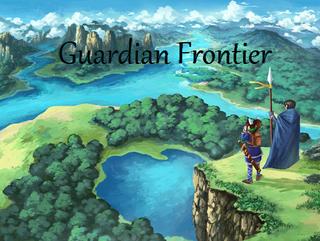
Guardian Frontier
An RPG with classic-style gameplay and a non-classic premise, inspired by the history of exploration and colonialism of the 19th century.
An RPG with classic-style gameplay and a non-classic premise, inspired by the history of exploration and colonialism of the 19th century.
Search
Filter
 All
All Game Pages
 User Statuses
 Penalties for leveling up
author=Liberty
And yeah, punishing you for something that you need to do to pass a game is just ridiculous. Instead of punishments, why not instead reward people for if they do things under-levelled?
A great example of that was Gades Sword in Lufia II where if you beat Gades, you'd get his sword. It was possible to die in the battle and just continue with the story, but it was a bonus for those who stuck it out and got through the battle alive.
That doesn't sound like a reward for doing things underlevelled. In fact, beating Gades in that battle generally requires you to be very significantly ahead of the level curve.
Personally, I like level grinding. It's a very simple, mindless way to feel like I'm achieving some quantifiable sort of progress. And I like the feeling of exceeding the game's expectations for how powerful you should be at a given point. I also like being challenged, having to strategize or work my reflexes and timing and so forth. So, you might think that having enemies scale according to the characters' levels would be a good way to satisfy both of these impulses. But frankly, I this is one solution that I generally hate. It destroys the feeling of progress, and makes it feel like the amount of effort I put in is irrelevant. It's like going to the gym day after day and lifting the same weight, over and over, every day, and every day someone comes in and paints a different number on the weight. The number might go up, but who cares?
So, Another Brand New Mana Game Is Slowly Upon Us
author=Travio
It depends on how they do the microtransaction model.
If you're paying for each individual chapter in the story, that's better than say charging for items/characters/whatever within the store. They've actually released some decent games using the first format, and the end game pricing isn't too horrible (usually in the $15ish range for the entire game's worth of chapters).
And if it's not something you need to finish the game, but a convenience, that's yet another thing.
The only reason companies make games on microtransaction pay models is to make more money. If they charge separately for individual chapters, they're doing it because they think that they can get more money out of their audience that way than if they'd simply sold the game up front. Either they're charging more than they otherwise would have for the complete game, or they're expecting to sell it to people who wouldn't have bought the game up front.
Similarly, if the transactions are for things which aren't necessary for game completion, but are an added convenience, they're still planning to make more money than they would have by simply selling the game. What this model incentivizes are games which hook players with the premise of being free, and then apply all the psychological pressure they can bring to bear to make the player want to pay for stuff. If this means making the game deeply frustrating, dissatisfying or unfun without the paid material, that's not really a downside for them.
Choicemaking: Character Relationships
Out of all the video games I've played (which is quite a lot,) I have frankly never encountered one, no matter how sandboxy, which really let me play the main character as myself. Making a set of choices broad enough to cover every outside-the-box thinker who might play your game is impossible, at least as long as the games are still being designed by human beings.
I think that silent protagonists can be handy, not so much for making blank slate characters that the player can project any personality onto, but for making a fill-in-the-blanks style character where the player can make inferences about their personality from context, but can project their own interpretation of what best fits that context. If you want a character who's a cool, suave badass for instance, you might be better off making other characters react to them as if they were a cool, suave badass, and then let the player decide exactly what it is that they're really saying. I think the protagonist of Persona 4 is a particularly good example of this. But far from being a shortcut, I think making a really compelling character this way is probably a lot harder than doing so with characterization that's made explicit.
I think that silent protagonists can be handy, not so much for making blank slate characters that the player can project any personality onto, but for making a fill-in-the-blanks style character where the player can make inferences about their personality from context, but can project their own interpretation of what best fits that context. If you want a character who's a cool, suave badass for instance, you might be better off making other characters react to them as if they were a cool, suave badass, and then let the player decide exactly what it is that they're really saying. I think the protagonist of Persona 4 is a particularly good example of this. But far from being a shortcut, I think making a really compelling character this way is probably a lot harder than doing so with characterization that's made explicit.
Your favorite game EVER!
Possibly Xenogears, for sentimental reasons. The three others which hold my top spots are Grandia, Persona 4, and Final Fantasy VII (which is a popular one to hate these days, in no small part because it's been copied ad nauseam, but I still consider it to be legitimately brilliant.)
World map or not?
author=LockeZ
speaking from a very different perspective, it's also weird as hell when a game has all the maps directly connected to each-other, but then has a desert, a snow area, a forest and a volcano all seemingly within walking distance of each-other
This is always a really big deal to me. I can go either way, but for me, it usually boils down to the question, "which makes the world feel bigger and more developed?"
Final Fantasy X, the first Final Fantasy game to do away with the World Map, has a tiny game world. Seriously, the distance from Besaid to Zanarkand is like the distance from lower Brooklyn to the Bronx. The lack of an abstraction to deliver the point that "this interval represents a large distance being traveled" makes the whole environment feel depressingly puny.
On the other hand, Earthbound does away with the World Map in a similar manner, and the world doesn't feel small at all, because there's no implication that the locations that the players travel through represent a significant portion of the entire world, and some of the locations are implied by the means of travel to be much more distant from each other than the characters could feasibly traverse on foot.
I generally prefer overworld maps which aren't actually world maps, like the ones used in the Suikoden series which represent whatever part of the world that installment happens to take place in. It's more realistic, and helps me take the setting more seriously.
I think that a good overworld map design can make the setting seem geographically interesting and realistic, but not many game designers put that level of thought into the layout of their world maps, and absent that level of effort it may be better if they simply don't bother. The "list of destinations" style maps of Final Fantasy Tactics, Suikoden 3, etc. do a good job of making their settings seem developed and expansive, and if you do want to employ a walkable world map, you should think about what you're going to accomplish with it that a list-of-destinations type wouldn't.
 Romancing Walker
I'm glad to hear the project has your approval. I'm currently busy working on the dialogue for a couple of other games, so I'll probably be holding off on Romancing Walker until I can give it the attention it deserves. Once those are out of the way, I'd be happy to get the chance to work on it.
 What do you think about this idea of mine?
I've seen a few stories that attempted similar things before, actually. Some executions are much better than others. A few thoughts about this:
It may be better not to call the world Terra. The moment they hear that name, most of your players are going to automatically realize that the character is talking about our world from the perspective of her fantastical one. I think this realization will be more interesting if the players piece it together gradually. If the name is totally unfamiliar, the players will be more surprised by the realization that the content is familiar.
It can be tempting to use this as a device to explain the fictional world, by having characters describe our own world as a contrast to what they're familiar with. This isn't a bad idea, but it's easy to fall into infodumping this way. Even when you're giving out information about your own constructed world indirectly, it's important to give it out in measured doses and give the audience the opportunity to process it.
I think it comes off better when it's not implied that the people of the fictional world think of our own world as a place that has even been hypothesized to actually exist. When it's a thought experiment or work of fiction or something, then it makes sense as a narrative device, but if it's something people have actually believed in, it raises uncomfortable "how do they know that?" type questions, and does more to hurt the stability of the fourth wall.
It may be better not to call the world Terra. The moment they hear that name, most of your players are going to automatically realize that the character is talking about our world from the perspective of her fantastical one. I think this realization will be more interesting if the players piece it together gradually. If the name is totally unfamiliar, the players will be more surprised by the realization that the content is familiar.
It can be tempting to use this as a device to explain the fictional world, by having characters describe our own world as a contrast to what they're familiar with. This isn't a bad idea, but it's easy to fall into infodumping this way. Even when you're giving out information about your own constructed world indirectly, it's important to give it out in measured doses and give the audience the opportunity to process it.
I think it comes off better when it's not implied that the people of the fictional world think of our own world as a place that has even been hypothesized to actually exist. When it's a thought experiment or work of fiction or something, then it makes sense as a narrative device, but if it's something people have actually believed in, it raises uncomfortable "how do they know that?" type questions, and does more to hurt the stability of the fourth wall.
Seeking Writing Assistance
This sounds right up my alley, but I'm already engaged with some other projects that are eating up a significant amount of my time. If you're willing to put up with progress being a bit attenuated until I get some other stuff out of the way though, I'd be happy to work on it.
If you want to show me some of the existing dialogue, we can see if you're happy with what I can make of it.
If you want to show me some of the existing dialogue, we can see if you're happy with what I can make of it.
What makes you want to play one game over another?
author=Housekeepingauthor=CashmereCatThat's actually part of the reason I made The God of Crawling Eyes. I knew that images were the best way to sell a game, as that's what makes me look at a game page, so I figured I should focus on making as striking of a presentation as I could, and if that game ended up doing well, it would bring more attention to the game I spent more than a month on. So, yeah, images and reputation are going to sell your game more than anything, but you have to work with what you've got; maybe I shouldn't be using A Very Long Rope's description as a positive example, haha.
Personally though, I decided to download and play "A Long Rope To The Top Of The Sky" simply because you made the game "God of the Crawling Eyes" and I wanted to see how a great writer would make a 50-hour long RPG.
I'd definitely regard it as one. It encapsulates something of the tone and style of the game, and gives an example of your writing ability, while outlining the basic premise of the story.
Ragnarok Began Yesterday!
author=Avee
"‘The idea that “boundaries that exist shall crumble” could be said to be about the Internet age, where you can communicate with millions of people simultaneously around the world thanks to the global rise of social media,’ said Ms Daglan."
Yeah, it totally couldn't be said to be about a million other things.
Reminds me of a guy I know who was visited by door to door evangelists, and let them stay to talk. They talked about all the prophesied signs of the apocalypse, and asked him, "Don't you think that sounds like now?" He responded "I think it sounds like every point in history, ever."
 Games - Tester
 Games - Other
