



 Full Games List
 Featured Games
 New Games
 Reviews
 Media
Media Images
 Blogs
Blogs Game Updates
 Images Feedback Summary
 Game Design Highlights
 Tutorials
 Articles
 Scripts
 Utilities / Plugins
 Resources
 Engines
 Engine Bulletins
 What is Makerscore?
 Past Events
 Achievements
 Misaos
 Forums
 Chat
Chat New to RMN?
 Full Store List
 RMN Music Pack (free)



 Profile
 Locker
 Play Lists
LOCKEZ'S PROFILE
LockeZ
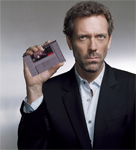
I'd really like to get rid of LockeZ. His play style is way too unpredictable. He's always like this too. If he ran a country, he'd just kill and imprison people at random until crime stopped.
5958
 Close
Close
The Unofficial Squaresoft MUD is a free online game based on the worlds and combat systems of your favorite Squaresoft games. UOSSMUD includes job trees from FFT and FF5, advanced classes from multiple other Square games, and worlds based extremely accurately upon Chrono Trigger, Secret of Mana, and Final Fantasies 5, 6, and 7. Travel through the original worlds and experience events that mirror those of the original games in an online, multiplayer format.
If a large, highly customized MUD, now over 10 years old and still being expanded, with a job system and worlds based on some of the most popular console RPGs seems interesting to you, feel free to log on and check it out. Visit uossmud.sandwich.net for information about logging on.
If a large, highly customized MUD, now over 10 years old and still being expanded, with a job system and worlds based on some of the most popular console RPGs seems interesting to you, feel free to log on and check it out. Visit uossmud.sandwich.net for information about logging on.



Search
Filter
 All
All Game Pages
 User Statuses
 Epic Monster Dungeon Explore! 2 Review
 Which came first: The Story or the Gameplay?
post=209795
Hmm...at first I thought about gameplay that comes first in RPGs...in the sense of old school RPGs. But now I think about it again, even old school RPGs do start with a simple story intro first before going into the gameplay elements (think FF1)
So while the RPGs of the past tend to be more gameplay-oriented than story-oriented, most of them too start with story rather than gameplay first.
I'm pretty sure we're talking about which one is designed first, not which one the player sees first.
Help with RPG MAKER 2003
I don't really have a problem with locking projects. Anti-cheating mechanisms are probably a good thing. If a game has the ability to easily cheat, there are tons of people who will be compelled to cheat, regardless of how fun the game is with or without cheating. People want to be more powerful with less work, it's a subconscious thing, it has nothing to do with feeling that the game would be better if it were easier and everything to do with the fact that the cheating is available with a single button press. Tell the truth, if in your favorite RPG of all time you could hit the Y button to gain a free level at any time, you would be seriously tempted to fucking do it, even though it would ruin the game.
If you just don't want people to steal your battke animations, I think it's ineffective and probably hypocritical, but I can't blame you.
If you just don't want people to steal your battke animations, I think it's ineffective and probably hypocritical, but I can't blame you.
Which came first: The Story or the Gameplay?
My previous project began with a story, and the gameplay was built around it. The result was that the gameplay was pretty lacking, because it wasn't the focus.
For my next project, now that I actually know a lot about game design, I want to start with a gameplay idea, and build a game around that, with story as a secondary concern. However, I feel like if I focus my energy like that, then the story will end up noticably lacking. I only have so much energy and drive and time to spread around to the different aspects of game design, and if I start to focus on something, then it takes over my mindset.
So what I'm going to do is reuse the story from my previous game, with some changes to fix the major problems that arose (like the poorly-defined setting and the two pointless stock characters). I'm not sure if this is a clever solution or one that will turn people off. But it seems like the easiest way to get a good, original story into my game without actually focusing on it and without hiring a writer.
For my next project, now that I actually know a lot about game design, I want to start with a gameplay idea, and build a game around that, with story as a secondary concern. However, I feel like if I focus my energy like that, then the story will end up noticably lacking. I only have so much energy and drive and time to spread around to the different aspects of game design, and if I start to focus on something, then it takes over my mindset.
So what I'm going to do is reuse the story from my previous game, with some changes to fix the major problems that arose (like the poorly-defined setting and the two pointless stock characters). I'm not sure if this is a clever solution or one that will turn people off. But it seems like the easiest way to get a good, original story into my game without actually focusing on it and without hiring a writer.
Elemental Weaknesses (and battles that make you think)
Up until now I had spells using EW doing triple damage, which means that there really is no substitute for that spell - it will almost always be the best choice. After reading this topic though, I think I should reduce it to x1.5 or x2. That way, an enemy that happens to be weak to fire might still be hit with water attacks sometimes (just to reapply the Slow debuff) and would allow for some cycling (thus making the battle more interesting) instead of just always using Fire.Yeah, I think this is the way to go. Especially with added debuffs, it makes things much more interesting. The player is presented with a real choice. The choice of debuffs is the same in every battle, but the choice is weighted differently for different enemies, so that the player has to change things up sometimes.
Another way to make spells different, besides added effects, is to tier them. So fire costs 6 MP and does 40 damage, then later in the game you get blizzard which costs 8 MP and does 50 damage, then later you get aero which costs 10 MP and does 60 damage, then later you get fire2 which costs 12 MP and does 70 damage...
LowI think this just means your game has too big of a margin of allowable error for the player. That is to say, it's too easy. It's definitely possible to make enemies that will kill you if they do 50% more damage, but won't if they don't... or to make an enemy that is much more likely to kill you if it lasts 50% longer... The same can be said for 25%, or even 10%.
- Elemental coverage becomes very secondary/redundant
- Players can't use resistance to combat a powerful ability
>New Game
Come on now, Hitchhiker's Guide to the Galaxy began with a guy in pajamas trying to get bulldozers to stop destroying his house. The huge explosion wasn't until 10 or 15 minutes later.
I think your intro should be however long it takes to set the tone for your game. It shouldn't have many details, but it should definitely tell the player enough to make them not wonder what the hell kind of game they're playing. If you explain the political setting, they're going to expect a game that focuses on political strife. If you show the main character's hometown, they're going to expect a story about a character's journey as he learns about the world. If you show a flashback to 1000 years ago, they're going to expect a story about mankind's repeated mistakes. If you show the main character murdering an innocent person, they're going to expect a story about his crimes and his attempts at redemption.
What you choose to show sets the tone for your game. Pick something appropriate, and show enough of it to make the player understand what they're seeing. Then save the rest for later.
I think your intro should be however long it takes to set the tone for your game. It shouldn't have many details, but it should definitely tell the player enough to make them not wonder what the hell kind of game they're playing. If you explain the political setting, they're going to expect a game that focuses on political strife. If you show the main character's hometown, they're going to expect a story about a character's journey as he learns about the world. If you show a flashback to 1000 years ago, they're going to expect a story about mankind's repeated mistakes. If you show the main character murdering an innocent person, they're going to expect a story about his crimes and his attempts at redemption.
What you choose to show sets the tone for your game. Pick something appropriate, and show enough of it to make the player understand what they're seeing. Then save the rest for later.
Cooldowns
Unfortunately, because of the nature of cooldowns, they're also seen as an essentially forced way to get players to use different moves.See, that's the opposite of what I think they do. I would have said cooldowns are a great way to force players to use different moves.
Oh, wait, that is what you said. Except with "great" instead of "unfortunate". Hmm.
No, but seriously. No one wants to play a game where the best strategy is to just mash one button the entire time.
MP costs do kind of the same thing, but in a more long-term sense instead of an immediate sense. You can use cooldowns instead of MP costs, or alongside MP costs.
For a *really* fun resource management puzzle, try putting cooldowns on healing spells.
Elemental Weaknesses (and battles that make you think)
Elemental defenses and elemental attacks allow for customization of your characters. For obvious examples, see the Shin Megami Tensei games or Pokemon games. You have to get characters who use different elements, but you're limited in the number of skills you can equip on each character. You also have to manage your own elemental resistances and weaknesses. And if you have a skill system that allows the player to spend points to improve skills, they have to choose which elements to improve.
Once in battle, the amount of tactical complexity added by elements can vary depending on how well it's done. Final Fantasy style black mages add no tactical complexity to battles whatsoever. However that's certainly not the only way to handle elements. You don't need to always have equal to every element. In fact, you probably shouldn't ever have that - since that is what causes elements to become meaningless.
The key here is what I like to call TENSION. When the player makes a skill choice, it should be a real choice. Each option should have an upside and a downside, and whether the upside cancels out the downside or not should change from turn to turn and from battle to battle depending on the situation. Maybe you have an amazing skill that costs 60% of your max MP. Maybe you have a skill that hurts both you and the enemy.
Here's a simple example involving elements. Maybe you have a fire skill that costs does 50 damage to all enemies, and a non-elemental skill that does 65 damage to all enemies. If one of the enemies is weak against fire, the two are pretty close to being even damage, just distributed differently. To make things more complicated, maybe another enemy in the same battle needs to be resistant to fire (or absorb fire).
Now, I'll grant, elements are not a great way to introduce tension in a battle with single-target attacks. Pokemon handles it well by making you waste a turn to bring out the party member that has access to the right element. You will have to come up with your own way to do so - that's why you're a game designer.
Once in battle, the amount of tactical complexity added by elements can vary depending on how well it's done. Final Fantasy style black mages add no tactical complexity to battles whatsoever. However that's certainly not the only way to handle elements. You don't need to always have equal to every element. In fact, you probably shouldn't ever have that - since that is what causes elements to become meaningless.
The key here is what I like to call TENSION. When the player makes a skill choice, it should be a real choice. Each option should have an upside and a downside, and whether the upside cancels out the downside or not should change from turn to turn and from battle to battle depending on the situation. Maybe you have an amazing skill that costs 60% of your max MP. Maybe you have a skill that hurts both you and the enemy.
Here's a simple example involving elements. Maybe you have a fire skill that costs does 50 damage to all enemies, and a non-elemental skill that does 65 damage to all enemies. If one of the enemies is weak against fire, the two are pretty close to being even damage, just distributed differently. To make things more complicated, maybe another enemy in the same battle needs to be resistant to fire (or absorb fire).
Now, I'll grant, elements are not a great way to introduce tension in a battle with single-target attacks. Pokemon handles it well by making you waste a turn to bring out the party member that has access to the right element. You will have to come up with your own way to do so - that's why you're a game designer.
cutscenes
post=208486
skippable cutscenes may sound nice (especially for repeat players) but that essentially means that you cannot put any valuable information within the cutscene or the players will miss it.
No, it doesn't mean anything of the sort.
Skippable cut scenes are for people who've already seen them, either because they died or because they've played the game before. Dying is a more major concern - if someone's replaying the game, they probably forgot a lot of the details anyway. But if they've already watched the same pre-boss scene six times in a row, they're probably getting really annoyed by now.
Pretty much every commercial RPG I've played for the last five years has used skippable cut scenes in this way. People are still going to watch them once... if they weren't supposed to be watched even once, they wouldn't be in the game.
How do you tell if a game is bad?
I will note that if you only care about gameplay and not story, RPGs are usually really boring at the beginning. Some types of adventure games too. Majora's Mask started you off with no tools except your sword, and the enemies died in one hit - and were few and far between. Ocarina of Time was even worse. If you know what you're doing, then it's an insufferable first hour or two. If you don't know what you're doing, then it's admittedly marginally helpful, but probably takes you three times as long before you get to the good part.
Final Fantasy 13 did the best job of hooking me in immediately of almost any RPG I've played in a decade, but you only have one to two abilities for the first three hours. One or two battles like that would have been fine, but three hours?
Older games aren't really any better at this, though. FF4 takes over an hour before you get any skills besides attack and jump... and you lose jump before you get to that point. FF5 makes you go through two dungeons before you can change classes. If you want to go back even further, then okay, the original Final Fantasy lets you buy magic immediately, in theory... except you have to fight random enemies for half an hour first to afford it, unless you want to be naked and unarmed.
Final Fantasy 13 did the best job of hooking me in immediately of almost any RPG I've played in a decade, but you only have one to two abilities for the first three hours. One or two battles like that would have been fine, but three hours?
Older games aren't really any better at this, though. FF4 takes over an hour before you get any skills besides attack and jump... and you lose jump before you get to that point. FF5 makes you go through two dungeons before you can change classes. If you want to go back even further, then okay, the original Final Fantasy lets you buy magic immediately, in theory... except you have to fight random enemies for half an hour first to afford it, unless you want to be naked and unarmed.
 Games - Tester
 Games - Other
