



 Full Games List
 Featured Games
 New Games
 Reviews
 Media
Media Images
 Blogs
Blogs Game Updates
 Images Feedback Summary
 Game Design Highlights
 Tutorials
 Articles
 Scripts
 Utilities / Plugins
 Resources
 Engines
 Engine Bulletins
 What is Makerscore?
 Past Events
 Achievements
 Misaos
 Forums
 Post History
 Chat
Chat New to RMN?
 Full Store List
 RMN Music Pack (free)



 Profile
 Locker
 Play Lists
HASVERS'S PROFILE
Hasvers

1298
 Close
Close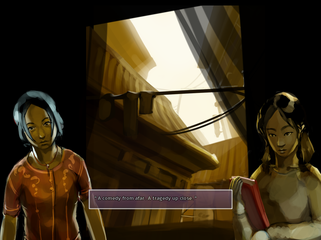
Exeunt Omnes
A game of strategic sophistry. Convince or crush the teenage girl who wants to end your reign of evil.
A game of strategic sophistry. Convince or crush the teenage girl who wants to end your reign of evil.
Search
Filter
 All
All Game Pages
 User Statuses
 Fundamental RPGology
author=outcry312
Aegix, I wouldn't post so much so frequently. While it's good to give progress updates, careful not to give them so often, especially since this isn't your blog. It's also multiple posts in a row, with little time between them. Just a heads-up before you get in trouble ;)
Haha yes Aegix while I enjoy knowing about people's progress, and I feel your pain when it comes to bugs, but if it's things on which we cannot really contribute a discussion, it's better not to fill pages of the common topic with it. It's already too bloated for its own good :P
You should make a gamepage for your project and post blogs there. Especially since you could then post script snippets and I'd try to have a look at it when I have the time, to try and tell you what's wrong.
outcry> glad you'll be able to make it ;)
Louis> Cool, I guess it's Essence Enforcer? It looks beautiful!
caparo and anyone with problems thinking about the AI: I really recommend taking a look at Design Patterns Revisited and perhaps especially
the page on State Machines
It's packed with far more information than you'll ever need, and you can skip the C code snippets altogether, but reading the main text up to Finite States Machine to the Rescue (included) can prove really helpful in thinking about how to make your AI, or even your game system.
Fundamental RPGology
Ilan> Well thank you for taking part in this contest and for trying to do it well!
You can perhaps proceed by dichotomy: start from one example that is exciting but too complex, and one that is functional but too simple, then proceed a little bit in each direction until you find balance. Don't hesitate to ask if you ever need mathematical help to check that your skills will do what you want them to do.
WM> Haha, well I don't necessarily hate element-based systems so don't worry, I will not run around naked and screaming upon seeing your entry. Though I do feel that the RPS system has become the go-to paradigm for adding trade-offs in RPG-like battles, and I'm sure there are other ones worth exploring.
(upon reading a Gene Sharp paper, I couldn't help but start dreaming of a strategy game of nonviolent action)
Thematically if not gameplayically, you might like Unrest, a recent kickstarted game that is about, well, unrest due to famine and xenophobia in a fantasy Indian city - although you mostly deal with the consequences rather than take part in the action.
I both like and fear contextual actions: the danger with them is that, since the same action can potentially mean anything, it's difficult for the player to develop a global feel of how they affect their environment and to start planning combinations of actions to lead them toward success (versus, say, constant physical laws in a platformer which quickly give you a feel for what you will or won't be able to do). On the other hand, elegant design is a huge plus in my book, so I don't know. If you manage to make it all intuitive, that could be fantastic.
I have no idea what a FOOS is however!
Also: learning to program is really worth it. I had almost never coded four years ago, now I can prototype a game from scratch in a matter of days - which is probably more than you need since nowadays you have awesome frameworks like Unity (or even RM and scripts). Even if you're not the main programmer on a project, not being reliant on someone else to test your ideas is a gift that keeps on giving.
You can perhaps proceed by dichotomy: start from one example that is exciting but too complex, and one that is functional but too simple, then proceed a little bit in each direction until you find balance. Don't hesitate to ask if you ever need mathematical help to check that your skills will do what you want them to do.
WM> Haha, well I don't necessarily hate element-based systems so don't worry, I will not run around naked and screaming upon seeing your entry. Though I do feel that the RPS system has become the go-to paradigm for adding trade-offs in RPG-like battles, and I'm sure there are other ones worth exploring.
I've had, in the past, the idea for a game in which your character would do what ammounted to civil disobedience and revolutionary actions in a fantastic settingI positively love that idea.
(upon reading a Gene Sharp paper, I couldn't help but start dreaming of a strategy game of nonviolent action)
Thematically if not gameplayically, you might like Unrest, a recent kickstarted game that is about, well, unrest due to famine and xenophobia in a fantasy Indian city - although you mostly deal with the consequences rather than take part in the action.
I both like and fear contextual actions: the danger with them is that, since the same action can potentially mean anything, it's difficult for the player to develop a global feel of how they affect their environment and to start planning combinations of actions to lead them toward success (versus, say, constant physical laws in a platformer which quickly give you a feel for what you will or won't be able to do). On the other hand, elegant design is a huge plus in my book, so I don't know. If you manage to make it all intuitive, that could be fantastic.
I have no idea what a FOOS is however!
Also: learning to program is really worth it. I had almost never coded four years ago, now I can prototype a game from scratch in a matter of days - which is probably more than you need since nowadays you have awesome frameworks like Unity (or even RM and scripts). Even if you're not the main programmer on a project, not being reliant on someone else to test your ideas is a gift that keeps on giving.
Fundamental RPGology
WetMattos and Ilan> Both your systems are interesting, yet in both cases I feel compelled to warn you about bloat :P
It's something I might have said a lot already since it's one of the goals of the very contest we're supposedly discussing here, so forgive me for repeating myself ;) But I'd really recommend to go at your system from the bottom up, one thing at a time, adding new ones only when the previous ones already work well together and the new one seems to make a real difference.
For instance, why that number of stats and classes? What is the unique thing that every one does that couldn't be done otherwise?
Without increasing progressively, balancing becomes incredibly difficult due to lot of false variation (e.g. in games with elemental weaknesses, most of the time it's just "choose the right color of fireball to kill that enemy faster"; which just means "restart, change your equipment, put the round peg in the round hole, now you win"; and in many cases you won't even care because the difference between the best and the second best is not worth the time spent thinking about it).
WM> Skyrim is an excellent example of terribly unbalanced bloat in that precise direction; it is roughly what you describe for the skill system, minus the mentor/training mission aspect, and 99% of the skills are entirely pointless because they are all different ways of getting the exact same +1 bonus to your attack, all forgotten when you've found some top-tier fireball and spammed your way to victory.
Of course I'm being a bit excessively negative with that problem, but really, balancing in almost all RPGs is terrible for a reason.
It's something I might have said a lot already since it's one of the goals of the very contest we're supposedly discussing here, so forgive me for repeating myself ;) But I'd really recommend to go at your system from the bottom up, one thing at a time, adding new ones only when the previous ones already work well together and the new one seems to make a real difference.
For instance, why that number of stats and classes? What is the unique thing that every one does that couldn't be done otherwise?
Without increasing progressively, balancing becomes incredibly difficult due to lot of false variation (e.g. in games with elemental weaknesses, most of the time it's just "choose the right color of fireball to kill that enemy faster"; which just means "restart, change your equipment, put the round peg in the round hole, now you win"; and in many cases you won't even care because the difference between the best and the second best is not worth the time spent thinking about it).
WM> Skyrim is an excellent example of terribly unbalanced bloat in that precise direction; it is roughly what you describe for the skill system, minus the mentor/training mission aspect, and 99% of the skills are entirely pointless because they are all different ways of getting the exact same +1 bonus to your attack, all forgotten when you've found some top-tier fireball and spammed your way to victory.
Of course I'm being a bit excessively negative with that problem, but really, balancing in almost all RPGs is terrible for a reason.
Fundamental RPGology
Ah okay got it this time, I had trouble seeing what you meant by battle simulations. My bad. So the RPG version of training missions, teaching you stuff you could figure on your own, with the added twist that they also give you levels because if you're training you clearly need them? Yes that sounds like a really clever idea, I like it.
I am just unsure whether they should, in addition to (or instead of) better stats, grant you more options via new techniques as you suggest, or not. Sounds like a shame to be restricted in your options because you're more strategic. Unless those techniques are essentially the easy way of doing something that you can already do the hard way on your own - and in that case, "hard" should mean "requiring wits", not "painful" or "tons of micromanagement".
But that's excellent food for thought.
(Edit: and now that I've understood what you mean, my suggestions are not really doing that, at all - still Arcanum and Planescape are games where you can win only be talking, which you may enjoy. My only regret is that, except in a few conversations, they mostly require character wits, not player wits, so just a big number on a character sheet and it's a sure win.)
Edit2: And I agree with caparo: make that game, now :P
I am just unsure whether they should, in addition to (or instead of) better stats, grant you more options via new techniques as you suggest, or not. Sounds like a shame to be restricted in your options because you're more strategic. Unless those techniques are essentially the easy way of doing something that you can already do the hard way on your own - and in that case, "hard" should mean "requiring wits", not "painful" or "tons of micromanagement".
But that's excellent food for thought.
(Edit: and now that I've understood what you mean, my suggestions are not really doing that, at all - still Arcanum and Planescape are games where you can win only be talking, which you may enjoy. My only regret is that, except in a few conversations, they mostly require character wits, not player wits, so just a big number on a character sheet and it's a sure win.)
Edit2: And I agree with caparo: make that game, now :P
Fundamental RPGology
That was humour, Louis, apologies if it didn't come out as intended. I did feel I should have added a smiley at the end of that line - second victory for Poe's law on this topic, I guess; possibly third if you weren't trying to offend me by likening me to a lazy n00b before :P That had me thinking you wouldn't mind jests either.
Edit: Though to clarify the point of that whole parenthetical paragraph: millions of players apparently love games where battles are a chore, as long as there's a good-looking carrot at the end (and judging from my own history, I was or am among them). Saying that the only rule we need is providing fun could seem to legitimize that if we don't specify that the same amount of fun could and should be provided in the least exploitative ways possible.
You argue for respecting your players' tastes, I argue for not abusing their weaknesses by cheap tricks even if they don't object, we are on the same side.
Anyway.
WetMattos> Yup that's pretty much exactly it! Haven't seen those videos but I will.
As for your idea, I still think it would be better if the powergaming alternative to "be very clever" wasn't "spend hundreds of hours hitting slimes with your starting wood sword" :P But you might want to look at PC RPGs that do some or most of what you're saying (Arcanum, Planescape Torment and the Elder Scrolls games, in different directions), if you haven't already.
Edit: Though to clarify the point of that whole parenthetical paragraph: millions of players apparently love games where battles are a chore, as long as there's a good-looking carrot at the end (and judging from my own history, I was or am among them). Saying that the only rule we need is providing fun could seem to legitimize that if we don't specify that the same amount of fun could and should be provided in the least exploitative ways possible.
You argue for respecting your players' tastes, I argue for not abusing their weaknesses by cheap tricks even if they don't object, we are on the same side.
Anyway.
WetMattos> Yup that's pretty much exactly it! Haven't seen those videos but I will.
As for your idea, I still think it would be better if the powergaming alternative to "be very clever" wasn't "spend hundreds of hours hitting slimes with your starting wood sword" :P But you might want to look at PC RPGs that do some or most of what you're saying (Arcanum, Planescape Torment and the Elder Scrolls games, in different directions), if you haven't already.
Fundamental RPGology
Haha on the contrary, I like that ambition and this system sounds really good.
Clearly, the AI should be able to do mistakes, but that's not so hard provided:
- it cannot read the future (i.e. it doesn't know you are going to parry this turn before choosing its actions)
- there's more than one "good" action in almost any situation, with their value differing by long-term consequences that the AI cannot compute
The typical way of doing AI is indeed to give scores to each possible action and choose the one with the maximal score; doing this with stances is a great idea.
Ilan> If any form of planning for the player is reliant on knowing these stats, then yeah it's probably a good idea to provide ways of seeing them. Even some hackish implementation like having a message box at the start of each turn recalling the stats of everyone.
Merlandese> Oh cool, I'll have to check this out!
Kyla and caparo> Yep at some point I realized I was basically asking to have only "quest xp", but tying this to quests is not ideal for me, because as a completionist I want to be able to do all the interesting quests without ending up completely overpowered. So for me it should be a separate system that plays more like an optional puzzle/minigame, i.e. you won't be missing out on the real game by ignoring it.
(Also, if battles are there to be a chore with a reward instead of being fun in themselves even without any xp or loot, I just don't think I want to play that game. It looks to me like devs using cheap tricks on the player to make them play longer - which makes no sense when you're not paying a monthly subscription. Despite what Louis said, having ethics is what makes us entertainers rather than drug pushers.)
Anyway.
Clearly, the AI should be able to do mistakes, but that's not so hard provided:
- it cannot read the future (i.e. it doesn't know you are going to parry this turn before choosing its actions)
- there's more than one "good" action in almost any situation, with their value differing by long-term consequences that the AI cannot compute
The typical way of doing AI is indeed to give scores to each possible action and choose the one with the maximal score; doing this with stances is a great idea.
Ilan> If any form of planning for the player is reliant on knowing these stats, then yeah it's probably a good idea to provide ways of seeing them. Even some hackish implementation like having a message box at the start of each turn recalling the stats of everyone.
Merlandese> Oh cool, I'll have to check this out!
Kyla and caparo> Yep at some point I realized I was basically asking to have only "quest xp", but tying this to quests is not ideal for me, because as a completionist I want to be able to do all the interesting quests without ending up completely overpowered. So for me it should be a separate system that plays more like an optional puzzle/minigame, i.e. you won't be missing out on the real game by ignoring it.
(Also, if battles are there to be a chore with a reward instead of being fun in themselves even without any xp or loot, I just don't think I want to play that game. It looks to me like devs using cheap tricks on the player to make them play longer - which makes no sense when you're not paying a monthly subscription. Despite what Louis said, having ethics is what makes us entertainers rather than drug pushers.)
Anyway.
Fundamental RPGology
Sure, I meant crafting in the most general sense possible because actual instances so far mostly do suck.
You'd need a "crafting"/evolution system that doesn't require parts (or monsters) that you collect by grinding, and never asks you to do the same operation again and again.
There are tons of games that reward you for doing things that require absolutely no skill or wit (like talking to all the NPCs) or just a bare minimum (like basic resource management) without being hollow time sinks. So I'm sure among all those mechanics we can find one that is appropriate. Even better if it's one that actually makes sense within the game's world (e.g. "crafting" uses some "laws of magic" that are also relevant in battle and as point plots, so that getting familiar with them that way is generally helpful and doubles as a sort of tutorial/advanced commentary).
Also, to avoid the usual bloat and redundancy of RPGs, this system should probably be the only way to "gain levels" or "have better equipment", and all battles should be winnable by wits without ever touching it (so gamist players who only care about the challenge can have their fun).
If there is a clear separation of the roles and effects of each system, there should be no unplanned interferences that throw your game off balance.
In the end it would really just be a convoluted way of allowing powergamers and narrativists to go through "easy mode" without them feeling like they're cheating- but where they're earning power or story by demonstrating their interest in optional plot points and mechanics, not by sheer time spent.
Edit: And now, this is really my last message on the topic of grinding, because srsly.
You'd need a "crafting"/evolution system that doesn't require parts (or monsters) that you collect by grinding, and never asks you to do the same operation again and again.
There are tons of games that reward you for doing things that require absolutely no skill or wit (like talking to all the NPCs) or just a bare minimum (like basic resource management) without being hollow time sinks. So I'm sure among all those mechanics we can find one that is appropriate. Even better if it's one that actually makes sense within the game's world (e.g. "crafting" uses some "laws of magic" that are also relevant in battle and as point plots, so that getting familiar with them that way is generally helpful and doubles as a sort of tutorial/advanced commentary).
Also, to avoid the usual bloat and redundancy of RPGs, this system should probably be the only way to "gain levels" or "have better equipment", and all battles should be winnable by wits without ever touching it (so gamist players who only care about the challenge can have their fun).
If there is a clear separation of the roles and effects of each system, there should be no unplanned interferences that throw your game off balance.
In the end it would really just be a convoluted way of allowing powergamers and narrativists to go through "easy mode" without them feeling like they're cheating- but where they're earning power or story by demonstrating their interest in optional plot points and mechanics, not by sheer time spent.
Edit: And now, this is really my last message on the topic of grinding, because srsly.
Fundamental RPGology
Hmm okay, I know I had promised to shut up, but after reflecting on Louis', Cashmere's and Kyla' comments, it occurred to me that this combination (alternate route for gamers who don't want a challenge + "proof of work" so that it doesn't feel like cheating) that's sought after in grinding is exactly the reason some games have crafting systems.
Now crafting is most often designed as a colossal source of grinding in and of itself, but it could also become our way out: design the crafting system (or some equivalent way of gaining power) so that
- it doesn't require skill or wits, but
- instead of being a simple repetitive time sink, its mechanics actually teach you something about the game world, or clarify parts of the plot, or somehow constantly provide rewards that are optional but interesting in addition to numbers going up
Some inspirations: HQ enhancements in Suikoden, Social Links in Persona.
One problem though: while this solution can satisfy both powergamers and "narrativist" players (who want to read the whole story without failing in fights), it may be a trap for completionists who want to see 100% of the content but still want challenge. So all that additional content should also be unlocked (in a bonus menu, visual novel style?) by succeeding in battles by pure wits - minus the fun of blatantly overpowering the enemy, plus some extra secrets as a reward for people who go that way.
It's a bit convoluted, but I think it would work for pretty much every player type at once. What do you think?
PS: Unraveled was really nice, I just played it a few days ago and it felt right on spot with this contest (although I think the tactical depth is ultimately a bit restricted by some of their design choices). Also, the fact that you can go on even if you lose a fight was a good choice for the narrativist-type gamers mentioned above, though it feels like a cop out for a powergamer. I'll add it to the recommendations on the contest page next time I update it.
Now crafting is most often designed as a colossal source of grinding in and of itself, but it could also become our way out: design the crafting system (or some equivalent way of gaining power) so that
- it doesn't require skill or wits, but
- instead of being a simple repetitive time sink, its mechanics actually teach you something about the game world, or clarify parts of the plot, or somehow constantly provide rewards that are optional but interesting in addition to numbers going up
Some inspirations: HQ enhancements in Suikoden, Social Links in Persona.
One problem though: while this solution can satisfy both powergamers and "narrativist" players (who want to read the whole story without failing in fights), it may be a trap for completionists who want to see 100% of the content but still want challenge. So all that additional content should also be unlocked (in a bonus menu, visual novel style?) by succeeding in battles by pure wits - minus the fun of blatantly overpowering the enemy, plus some extra secrets as a reward for people who go that way.
It's a bit convoluted, but I think it would work for pretty much every player type at once. What do you think?
PS: Unraveled was really nice, I just played it a few days ago and it felt right on spot with this contest (although I think the tactical depth is ultimately a bit restricted by some of their design choices). Also, the fact that you can go on even if you lose a fight was a good choice for the narrativist-type gamers mentioned above, though it feels like a cop out for a powergamer. I'll add it to the recommendations on the contest page next time I update it.
Fundamental RPGology
Hahah well I won't blame you for not being brief, and I totally agree that anyone should delve into p&p theory, including GNS and co. But what I'm saying is not that some types of fun are better than others, only that you can do the same type of fun in better ways (e.g. by changing what tricks you use to provide it). It's not a question of enlightening the player, but the dev, and that I think we can agree is pretty much the purpose of game design theory.
Edit: Clearly the powergamers need some sort of proof that they've done a good job before they get access to that power, but I'm sure this can be done in ways that are not so repetitive and time-consuming and basically obsessive-compulsive. Now since I haven't got a brilliant idea to revolutionize grinding right now, I will just (finally) shut up, but I do believe it's a discussion worth having.
Edit: Clearly the powergamers need some sort of proof that they've done a good job before they get access to that power, but I'm sure this can be done in ways that are not so repetitive and time-consuming and basically obsessive-compulsive. Now since I haven't got a brilliant idea to revolutionize grinding right now, I will just (finally) shut up, but I do believe it's a discussion worth having.
Fundamental RPGology
I agree, but I wonder whether you could somehow give that same pleasure without the mindnumbing aspects of grinding. I mean, grinding is actually having people work for hours at something at least as boring as their day job, before allowing them to enjoy their fantasy.
I'll get all high-and-mighty (again) and say: sure lots of people enjoy it as it is, but ethically I'm not sure it's a good thing to encourage that sort of value system - no more than, say, time-based Facebook games basically designed to appeal to addiction mechanisms without providing anything in return. That's the last part I really deplore, the fact that grinding is a lot of effort spent, to be rewarded by a short in-game high and that's all, not even a sense of becoming skilled as a player. As developers we could do better.
So either you find some other, less disastrous/exploitative way to make that group of players feel they deserve being overpowered (perhaps taking inspiration from over-the-top games like Asura's Wrath), or you find some way to make grinding worthwhile beyond a fix of your gamey dope. No idea for the latter, except perhaps those weird language learning games.
I'll get all high-and-mighty (again) and say: sure lots of people enjoy it as it is, but ethically I'm not sure it's a good thing to encourage that sort of value system - no more than, say, time-based Facebook games basically designed to appeal to addiction mechanisms without providing anything in return. That's the last part I really deplore, the fact that grinding is a lot of effort spent, to be rewarded by a short in-game high and that's all, not even a sense of becoming skilled as a player. As developers we could do better.
So either you find some other, less disastrous/exploitative way to make that group of players feel they deserve being overpowered (perhaps taking inspiration from over-the-top games like Asura's Wrath), or you find some way to make grinding worthwhile beyond a fix of your gamey dope. No idea for the latter, except perhaps those weird language learning games.
 Games - Tester
 Games - Other
