



 Full Games List
 Featured Games
 New Games
 Reviews
 Media
Media Images
 Blogs
Blogs Game Updates
 Images Feedback Summary
 Game Design Highlights
 Tutorials
 Articles
 Scripts
 Utilities / Plugins
 Resources
 Engines
 Engine Bulletins
 What is Makerscore?
 Past Events
 Achievements
 Misaos
 Forums
 Post History
 Chat
Chat New to RMN?
 Full Store List
 RMN Music Pack (free)



 Profile
 Locker
 Play Lists
HASVERS'S PROFILE
Hasvers
1298
 Close
Close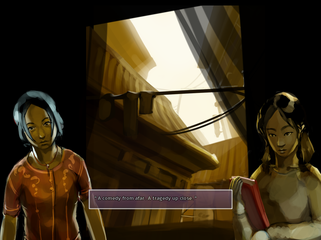
Exeunt Omnes
A game of strategic sophistry. Convince or crush the teenage girl who wants to end your reign of evil.
A game of strategic sophistry. Convince or crush the teenage girl who wants to end your reign of evil.
Search
Filter
 All
All Game Pages
 User Statuses
 Fundamental RPGology
Fundamental RPGology
author=NeverSilent
These are just my personal thoughts, of course, but I think it should be avoided to needlessly limit the participants' creativity with these rules. I don't think it's improbable that people will come up with new and original takes on old or well-known battle machanics, and if that means using a ressource like MP in an unconventional way, then why not?
I admit this was the hardest choice for me in the rules. The problem is that I'm almost certain that keeping the MP in will discourage most people from thinking about why it is a rather meh system in the first place (see the point about long-lasting locking effects in the rules). If you really want to have some MP equivalent, you can find lots of way around it as Kyla said, and I'm almost sure that whatever equivalent you come up will be better than MP.
As for randomness, yep here we're just experimenting so it seems more right to avoid dealing with unplannable factors altogether.
I should state for full disclosure that I'm convinced risk is more interesting when it stems from unforeseen actions by the enemy, rather than a dice roll suddenly screwing your perfect strategy, but this is my personal conviction and not relevant to the contest.
Now if these two "musts" really scare people away from participating, I will turn them into "shoulds", but they are a large part of what justifies the whole contest in the first place: looking for something that no one has ever done before in their games or even in other contests, because tradition has an incredible weight on our minds. Still, I have updated their phrasing somewhat to clarify.
If there's no healing, then you can only last as long as your HP. So you'd either have really short battles or massive amounts of HP. That doesn't sound as appealing as having healing.Hmm I should be clearer about that. No rules here are against healing, I'm saying that there are better ways to do it, such as delaying damage (it will come back in 5 turns, better find some way to delay it again then), or spreading it, or converting it into something else. It should just not disappear altogether to avoid this feeling of useless actions. Although "short battles or massive amount of HP" is exactly what is already happening on the enemy side in any RPG, so your criticism should be applicable to standard battle systems as well ;)
(and like Kyla, I really wouldn't mind shorter, much more focused battles - battles that may take time because you retry them a couple of times, not because you spend an hour casting Knights of the Round Table again and again)
In any case, it's a shame you won't contribute, thanks for the comments nevertheless.
Fundamental RPGology
author=karins_soulkeeper
Ah, another question. Sorry!
When I finish making my game, do I make a game page for it or do I submit it to the 'event locker' as is stated in the submit button on the upper right?
If it's the former, then how do I link it to the event?
If it's the latter, then I doubt that I'll have enough space in my locker for a game...
No problem, all your questions are very welcome and help me streamline the event a little! (it's my first time managing one, quite obviously.)
It should be possible to use either the event locker (which is common to everyone and separate from your own locker, so no worries about your space) or to choose any download from any gamepage you have already made - for the latter, I had forgotten to tick the right option but it's been corrected now, sorry about that.
Fundamental RPGology
Thanks Kyla for the clarifications! Yes karins_soulkeeper you can build this however you want, from a clever use of the default battle system to a fully custom one. The implementation is unimportant as long as the principles behind it are sound.
Well let's put it like this: healing cancels any number of enemy attacks depending on your current HP and your max HP. If you were at your max HP before the attack and then you heal, you technically cancel only one attack at a time, and so on. In doing so, it indeed extends the battle, possibly by many turns. But in any case, more effective healing just means you're erasing bigger chunks of the history of the battle: that's why everyone hates enemies who can heal, you get the feeling that some of your effort has just vanished into thin air.
You also have ways to cancel any other effect from an attack, but those are generally part of the skill locking/unlocking that I describe in part 3. Most status conditions (Silence, Berserk...) boil down to a variant of being out of mana, i.e. they prevent you from using some skills. Sure there are little concrete differences (in one case you use an ether, in the other an antidote), but by having these equivalent effects come from completely separate sources, we miss out on simple unifications, and on other, potentially much more significant differences to exploit.
Thanks for all your comments, I will update the rules to make these points clearer!
author=Link_2112
It doesn't belong in that group because all of the other examples above that are mainly absolute. Whereas you're suggesting that a healing spell is always weak. I would suggest that healing extends a battle rather than to erase an enemy attack. You are also assuming that the enemy only deals damage. If they inflicted a status effect or got some other effect from the attack, then healing will not negate that.
Well let's put it like this: healing cancels any number of enemy attacks depending on your current HP and your max HP. If you were at your max HP before the attack and then you heal, you technically cancel only one attack at a time, and so on. In doing so, it indeed extends the battle, possibly by many turns. But in any case, more effective healing just means you're erasing bigger chunks of the history of the battle: that's why everyone hates enemies who can heal, you get the feeling that some of your effort has just vanished into thin air.
You also have ways to cancel any other effect from an attack, but those are generally part of the skill locking/unlocking that I describe in part 3. Most status conditions (Silence, Berserk...) boil down to a variant of being out of mana, i.e. they prevent you from using some skills. Sure there are little concrete differences (in one case you use an ether, in the other an antidote), but by having these equivalent effects come from completely separate sources, we miss out on simple unifications, and on other, potentially much more significant differences to exploit.
Thanks for all your comments, I will update the rules to make these points clearer!
 An Oathguard Named Desire
The best I can say right now is that this made me want to play your game and I hope to have more meaningful comments afterward. In the meantime, I know this is some of the most worn-out advice ever, but I feel like I need to vouch for it, as someone who literally couldn't finish anything until roughly 2 years ago: finishing things is just a habit that you can catch like drinking or watching BBC series in your underwear. The only hard part is the beginning, full of throat-burning and British accents.
It's easier to start finishing things either
- because you don't care about them (like short stories or even flashfiction that must never see the light of day, that I wrote in one sitting just to get some ideas out of my system and thus safely away from my real project),
- or because you have no damn choice (having two months to write 300 pages lest I fail at my entire career had an extremely positive outcome on my life). Deadlines from writing workshops and other events are your best friends.
Your brain is like a pigeon. Extremely dumb and therefore surprisingly easy to train once you stop believing that you can change yourself using magic free will. Peer pressure helps to an amazing degree, so enlist people who will actually chastise you for missing your deadlines.
Now of course - like anything out of a self-help book - you won't believe a word of it, or will acquiesce and not try it a single second. And I cannot blame you, I didn't either before I had to learn it the hard way on my own. But at least, once you get there, I will be able to say that I told you so.
It's easier to start finishing things either
- because you don't care about them (like short stories or even flashfiction that must never see the light of day, that I wrote in one sitting just to get some ideas out of my system and thus safely away from my real project),
- or because you have no damn choice (having two months to write 300 pages lest I fail at my entire career had an extremely positive outcome on my life). Deadlines from writing workshops and other events are your best friends.
Your brain is like a pigeon. Extremely dumb and therefore surprisingly easy to train once you stop believing that you can change yourself using magic free will. Peer pressure helps to an amazing degree, so enlist people who will actually chastise you for missing your deadlines.
Now of course - like anything out of a self-help book - you won't believe a word of it, or will acquiesce and not try it a single second. And I cannot blame you, I didn't either before I had to learn it the hard way on my own. But at least, once you get there, I will be able to say that I told you so.
Fundamental RPGology
Darn, that's the problem with me not being a native speaker. Please let me know what is unclear and I will rectify the wording quickly!
 Design principles vol. 1: RPGs and strategy
In other news, the contest is live. Let me know if you guys are interested in judging! (or of course please participate to showcase all your ideas ;) )
Design principles vol. 1: RPGs and strategy
Sorry,I can't believe it took me so long to reply! Hectic week.
I played Bonfire a long time ago so I don't remember the specifics but I had enjoyed it a lot, although its unforgiving rogue-like formula of permadeath made it painful for me to restart after a couple of failures.
Pokemaniac (that's an appropriate name for Pokemon comparisons), I agree that it is traditional for RPGs to have battle tactics centered on identifying the nature of your enemy and finding the appropriate response. But I don't like that principle so much: I would prefer to triumph because of what I and the enemy have done during the battle, not because he is of plant type and I used a fire spell. And really, decent AIs are done in a lot of other genres (take turn-based strategy like Heroes of Might and Magic or RTSes, they all have AI that does the job without being either idiotic or untouchable).
How about instead having enemies who have the same brute force as you, but are programmed to have an increasingly broad range of tactical possibilities? That way, every encounter would actually serve the overall gameplay by teaching you how to deal with them in more and more elaborate settings, instead of being its own beast that loses all purpose once mastered.
This sort of learning curve is what basically every genre does, except RPGs who are alone in being solvable by just spending more time on it.
Of course I don't want the endgame to be chess matches against Deep Blue, I don't play videogames to have headaches. But a simple difficulty setting in the menu can take care of that, really. And even better: if you really want to avoid blocking players from the story by extremely hard battles, what about a game where losing a single battle isn't such a big deal? Where for instance you need to lose X battles before dying, or being allowed to continue but missing the best ending?
I played Bonfire a long time ago so I don't remember the specifics but I had enjoyed it a lot, although its unforgiving rogue-like formula of permadeath made it painful for me to restart after a couple of failures.
Pokemaniac (that's an appropriate name for Pokemon comparisons), I agree that it is traditional for RPGs to have battle tactics centered on identifying the nature of your enemy and finding the appropriate response. But I don't like that principle so much: I would prefer to triumph because of what I and the enemy have done during the battle, not because he is of plant type and I used a fire spell. And really, decent AIs are done in a lot of other genres (take turn-based strategy like Heroes of Might and Magic or RTSes, they all have AI that does the job without being either idiotic or untouchable).
How about instead having enemies who have the same brute force as you, but are programmed to have an increasingly broad range of tactical possibilities? That way, every encounter would actually serve the overall gameplay by teaching you how to deal with them in more and more elaborate settings, instead of being its own beast that loses all purpose once mastered.
This sort of learning curve is what basically every genre does, except RPGs who are alone in being solvable by just spending more time on it.
Of course I don't want the endgame to be chess matches against Deep Blue, I don't play videogames to have headaches. But a simple difficulty setting in the menu can take care of that, really. And even better: if you really want to avoid blocking players from the story by extremely hard battles, what about a game where losing a single battle isn't such a big deal? Where for instance you need to lose X battles before dying, or being allowed to continue but missing the best ending?
 Exeunt Omnes Review
Haha well I'm planning on releasing the engine and editor at some point so anyone can improve on the concept, so I'd be glad to see you make a game in that spirit. Since there's no real genre for rhetorical games yet, I see it more as a collective research effort than a competition, so any contribution is more than welcome, from ideas and suggestions to whole new games ;)
 World Remade
I have just finished it and first I must say I haven't played MOTW either (well actually I tried, but I abhor RPG puzzles so you can imagine I sadly didn't last long - incompatible tastes, really; I was kind of relieved to find none of those here).
I could make a review but honestly I'd give it a 3 or 3.5, and last time I did this to a commercial game, said game was pulled from the site, so I'll save myself the trouble and make a short comment on the points that merit your attention the most for future improvements.
The gameplay attempted some degree of originality that was pleasant at first (I really like seeing some twist on the RPG formula) but the intent was a bit defeated in the long run by the fact that very few variations in tactics are actually needed. The battles feel long rather than challenging - I much prefer battles that end rapidly provided you find a clever strategy that adapts to your enemy and to their previous actions. Here there are many, many battles with so little variation. I probably didn't do half of the optional ones.
The dialogue was generally rather good, although it tended to be a bit stilted at timed, with people enunciating their positions in very expository ways. Because of that, despite having a reasonable amount of dialogue for a comparatively short game, the characters felt somewhat one-sided, or progressing on very obvious arcs. For instance, I liked the occasional inklings that the lich might have a degree of humane concerns, but once again they were showcased very punctually and explicitly in text rather than interspersed subtly throughout all its interactions with the protagonists
Overall, I had some fun and was mildly intrigued, but in writerly terms, it feels like a draft rather than a finished product. Still a little uncertain of what to do with its good ideas, so it tends to dump them on the player in a rough state. I would really like to see it refined.
I could make a review but honestly I'd give it a 3 or 3.5, and last time I did this to a commercial game, said game was pulled from the site, so I'll save myself the trouble and make a short comment on the points that merit your attention the most for future improvements.
The gameplay attempted some degree of originality that was pleasant at first (I really like seeing some twist on the RPG formula) but the intent was a bit defeated in the long run by the fact that very few variations in tactics are actually needed. The battles feel long rather than challenging - I much prefer battles that end rapidly provided you find a clever strategy that adapts to your enemy and to their previous actions. Here there are many, many battles with so little variation. I probably didn't do half of the optional ones.
The dialogue was generally rather good, although it tended to be a bit stilted at timed, with people enunciating their positions in very expository ways. Because of that, despite having a reasonable amount of dialogue for a comparatively short game, the characters felt somewhat one-sided, or progressing on very obvious arcs. For instance, I liked the occasional inklings that the lich might have a degree of humane concerns, but once again they were showcased very punctually and explicitly in text rather than interspersed subtly throughout all its interactions with the protagonists
Overall, I had some fun and was mildly intrigued, but in writerly terms, it feels like a draft rather than a finished product. Still a little uncertain of what to do with its good ideas, so it tends to dump them on the player in a rough state. I would really like to see it refined.
 Games - Tester
 Games - Other
